
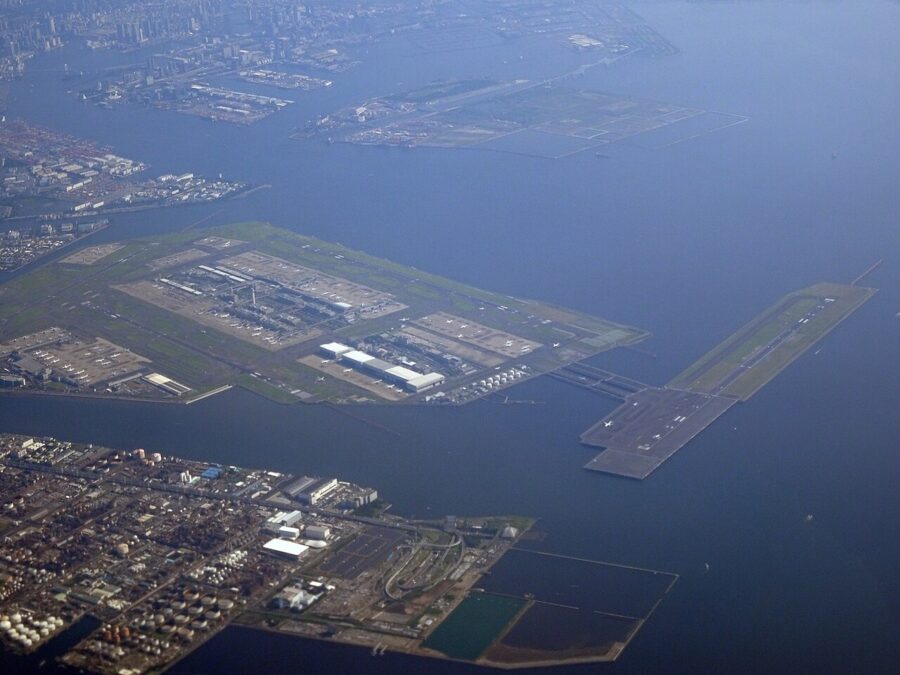
Japan has seven airports that matter to someone flying in from abroad, and the right one is decided less by the fare than by where you want to sleep on the second night. Land at Haneda and you can be in central Tokyo within half an hour; land at Kansai and Kyoto is an hour and a quarter away by train; land at Fukuoka and the subway reaches Hakata Station in five minutes. The long flight often costs much the same whichever you choose. The day you save at either end does not.
Getting the shape of the trip right starts with the map. Tokyo and Osaka are about 400 kilometres apart in a straight line, joined by one of the busiest high-speed railways in the world, and almost every first visit runs along that corridor. Hokkaido lies a long way north of it, Okinawa far to the south-west, and Kyushu at the western end where Japan comes closest to Korea. The airport you pick should sit at one end of the line you plan to travel, not in the middle of it.

The other half of the decision is time of year. Japan’s own holidays move whole cities at once, and a fare that looks reasonable in February can climb steeply for the same seat in Golden Week. Time the trip well and the same money buys a quieter train and a cheaper room at the far end.
Contents
- The seven gateways and what each is for
- From the UK and Europe: the long way round
- From North America
- From Australia, New Zealand and across Asia
- When fares are lowest, and when they spike
- Open-jaw: into Tokyo, out of Osaka
- Flying within Japan, or taking the shinkansen
- On arrival: paperwork, then the way into town
The seven gateways and what each is for
Most long-haul flights land in Tokyo or Osaka, but each of the main airports serves a region, and choosing by region rather than by city name is the first useful habit. The map of Japan’s regions and main routes shows how they sit against the rail lines.
Haneda (HND): the Tokyo airport to aim for
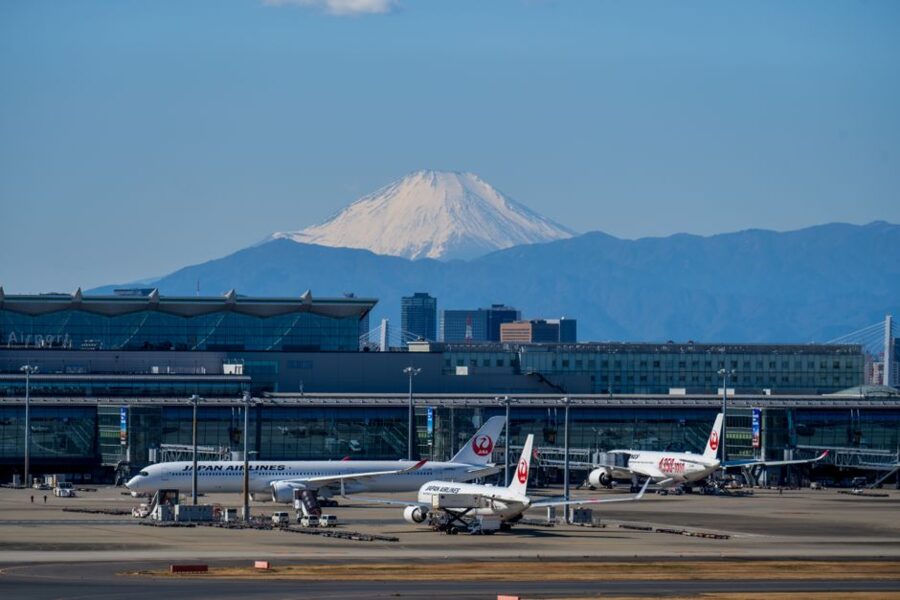
Haneda (羽田) is Tokyo’s original airport, and after decades as a mostly domestic field it now takes a large share of the long-haul flights too. International flights use Terminal 3, with some ANA services from Terminal 2, while Terminals 1 and 2 also handle the domestic network. Shinagawa is about 15 minutes away by train, Tokyo Station about 30 and Shinjuku about 50.
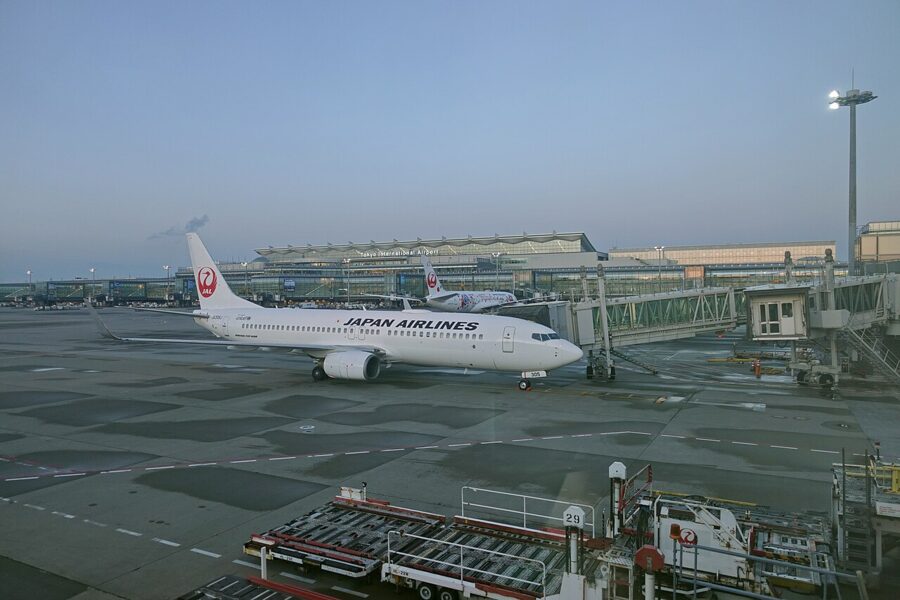

If a choice of Tokyo airports is offered at a similar price, I would take Haneda every time. The gain is greatest on a late arrival or an early departure. It is also the airport for most domestic connections, so a flight on to Sapporo, Fukuoka or Okinawa rarely means changing airports.
Narita (NRT): further out, more airlines
Narita (成田) sits in the farmland of Chiba Prefecture, some 60 kilometres east of central Tokyo. It opened in 1978 as the international airport when Haneda ran out of room, and it remains the main Tokyo airport for many foreign airlines and for the low-cost carriers. Terminal 3 is the budget terminal, a walk or shuttle ride from Terminal 2.
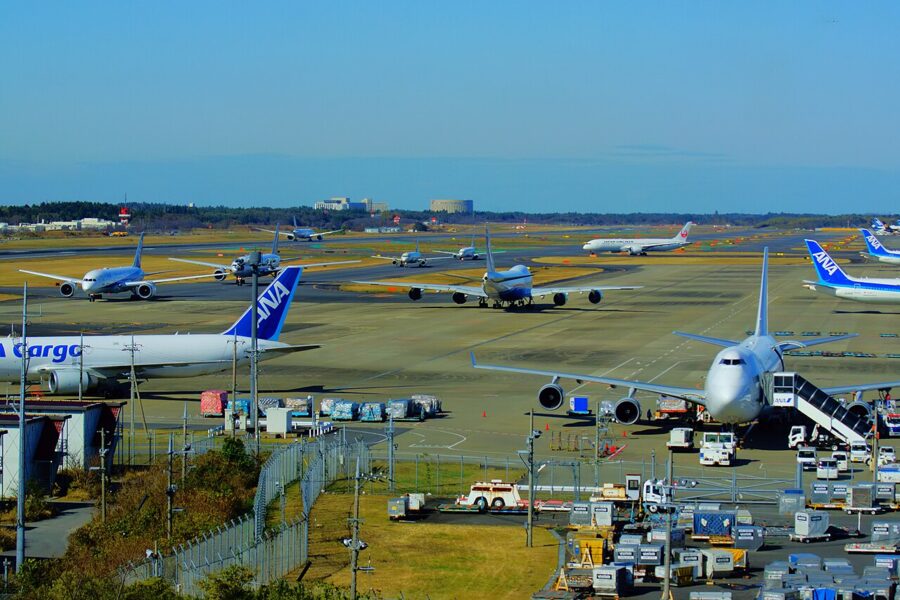

Narita is no hardship. The fastest train into the city, Keisei’s Skyliner, reaches Nippori in as little as 36 minutes, and JR’s Narita Express reaches Tokyo Station in 53 minutes at best. The real cost is on the far side of the city: from Narita to Shinjuku or Shibuya takes well over an hour, and nearer two on the slower trains with a change.
Kansai (KIX): for Osaka, Kyoto and Nara
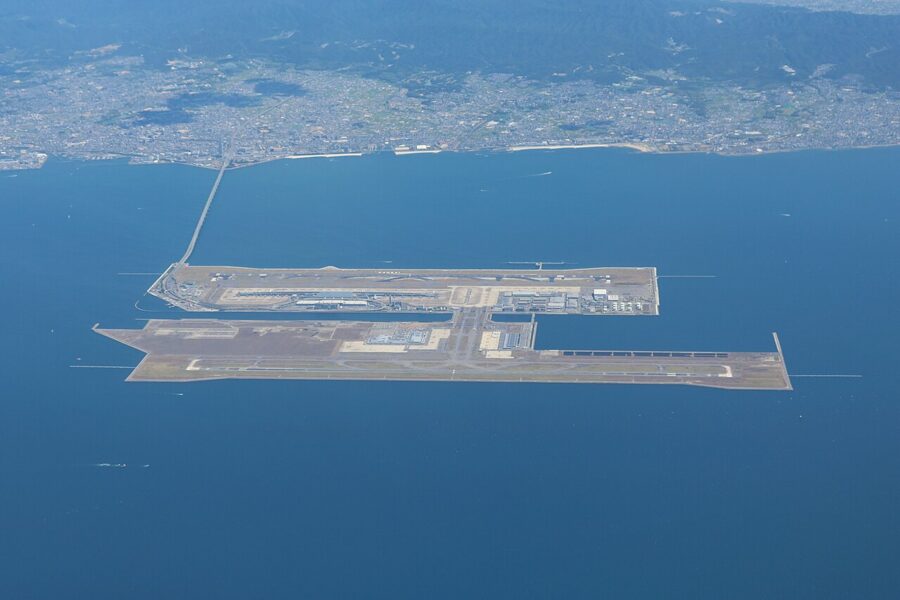
Kansai International (関西国際空港) is the gateway to western Japan’s old heartland. Trains leave from a station attached to Terminal 1: JR’s Haruka limited express reaches Kyoto in about 75 minutes and Shin-Osaka in about 50, and Nankai’s Rapi:t α reaches Namba in about 34. Terminal 2 handles the low-cost airline Peach and is reached by a free shuttle bus that takes 7 to 9 minutes from Terminal 1.
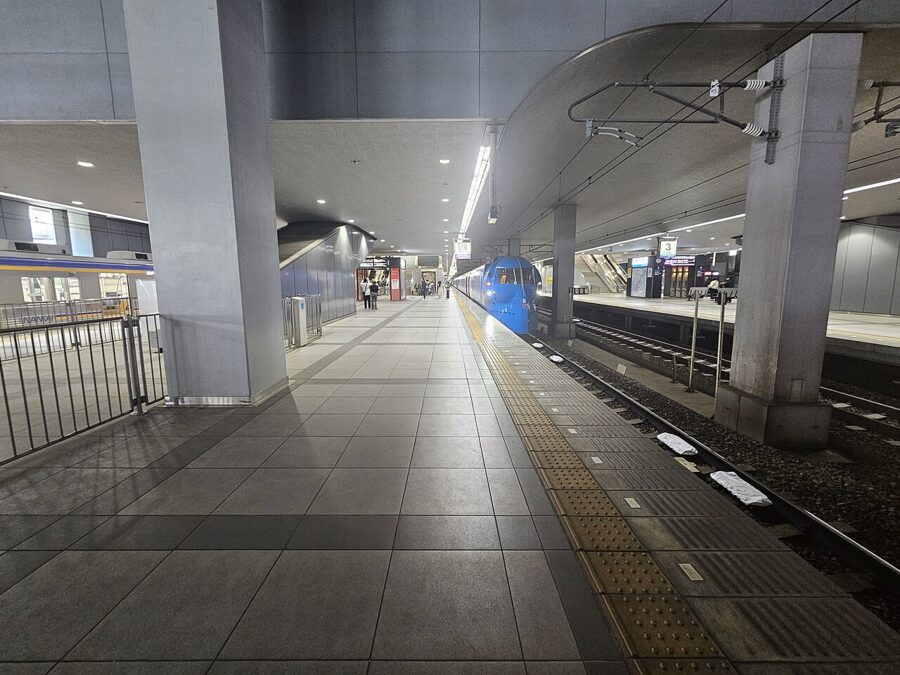

For a trip built around Kyoto, Nara and Osaka, landing here instead of Tokyo saves a day, and often the cost of a train back to Tokyo. It also opens the west: Himeji, Okayama and Hiroshima are all far closer to Kansai than to Tokyo.
Chubu Centrair (NGO): central Japan
Chubu Centrair, on an artificial island off Tokoname in Aichi Prefecture, is Nagoya’s airport. The quickest way into the city is Meitetsu’s μSKY limited express to Meitetsu Nagoya, which needs a ¥450 (about £2 / $3) μticket for a reserved seat on top of the ordinary fare. It has fewer long-haul routes than Tokyo or Osaka, but it is the most sensible landing for the Japan Alps, Takayama, the Kiso valley and Ise-Shima.

Fukuoka (FUK): Kyushu’s city-centre airport
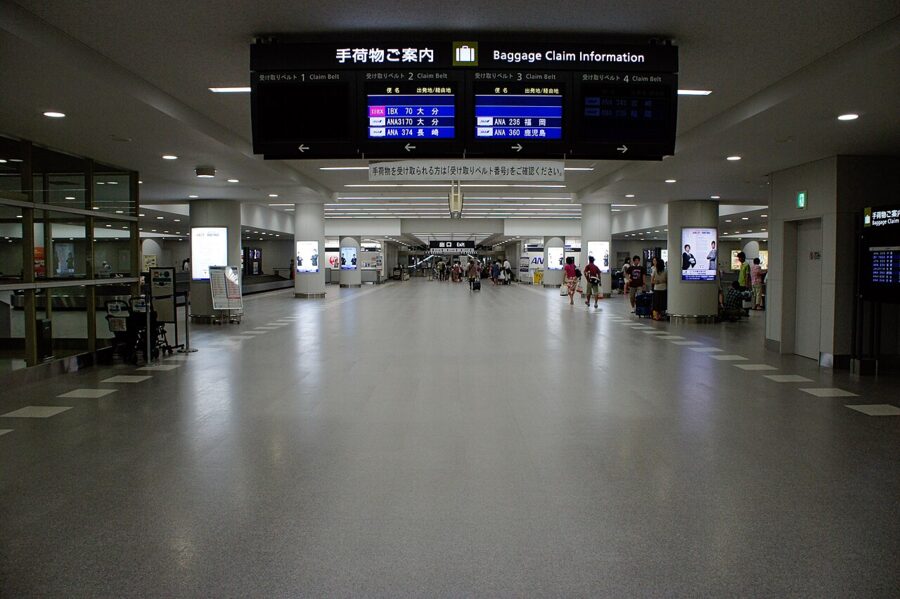
Fukuoka Airport is one of the most conveniently placed airports in the world. The subway runs from the domestic terminal to Hakata Station in about 5 minutes for ¥260 (about £1 / $2), and travellers arriving at the international terminal take the free inter-terminal shuttle bus across. A second runway opened in March 2025, and the international terminal was enlarged at the same time.
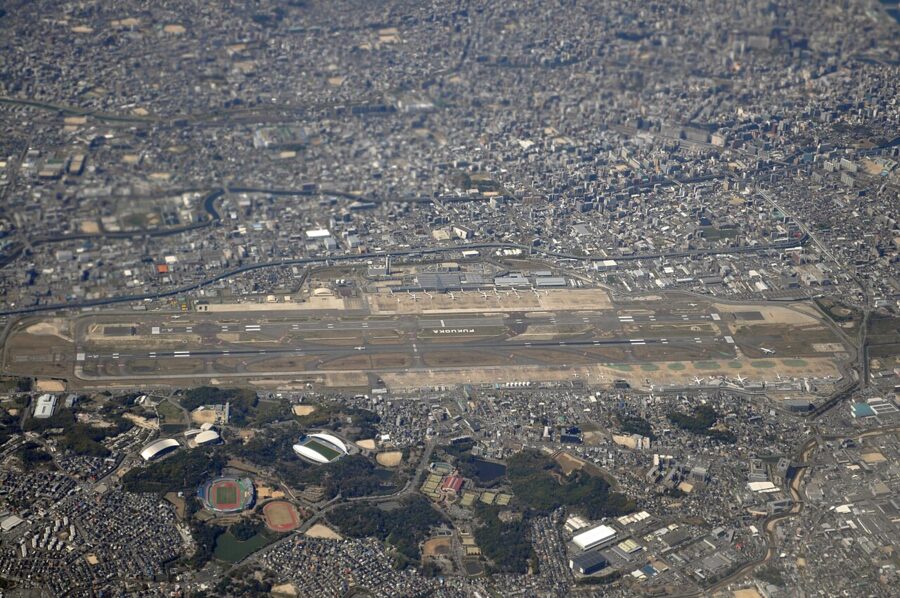

Fukuoka is closer to Busan and Seoul than to Tokyo, and its routes reflect that: short hops across East Asia rather than long-haul flights from Europe. It is the natural way into Kyushu for a trip to Nagasaki, Kumamoto or Kagoshima, often reached with a connection in Seoul, Taipei, Hong Kong or Tokyo.
New Chitose (CTS): Hokkaido
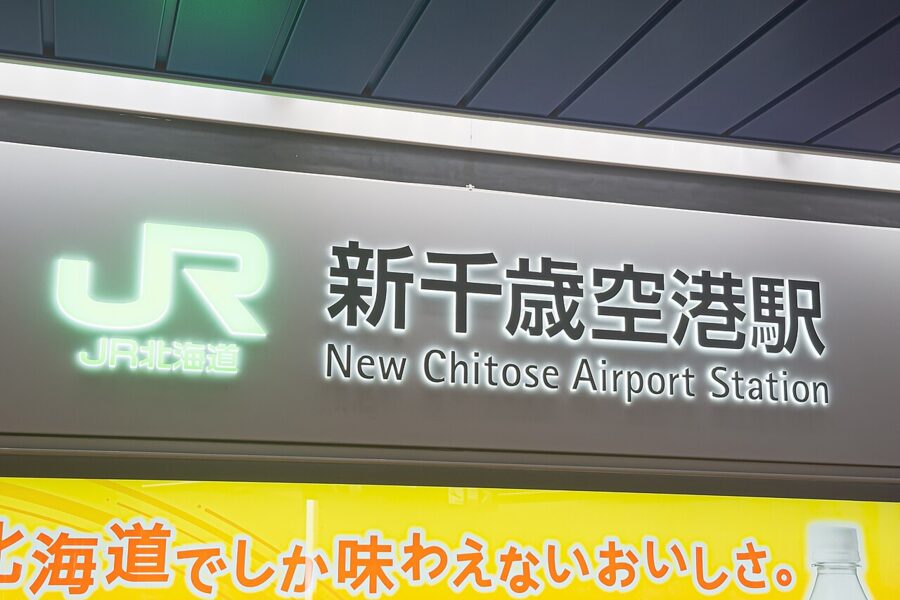
New Chitose (新千歳空港) serves Sapporo and almost everything else in Hokkaido. JR Sapporo Station is about 40 minutes away by train from the station under the terminal,. In winter it is the airport for Niseko and the ski fields, and the busiest air route in Japan links it with Haneda.

Naha (OKA): Okinawa and the southern islands
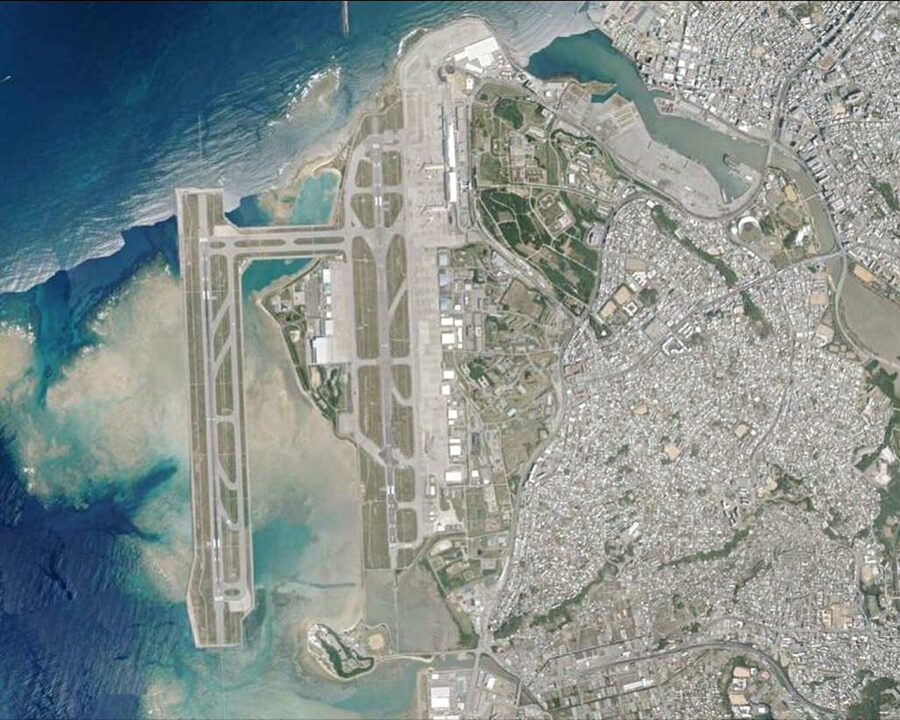
Naha (那覇空港) is the airport for Okinawa, the subtropical chain that runs towards Taiwan. A second runway built out into the sea opened in 2020. The Yui Rail monorail leaves from the terminal and runs through central Naha, reaching Shuri in about 27 minutes. Its international flights come mostly from Taipei, Seoul, Hong Kong and mainland China; from anywhere further away, you change in Tokyo or Osaka.

Regional airports worth knowing
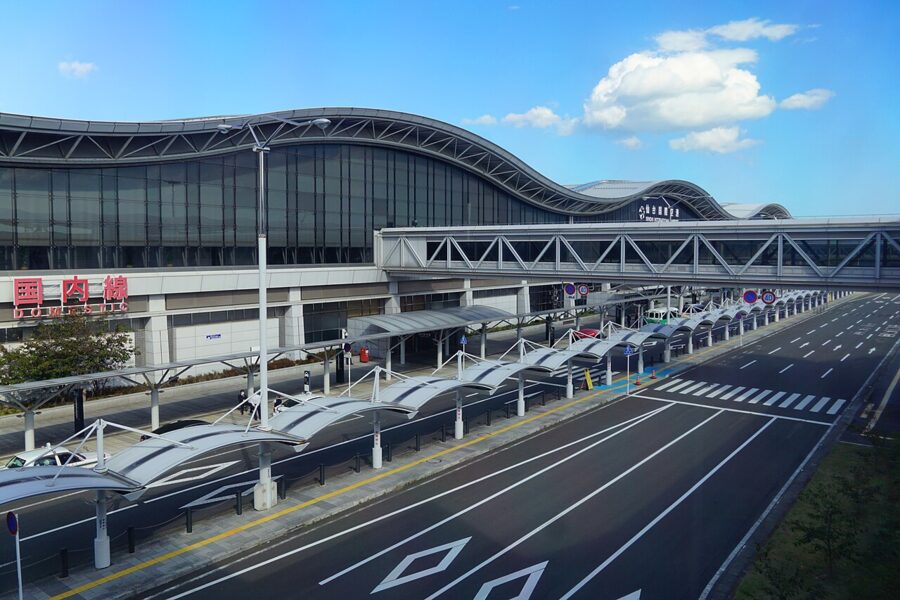
Several smaller airports have scheduled international flights, almost all to East Asia. Sendai, the way into Miyagi and the rest of Tohoku, has flights from Seoul, Taipei, Shanghai, Hong Kong and Bangkok. Nagasaki has links to Seoul, Busan and Shanghai. With one change in Seoul these can save a long rail journey, and the arrival halls are quiet.

From the UK and Europe: the long way round
Before 2022 a nonstop flight from London to Tokyo took about 12 hours, on a great-circle route over Siberia. Russian airspace has been closed to European Union airlines since February 2022, and British, Japanese and other carriers have avoided it too. Finnair, which built its business on the short way to Asia, says its flights to Japan and South Korea can now take two to four hours longer than before.

Airlines now take one of two lines. The polar route crosses the Arctic and comes down over Alaska and the Bering Sea; the southern route runs east over the Black Sea, Central Asia and China. Which one a flight takes is settled close to departure and depends on the winds. Finnair notes that flights from Japan back to Helsinki almost always go over the pole, since the southern route’s headwinds can add at least three hours.
From Heathrow, British Airways, Japan Airlines and ANA all fly nonstop to Haneda. In the 2026 timetables the outbound flight is scheduled at about 13 hours 40 minutes and the return at around 14 hours 45 minutes to 15 hours, longer because it flies into the jet stream. Elsewhere in Europe there are nonstops to Tokyo from Paris, Frankfurt, Munich, Helsinki, Istanbul and others, with Helsinki to Haneda scheduled at about 13 hours 25 minutes this winter.
| Route | Scheduled flight time, 2026 timetables |
|---|---|
| London Heathrow to Tokyo Haneda | about 13 h 40 min |
| Tokyo Haneda to London Heathrow | about 14 h 45 min to 15 h |
| Helsinki to Tokyo Haneda | about 13 h 25 min |
| Helsinki to Osaka Kansai | about 12 h 50 min |
| Paris Charles de Gaulle to Osaka Kansai | about 13 h 05 min |
Osaka is better served from Europe than most people expect. Air France flies to Kansai from Paris, Lufthansa from Munich, Finnair from Helsinki and Turkish Airlines from Istanbul, so a trip into Tokyo and out of Kansai rarely needs a domestic connection. From Britain, the simplest way to Osaka is usually one change in Helsinki, Paris or Munich.
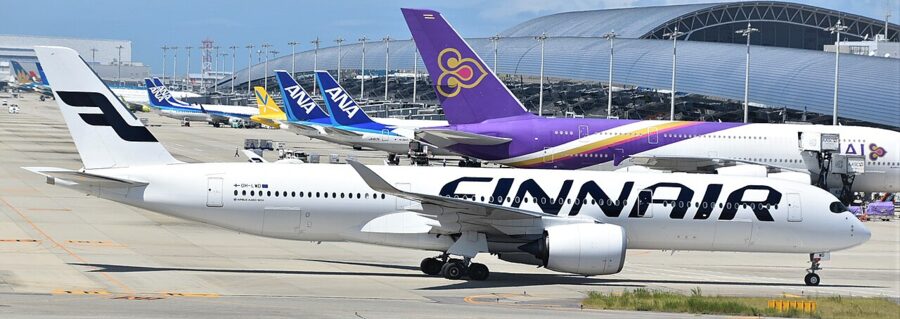

One-stop fares are where the savings lie. Gulf airlines connect through Dubai and Doha, Turkish Airlines through Istanbul, and Chinese airlines, which still fly over Russia, through Beijing and Shanghai, often at the lowest price of all. The trade-off is time: a connection through the Gulf adds several hours to a journey that is already long, and a cheap fare with a tight change in an unfamiliar hub is a false economy. Emirates also flies to Kansai from Dubai.
From North America
The Pacific crossing is long but simple, and the West Coast is where the fares are lowest. In the 2026 timetables Seattle to Haneda is scheduled at about 10 hours 25 minutes, San Francisco to Haneda about 11 hours 35, Vancouver to Narita about 10 hours, and Los Angeles to Narita about 11 hours 50. From New York, JAL’s nonstop to Haneda is scheduled at 14 hours 35 minutes. The return is an hour or two quicker with the jet stream behind you.
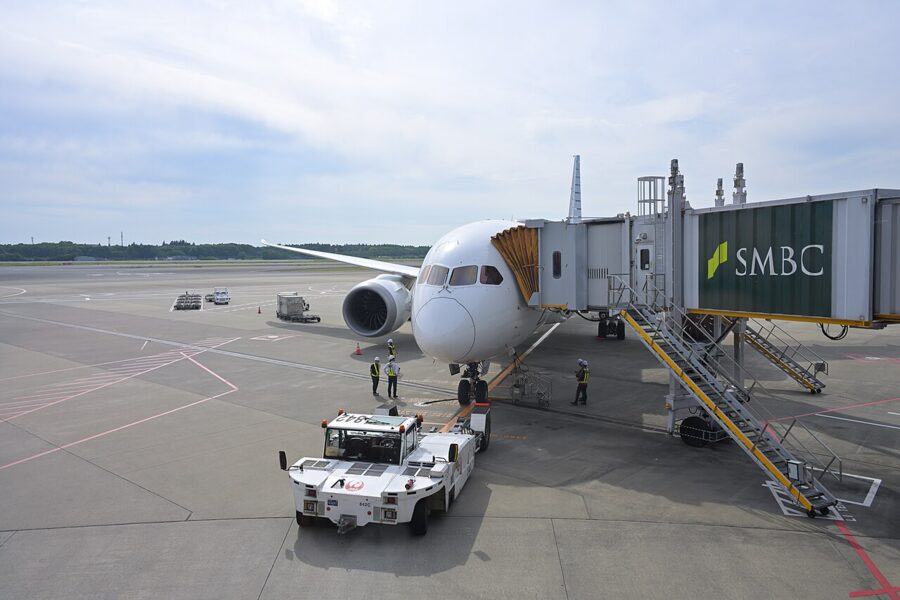

United, American, Delta, Air Canada, JAL and ANA all fly nonstop to Tokyo from their hubs, and United also flies from San Francisco to Kansai. ZIPAIR, the low-cost long-haul arm of Japan Airlines, flies from Los Angeles, Houston and Honolulu to Narita, and its fares tend to pull down prices on the same routes. If you live away from the coasts, a separate cheap flight to a West Coast gateway and a sale fare from there often beats a through ticket from home.
Arrival times matter on this crossing, because most flights from the West Coast leave in the late morning and land in Tokyo in the afternoon of the following day. That is kind to the body: an early night in Tokyo and you are almost on local time. JAL’s overnight flight from New York is the exception, landing at Haneda at about five in the morning.
From Australia, New Zealand and across Asia
From Australia the flight runs almost due north and stays inside a time zone or two, which makes jet lag mild. Qantas flies from Sydney to Haneda in about 10 hours and from Sydney to Kansai in a little under 10 hours this winter; JAL and ANA fly from Sydney too. From Auckland, Air New Zealand reaches Narita in about 11 hours.
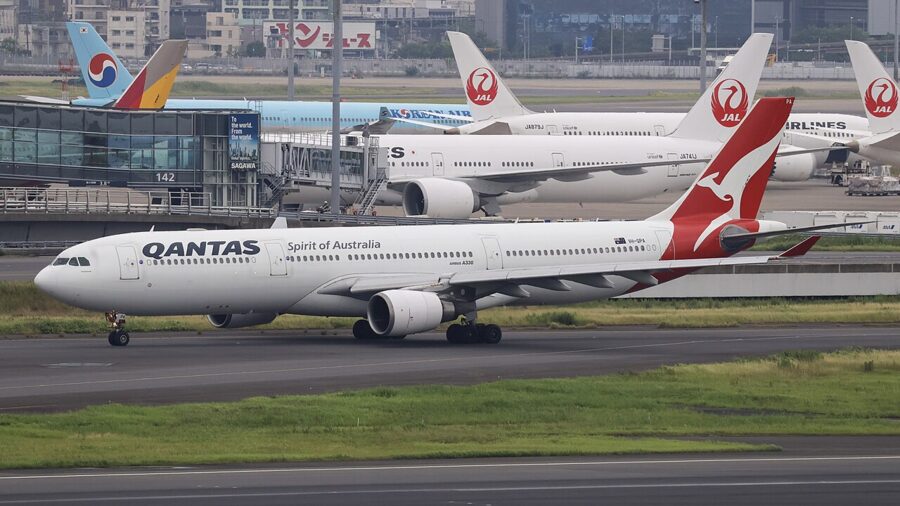

From elsewhere in Asia, Japan is a short hop. In the 2026 timetables Seoul Incheon to Narita is scheduled at about 2 hours 25 minutes, Hong Kong to Haneda about 3 hours 45, Bangkok to Narita just under 6 hours and Singapore to Narita about 6 hours 45. Regional low-cost airlines such as Peach, Jeju Air, HK Express, Scoot and AirAsia X compete hard on these routes, and they reach regional airports the big carriers ignore.
That makes Seoul, Taipei and Hong Kong useful stepping stones from further afield. A long-haul ticket to one of them, followed by a short flight straight to Fukuoka, Sendai or Okinawa, can be quicker than going through Tokyo and sometimes cheaper than flying into Japan direct. Check that both flights are on one ticket, or leave a generous gap if they are not.
When fares are lowest, and when they spike
Fares to Japan follow two calendars at once: the seasons visitors care about and the holidays when the whole of Japan travels. The first pushes up long-haul prices from abroad, the second fills domestic flights, shinkansen and hotels to the last seat. When both coincide, as they do in late March and early April, everything is dearer.

The cheapest stretches are mid-January to early March, apart from the week around the Lunar New Year when travel from China, Korea and Taiwan peaks (it falls on 6 February in 2027). June, the rainy season, is the other quiet month, and the first half of December is good value too, once the autumn leaves in Kyoto are over.
The weeks to avoid, or to book far ahead for:
| Period | Dates | What happens |
|---|---|---|
| Cherry blossom and spring holidays | late March to early April | Long-haul fares and hotels at their highest; Kyoto and Tokyo parks crowded |
| Golden Week | 29 April to 5 May (2027: Thursday 29 April, then Monday 3 May to Wednesday 5 May) | Japan’s longest holiday; domestic flights, shinkansen and hotels full |
| Summer holidays and Obon | late July to August, peaking around 13 to 16 August | School holidays abroad and the family return to home towns in Japan |
| New Year | about 29 December to 3 January | Shops and many sights close for a few days; transport packed either side |
Japanese holidays work in a particular way. At the start of Golden Week and Obon the long-haul crush runs outward from Japan, and at the end it runs back in, so a visitor flying the other way can find the international leg reasonable. The problem is everything else: domestic seats, shinkansen reservations and rooms in Kyoto, Hokkaido and Okinawa go early and go dear.
For the cherry blossom or the autumn leaves I would book the long-haul flight three to five months ahead and the room at the same time; the guide to hotels in Japan covers where to stay. Outside those seasons there is no magic date to buy, but price alerts on the exact route and a willingness to move your trip by a few days save more than any trick. Midweek departures are usually cheaper than Friday and Sunday ones.
Open-jaw: into Tokyo, out of Osaka
The most useful booking habit for a first visit is the open-jaw ticket: fly into one city and home from another. Most first trips run from Tokyo to Kyoto and Osaka, or the reverse, and a return ticket to Tokyo forces you to retrace the whole line on the last day. An open-jaw ticket lets the trip move in one direction.
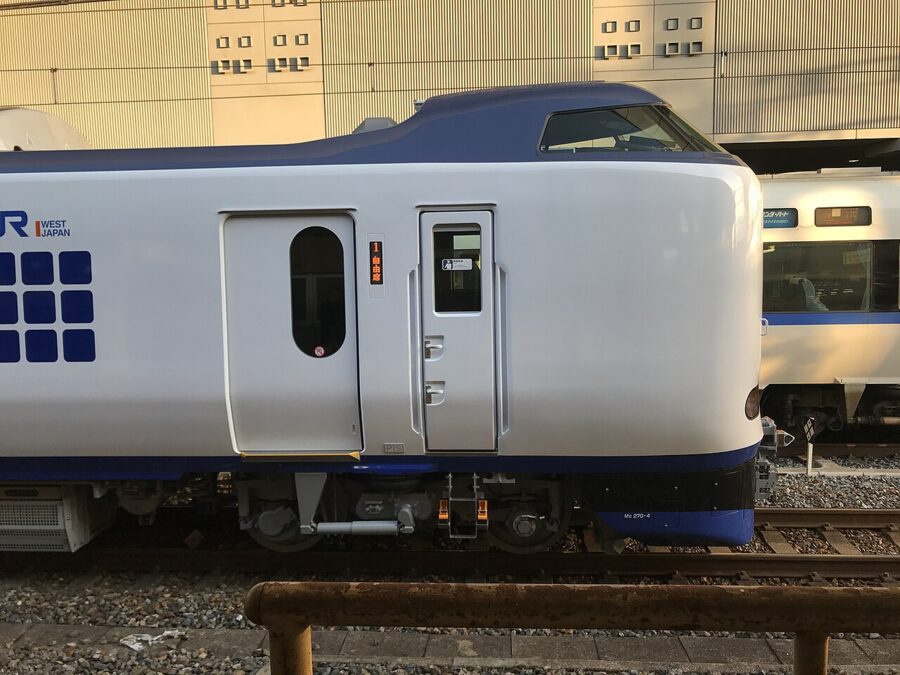
The saving in time is real. From Kyoto, the Haruka reaches Kansai Airport in about 75 minutes. Flying home from Tokyo instead means the Nozomi to Tokyo, a little over two hours, then the Narita Express or a train to Haneda, and a margin for luggage and changes at each end. In practice that is most of a day given back to Kyoto or Osaka, or a night in an airport hotel avoided.
On full-service airlines an open-jaw ticket usually costs about the same as a return, because the fare is built from two halves; search with the “multi-city” option rather than “return”. Any airline with a European or Asian hub can sell you a ticket into Tokyo and home from Kansai with a single change. It works the other way too, and for some routes, such as a trip that ends in Hokkaido, it is the only sensible plan.
Flying within Japan, or taking the shinkansen
Inside Japan the plane and the train compete over distance, and the line between them is clear. From Tokyo the shinkansen wins to Osaka and Hiroshima, door to door, and it is close to even for Fukuoka, a little under five hours by Nozomi against a flight of about two hours plus the airports. Beyond that the plane takes over: Sapporo, Kagoshima, Okinawa and the outer islands are flights.
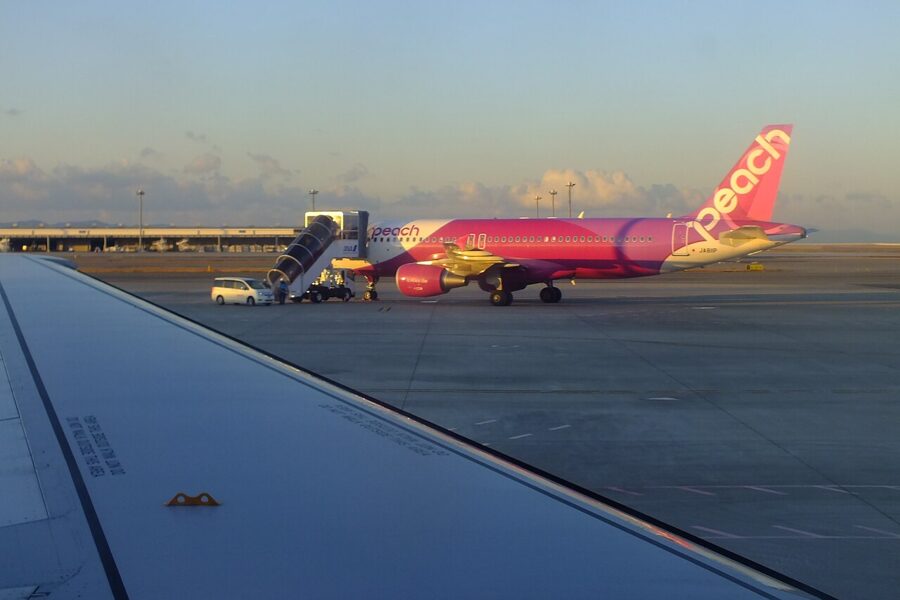

The domestic flights themselves are short and frequent. Haneda to New Chitose is scheduled at about an hour and a half, Haneda to Fukuoka about two hours heading west and an hour and three quarters coming back, and Haneda to Naha nearly three hours outbound. The full list of times sits on the map of Japan’s regions, alongside the shinkansen.
Two kinds of airline fly these routes. JAL and ANA carry most passengers, from Haneda and Itami, with free checked bags and seat selection. The low-cost airlines, chiefly Peach, Jetstar Japan and Spring Japan, fly mostly from Narita and Kansai, and their base fares are low but strip out checked luggage, seat choice and changes. Price the bag before you book, and remember that Narita and Kansai are a long way from the city centres.
Visitors have one advantage. JAL sells a Japan Explorer Pass fare to people who live outside Japan and hold an international ticket to and from the country: a fixed price per domestic flight, from ¥7,700 (about £37 / $49) on short routes and ¥11,000 (about £52 / $70) on middle-distance ones such as Nagoya to Okinawa, tax included, with a higher price for the longest flights, as of November 2026. On a long hop it can undercut both the regular fare and the train.
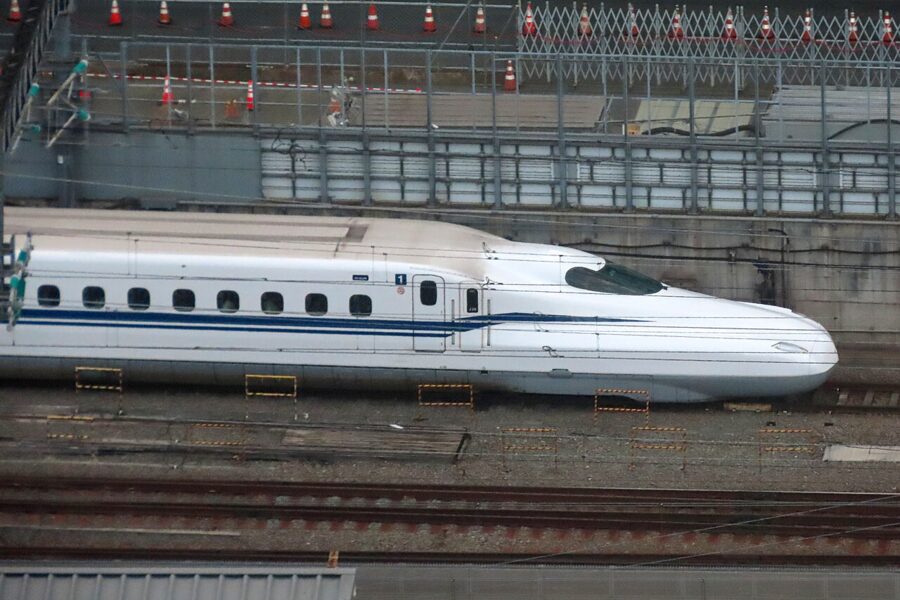

One rule of thumb. If the train takes four hours or less, take the train; it runs from centre to centre and the views are part of the trip. Over five hours, compare the plane, and over six take it, unless the ride is the point.
On arrival: paperwork, then the way into town
Immigration and customs are quicker if you fill in your details in advance through the government’s Visit Japan Web service, which gives you QR codes to show at the counters. Visa rules, money and phones are set out in the practical information guide; one thing to know before you book is that the International Tourist Tax rose to ¥3,000 (about £14 / $19) per departure on 1 July 2026, and it is added to the ticket price.
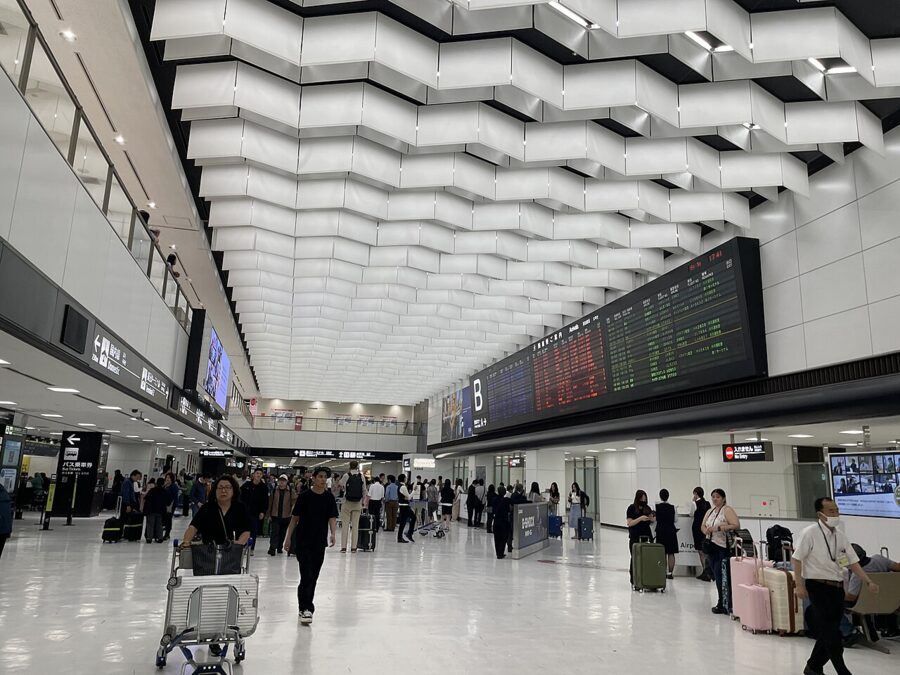

Each airport’s rail link is the fastest and most predictable way in, with buses useful when you are heading to a hotel they stop at, or travelling with heavy bags. Times are fastest or typical, as of 2026.
| Airport | To | By | Time |
|---|---|---|---|
| Haneda | Shinagawa / Tokyo Station / Shinjuku | Keikyu line or Tokyo Monorail, changing for Tokyo Station and Shinjuku | about 15 / 30 / 50 min |
| Narita | Nippori and Ueno | Keisei Skyliner | from 36 min to Nippori |
| Narita | Tokyo Station | JR Narita Express | from 53 min |
| Kansai | Kyoto / Shin-Osaka | JR Haruka | about 75 / 50 min |
| Kansai | Namba | Nankai Rapi:t α | about 34 min |
| Fukuoka | Hakata | Subway (from the domestic terminal) | about 5 min |
| New Chitose | Sapporo | JR rapid | about 40 min |
| Naha | Shuri | Yui Rail monorail | about 27 min |
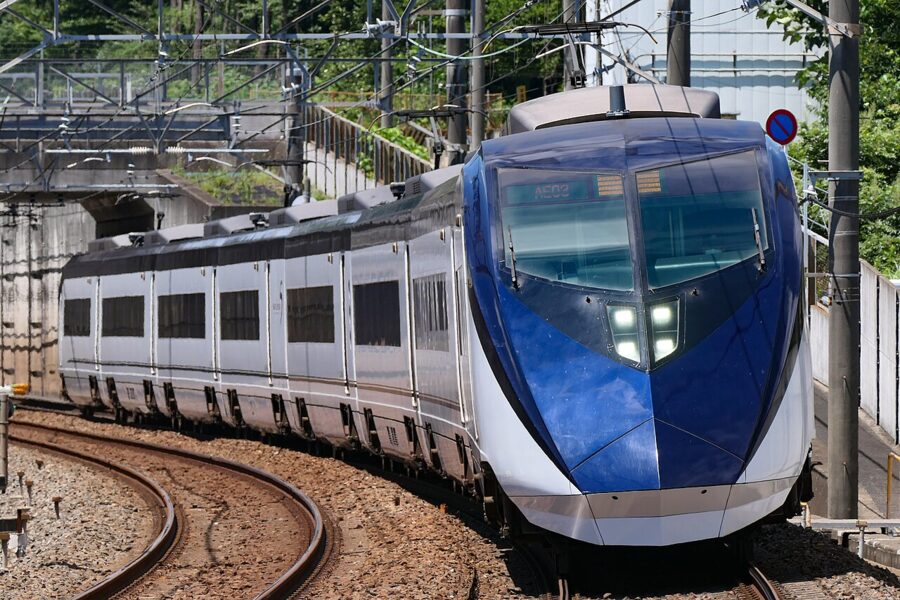

If you are staying more than a few days, JR East’s N’EX Tokyo Round Trip Ticket covers the Narita Express both ways within 14 days for less than two single tickets. At Haneda the Keikyu line and the Tokyo Monorail both reach the Yamanote loop in about 15 to 20 minutes, so there is little to choose between them; take whichever stops closer to your hotel.
A late landing changes the plan. The airport trains do not run through the night, and an arrival close to midnight at Narita or Kansai can mean a long wait or an expensive taxi. On a late flight, book the first night near the airport or near the station the airport train reaches.
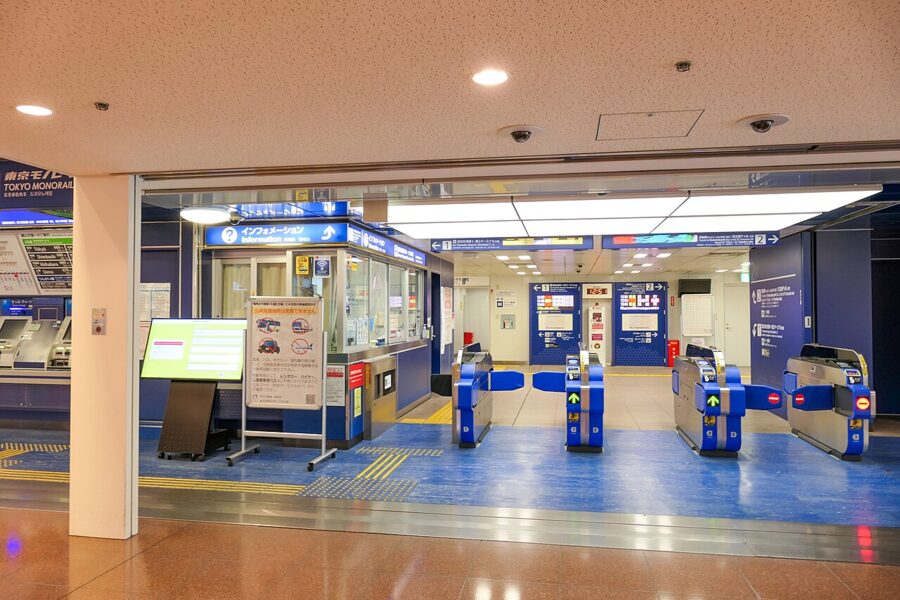

From the airport, the trip begins. In Tokyo the first evening is best spent close to the hotel, a walk and a bowl of noodles; in Kansai the Haruka sets you down in Kyoto in time for the light on the Kamo River. Whichever airport you chose, it should be one end of the line you mean to travel, and the other end should be where you fly home.