
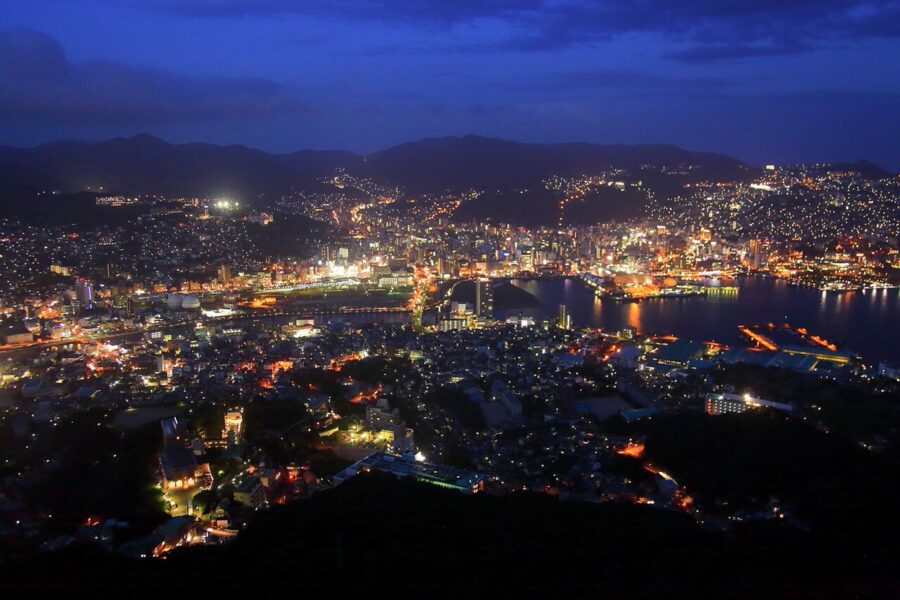
Nagasaki (長崎) has almost no flat ground. The city fills a long, narrow harbour on the west coast of Kyushu and climbs the hills on three sides of it, so the streets run along the valley floors and everything else is steps and slopes. The trams take the flat land, and the sights sit beside the tracks or a short, steep walk above them.
That shape explains how to see the place. The Urakami valley in the north holds the Peace Park and the hypocentre of the atomic bomb of 9 August 1945. The old port at the head of the harbour has Dejima, Chinatown and the stone bridges of the Nakashima River, and the southern hills hold the former foreign settlement around Glover Garden and Oura Church. Mount Inasa (稲佐山) looks at all three from across the water, and about 19 kilometres out to sea lies the concrete island of Gunkanjima.
I would give Nagasaki two full days, plus a spare morning in case the Gunkanjima boats cannot sail, and spend almost none of it in taxis. A tram day pass costs less than a coffee, and the hills are the point. Fares, hours and fees below are as of November 2026, a year in which several of them rose sharply.
Contents
- A harbour city with no flat ground
- Urakami: the Peace Park, the hypocentre and the museum
- Dejima, the fan in the river
- Minamiyamate: Glover Garden and Oura Church
- Chinatown, Megane-bashi and Teramachi
- Mount Inasa after dark
- Gunkanjima: the boat, the weather and the landing
- What Nagasaki eats
- Getting there and how long to stay
A harbour city with no flat ground
Nagasaki Prefecture is the ragged western end of Kyushu: peninsulas, drowned valleys and more islands than any other prefecture. The city sits where one drowned valley makes a deep, sheltered anchorage, which is why the Portuguese chose it in 1571 and why the shipyards are still here. The Nakashima River comes in from the east and the Urakami River from the north, and between them and the sea there was never room for a grid.
Houses and graveyards stack up the slopes on stone terraces, and many lanes are too steep for cars, so bring shoes with grip. The rainy season runs through June into July and typhoons brush the coast from late summer. Winters are mild enough to make the February lantern festival a pleasure.

The trams: routes, fares and the day pass
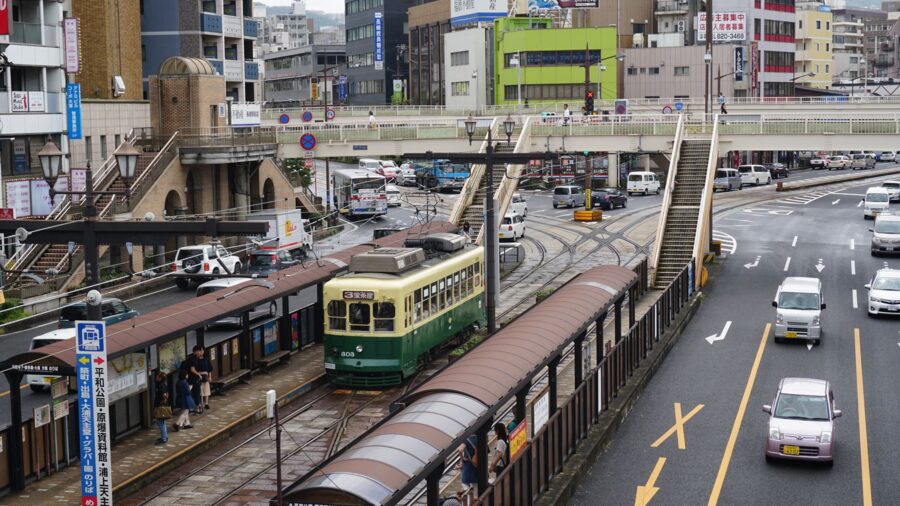
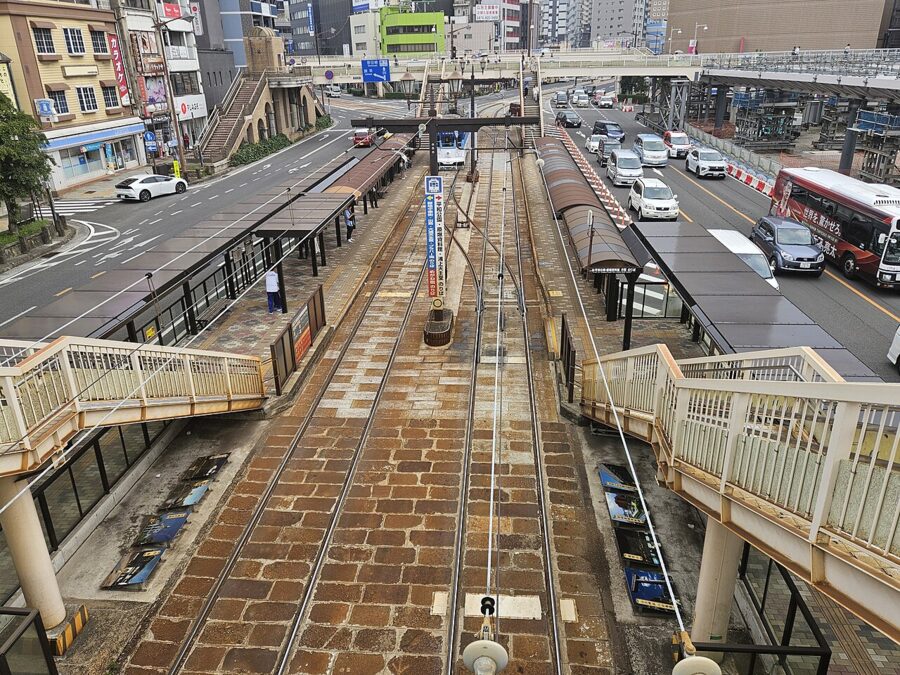
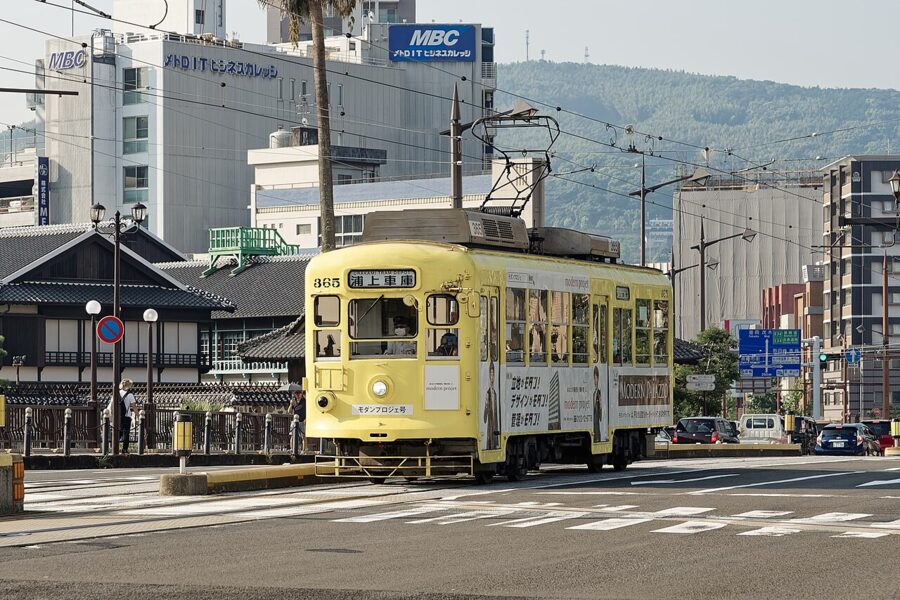
Nagasaki Electric Tramway has run streetcars here since 1915, and three routes operate as of November 2026. Route 1 is the spine, from Akasako in the north past the Peace Park, Nagasaki Station, Dejima, Shinchi Chinatown and Shianbashi to Sofukuji, with a car about every seven minutes in the daytime. Route 3 shares the run from Akasako to the station, then turns east to Hotarujaya, and Route 5 links Ishibashi, below Glover Garden, with Hotarujaya by way of Oura, Chinatown and Megane-bashi. Route 4 is suspended until further notice.
The fare is flat: ¥150 (about 70p / $1) from junior high school age up and ¥80 for children, paid at the fare box by the driver as you get off. On the third Sunday of each month, children of primary school age and under ride free. There are four ways to pay.
- Cash. Coins into the fare box. Carry some cash anyway, since small restaurants and temple offices often take nothing else.
- Transport IC cards. The trams use nimoca, which works with the national IC cards. A card cuts rides of up to two stops to ¥110, and a second ride is free if you change within 30 minutes at Nagasaki-ekimae, Shinchi Chinatown, Shiyakusho or Nishi-Hamanomachi.
- Contactless bank cards and phones. Visa, Mastercard, JCB, American Express, Diners, Discover and UnionPay all work: tap the reader as you board and again as you leave, with the same discounts. The daily and monthly caps on card fares ended on 30 September 2026.
- The day pass. ¥600 (about £3 / $4) for adults and ¥300 for children, sold at tourist information centres, tramway offices and many hotel desks along the lines, never on board. The same pass and a 24-hour version at ¥700 are sold through several phone apps.
Four rides pay for the pass, and a day of sightseeing easily runs to six. Now that the card cap has gone, the pass is the simple choice again.

Urakami: the Peace Park, the hypocentre and the museum
At 11:02 on 9 August 1945 a plutonium bomb exploded about 500 metres above the Urakami valley, three kilometres north of the old port. The hills that shelter the harbour also channelled the blast, so the centre suffered less than Hiroshima did while Urakami was flattened. Nagasaki City counts 73,884 dead by the end of 1945 and nearly 75,000 injured. The memorials lie within a few minutes’ walk of each other, around the Peace Park (平和公園) and Atomic Bomb Museum (原爆資料館) stops on Routes 1 and 3.
The city is not radioactive. The bomb burst high in the air, most residual radiation was gone within weeks, and levels today are ordinary background, as anywhere else in Japan.
The Peace Park
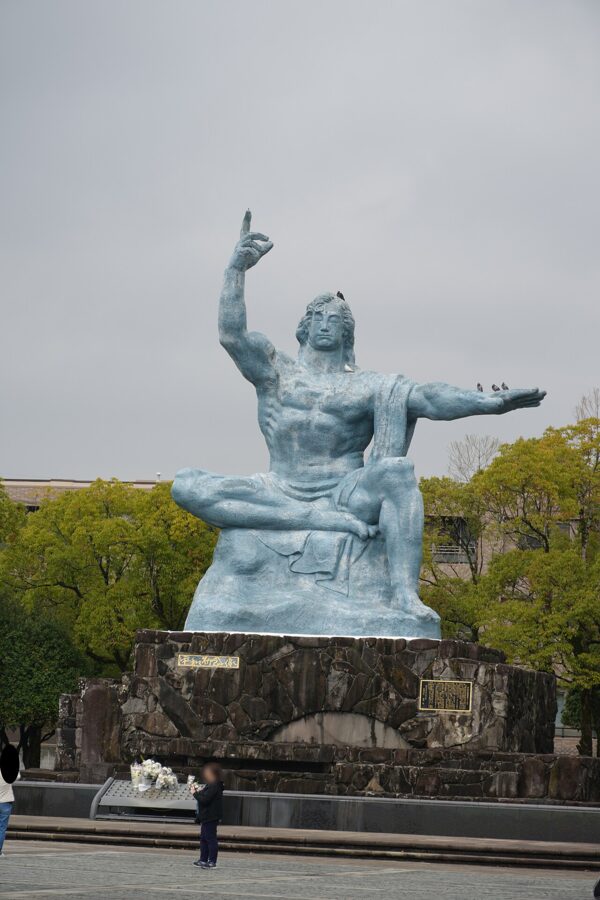

The park covers a low hill north of the hypocentre, where a prison stood in 1945. Steps lead past the Fountain of Peace, built for the victims who died begging for water, to a long plaza ending at the 9.7-metre Peace Statue by the Nagasaki-born sculptor Kitamura Seibo. Its raised right hand points at the threat from the sky, its outstretched left hand at peace, and its closed eyes pray for the dead.

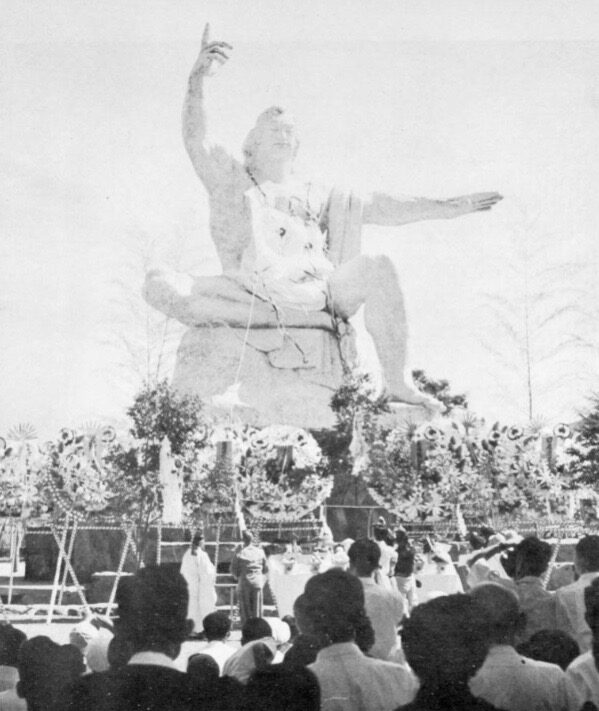
The park is always open and free. Every 9 August the city holds the Peace Memorial Ceremony here, and at 11:02 the bells ring for a minute’s silence. If you want the plaza quiet, come early on any other day.
The hypocentre
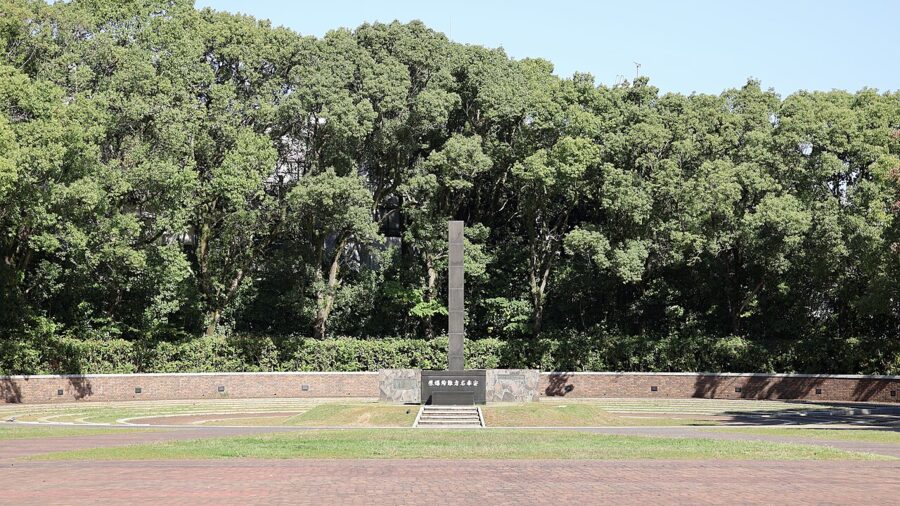
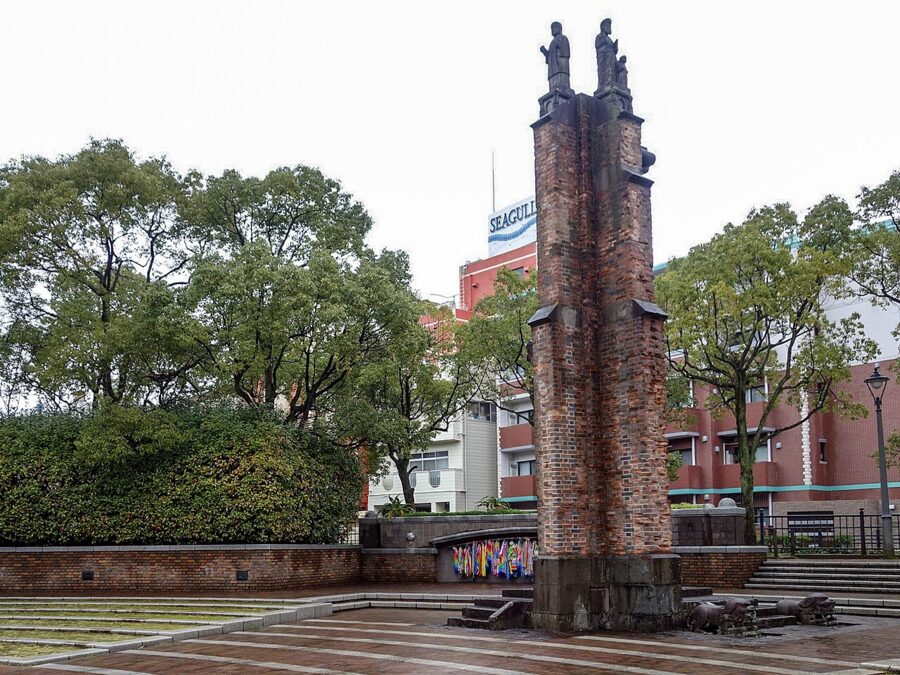
Across the road to the south, Hypocentre Park is a small lawn around a black stone column marking the point beneath the explosion. Beside it stands a piece of wall from the old Urakami Cathedral, and under glass a cut through the ground shows the layer of tiles and debris from 1945. Of everything in the valley, this is the place I would not hurry.


The Atomic Bomb Museum
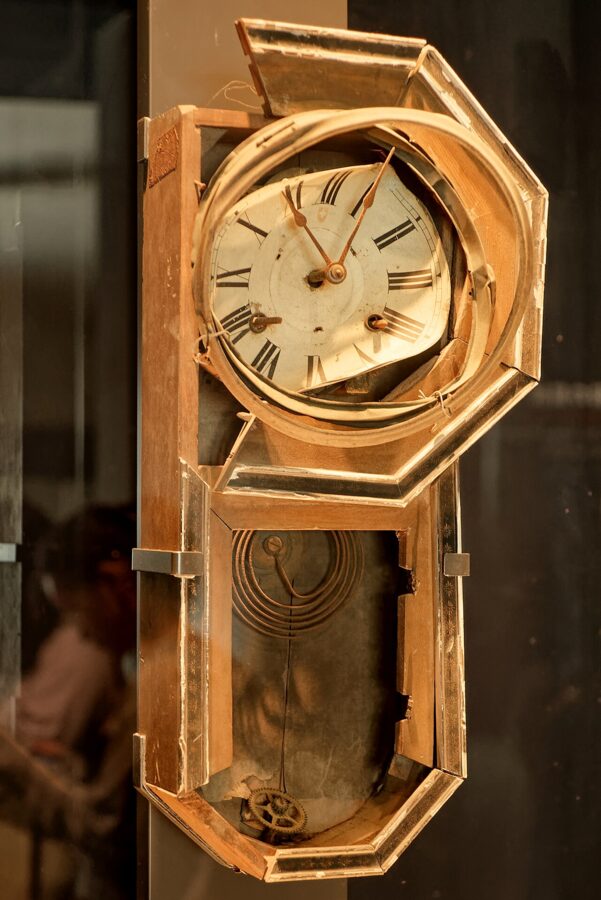
The museum on the slope above opened in 1996. It walks you through the city on the morning of 9 August, the damage and the human cost, then the history of nuclear weapons and the campaign against them. Stopped clocks, twisted girders and the belongings of people who never came home do more than any statistic; allow an hour and a half.

| Nagasaki Atomic Bomb Museum | As of November 2026 |
|---|---|
| September to April | 8:30 to 17:30 (last entry 17:00) |
| May to August | 8:30 to 18:30 (last entry 18:00) |
| 7 to 9 August | 8:30 to 20:00 (last entry 19:30) |
| Closed | 29 to 31 December |
| Age 15 and over | ¥200 (about £1 / $1.30) |
| High school age and under | Free with student ID |
Group rates went in April 2026, so every adult pays ¥200. The permanent exhibition is also being rebuilt in stages for the 80th year since the bombing. Corner C, on a world without nuclear weapons, is screened off from 25 November 2026 to March 2027, parts of corner B close from 14 January 2027 and the video room from January to March. If you can wait until spring 2027, you will see the new galleries whole.
Photography without flash is allowed. Volunteer peace guides explain the galleries free from 10:00 to 16:00; ask at the entrance. Next door, the national Peace Memorial Hall for the Atomic Bomb Victims is free and quieter, and both ask for the low voices and unhurried manners of any Japanese memorial or shrine.
Urakami Cathedral and the one-legged torii
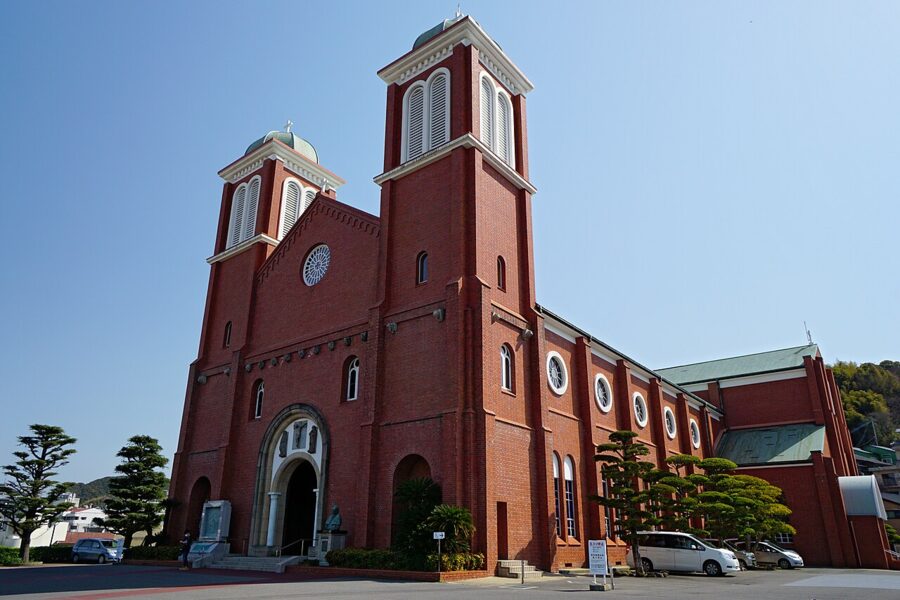
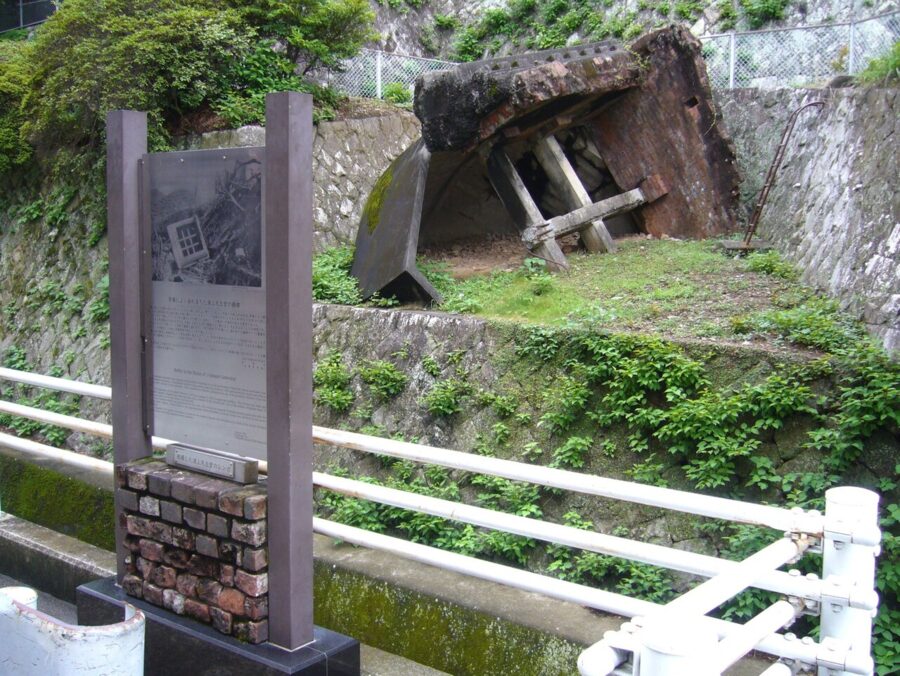
Urakami’s farmers kept their Christian faith in secret through two and a half centuries of prohibition, were exiled for it from 1867 to 1873, and then spent three decades building the largest church in East Asia. It stood about 500 metres from the hypocentre and was left as a few walls. The present red-brick cathedral, ten minutes’ walk east of the Peace Park, dates from 1959, and one of the old bell towers still lies where it fell in the stream below.


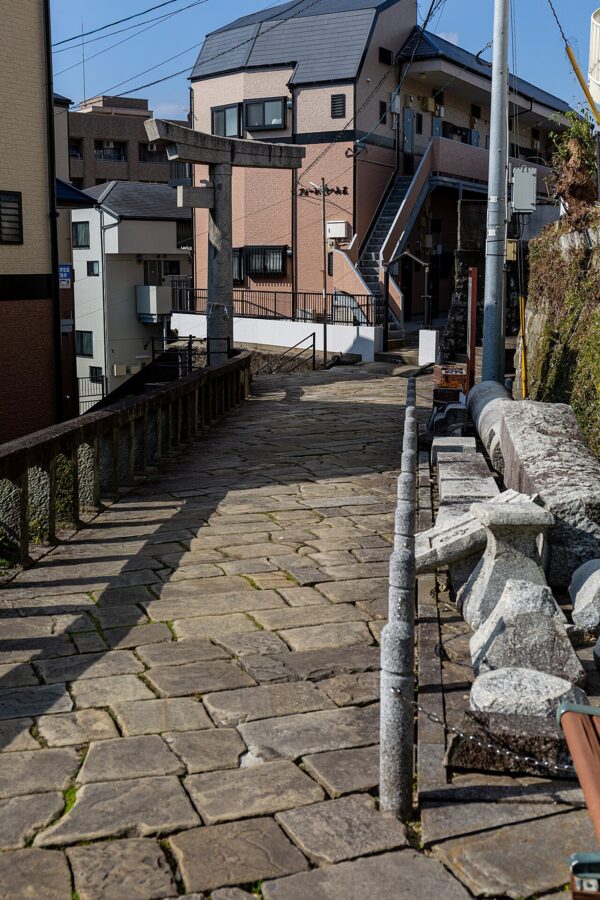
About 800 metres from the hypocentre, up the slope from the University Hospital stop, the second torii of Sanno Shrine lost half its frame to the blast and has stood on one pillar ever since. Two camphor trees stripped bare in 1945 grow on behind it.
Dejima, the fan in the river
For two centuries a fan-shaped island of about 1.5 hectares was Japan’s only door to Europe. Dejima (出島) was built in 1634 for the Portuguese merchants, and after their expulsion the Dutch East India Company was moved here from Hirado in 1641. Until 1859 the Dutch lived and traded on it under guard, and through its single bridge came sugar, clocks, books on anatomy and the learning the Japanese called rangaku, Dutch studies.
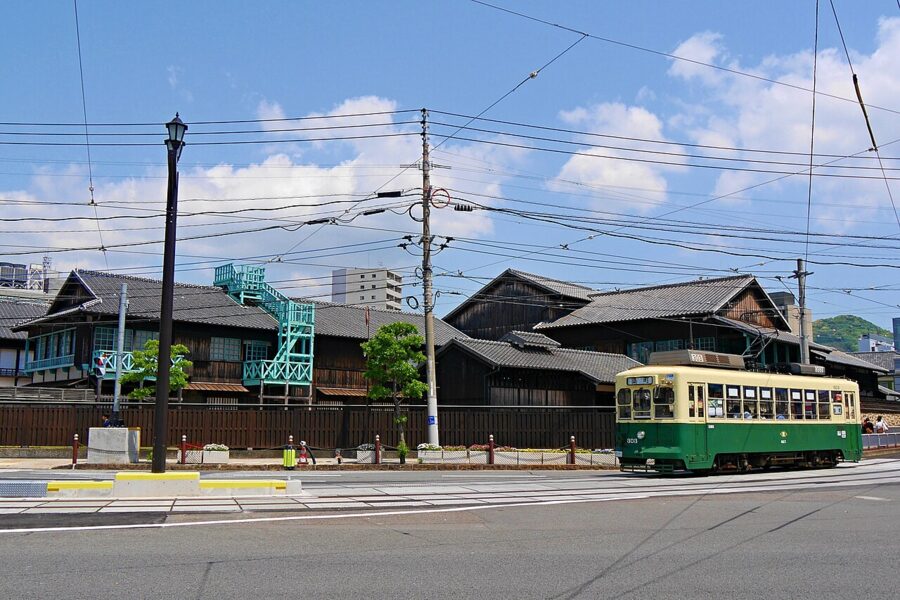
Land reclamation swallowed the island long ago, and the city is rebuilding it to its early 19th-century plan: warehouses, the chief factor’s residence, the officials’ rooms and the kitchens on their original plots. A replica bridge reopened the main gate in 2017. Allow an hour.
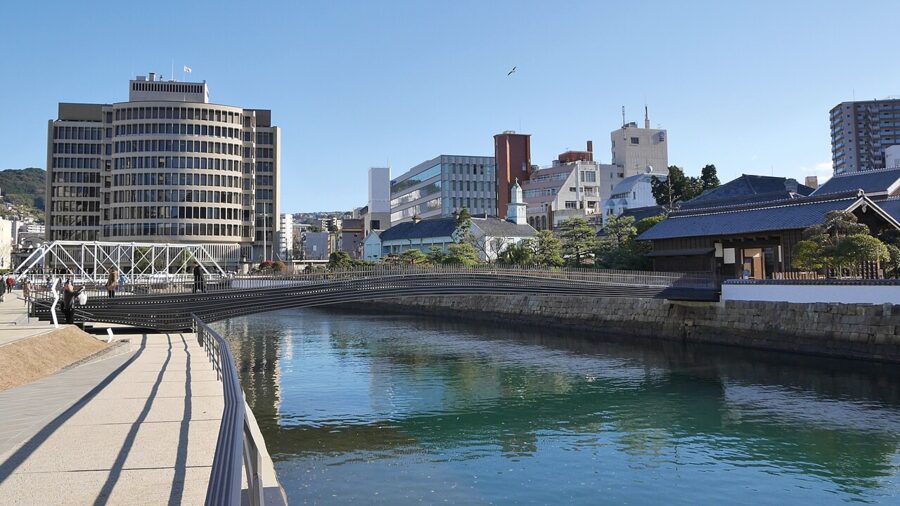
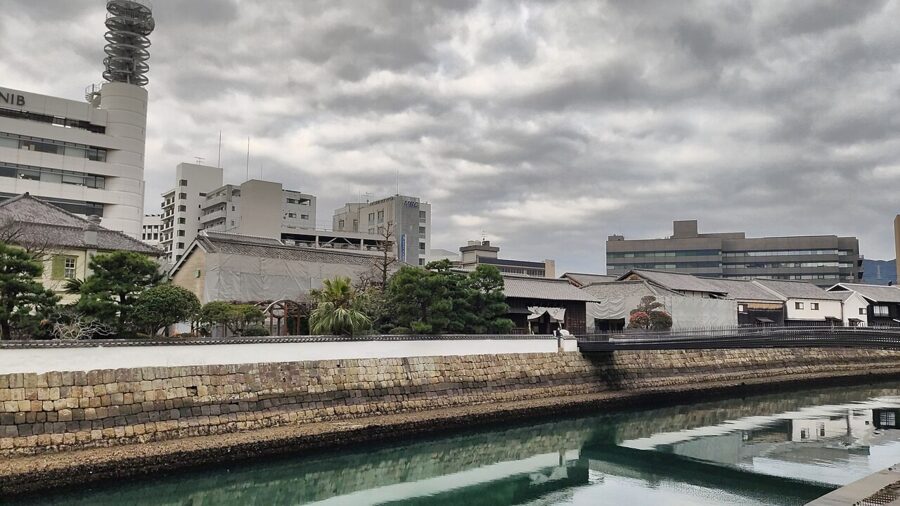
Dejima opens daily from 8:00 to 21:00 (last entry 20:40). Admission rose in April 2026 to ¥1,100 (about £5 / $7) for adults and ¥550 for school pupils, with no re-entry, and IC cards and bank cards are accepted. The Dejima stop on Route 1 is beside it.
Minamiyamate: Glover Garden and Oura Church
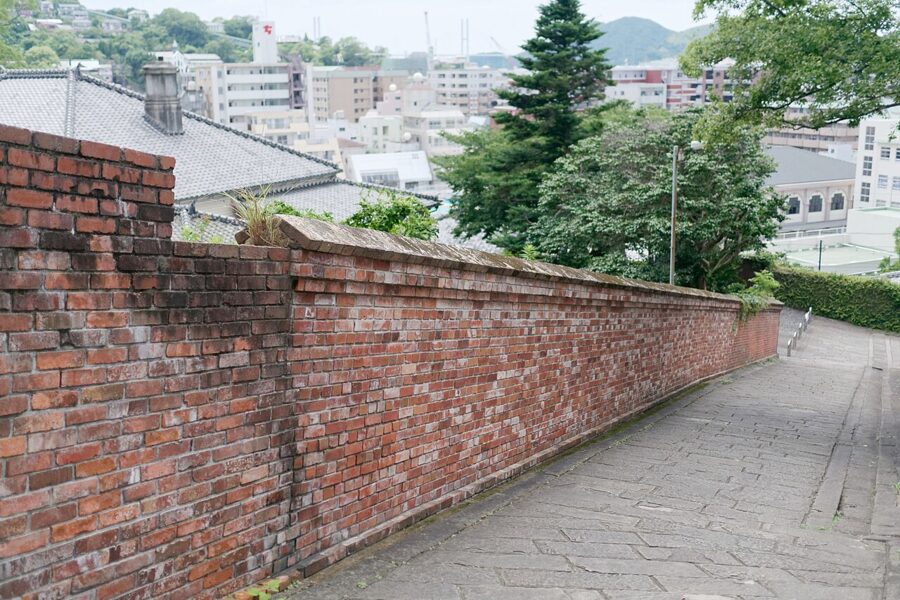
When the treaty ports opened in 1859, foreign merchants leased the hillsides south of the old town, and Minamiyamate and Higashiyamate filled with verandas, churches and consulates. The cobbled Dutch Slope (オランダ坂) climbs through Higashiyamate, and further south Glover Garden and Oura Church share one hill above the Oura Tenshudo and Ishibashi stops on Route 5.
Glover Garden
Thomas Blake Glover was 21 and fresh from Aberdeenshire when he arrived in 1859. He traded tea, then ships and guns, helped young samurai from Satsuma and Choshu slip away to study in Britain, and went on to build the Kosuge slip dock and develop the Takashima coal mine. His house of 1863 is the oldest surviving wooden Western-style building in Japan.
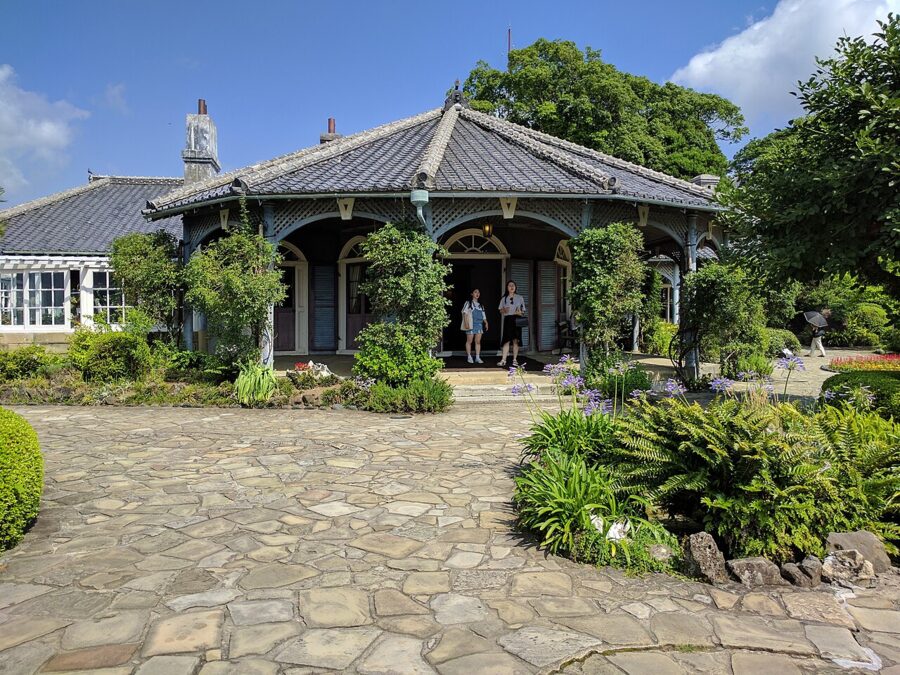

The garden gathers it with the houses of his neighbours Frederick Ringer and William Alt and several Meiji buildings moved from elsewhere, on terraces served by moving walkways. Most people enter at the main gate near Oura Church and climb. The upper gate, reached from Ishibashi by the lift called the Glover Sky Road, lets you walk downhill instead, but it takes cash only.
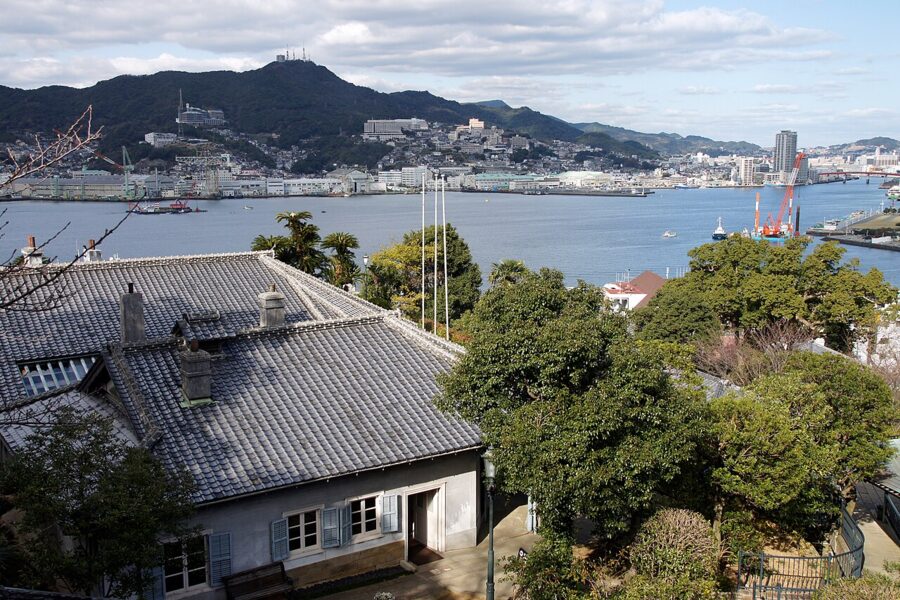

A city ordinance raised the adult ticket in April 2026 to ¥1,300 (about £6 / $8), and ¥650 for school pupils. The garden normally opens 8:00 to 18:00, but as of November 2026 it stays open until 20:00 through 31 December, returning to 18:00 from January to March. Last entry is 20 minutes before closing.
Oura Church
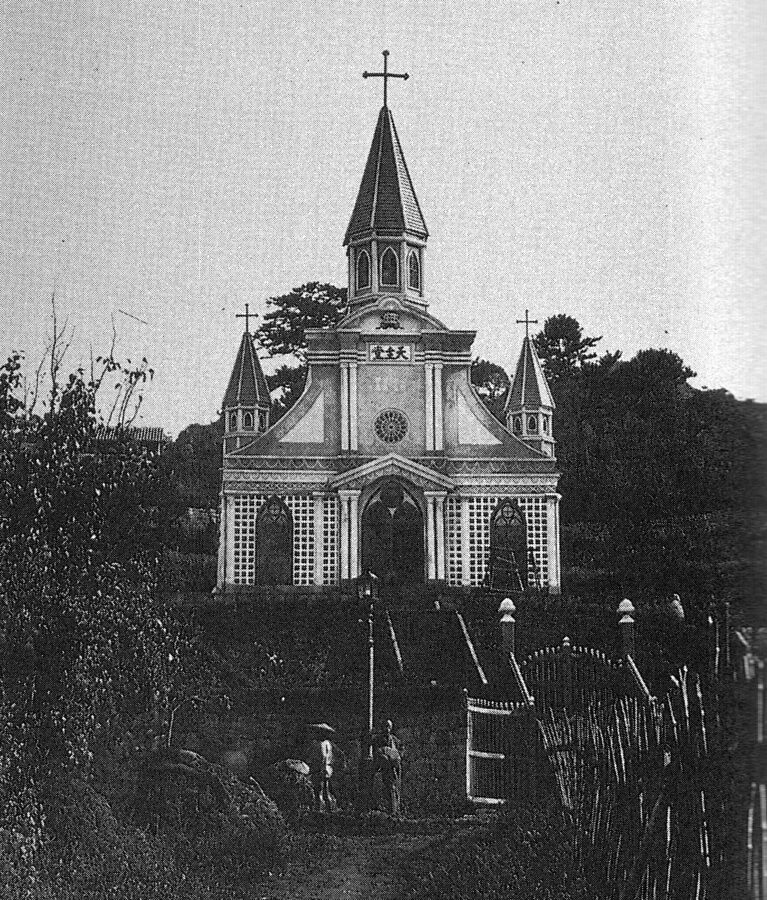
French missionaries finished Oura Church (大浦天主堂) at the end of 1864, for the foreign residents and in memory of the twenty-six Christians crucified on Nishizaka hill in 1597. On 17 March 1865 a group of Urakami villagers came in and told Father Bernard Petitjean that they shared his faith. They were Hidden Christians, whose families had kept their religion without priests since the early 1600s, and the church still marks the day as the Discovery of the Faithful.
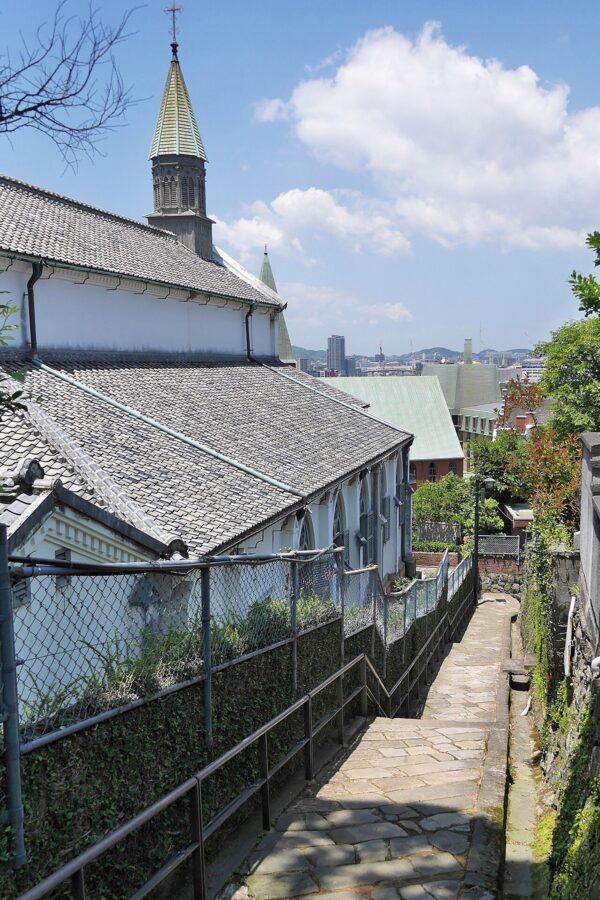
Enlarged to its present Gothic form by 1879, it is the oldest church standing in Japan and in 1933 became the first Western-style building named a National Treasure. Inside stands the statue of the Virgin the villagers asked to see in 1865, and photography inside is not allowed. Admission is ¥1,000 (about £5 / $6) for adults, ¥400 for secondary pupils and ¥300 for primary pupils, including the Christian museum next door.
As of November 2026 the church opens 8:30 to 18:00 from March to October and 8:30 to 17:30 from November to February, with last entry half an hour before closing. It can close for services.
Two World Heritage listings, one hill
The two sites belong to different UNESCO listings. The Former Glover House is part of the Sites of Japan’s Meiji Industrial Revolution, inscribed in 2015 with the coal mines of Hashima and Takashima, the Kosuge slip dock and four parts of the Mitsubishi shipyard, including the Giant Cantilever Crane of 1909. Oura Church is part of the Hidden Christian Sites in the Nagasaki Region, inscribed in 2018: twelve villages, churches and a castle ruin that trace how the faith survived underground.
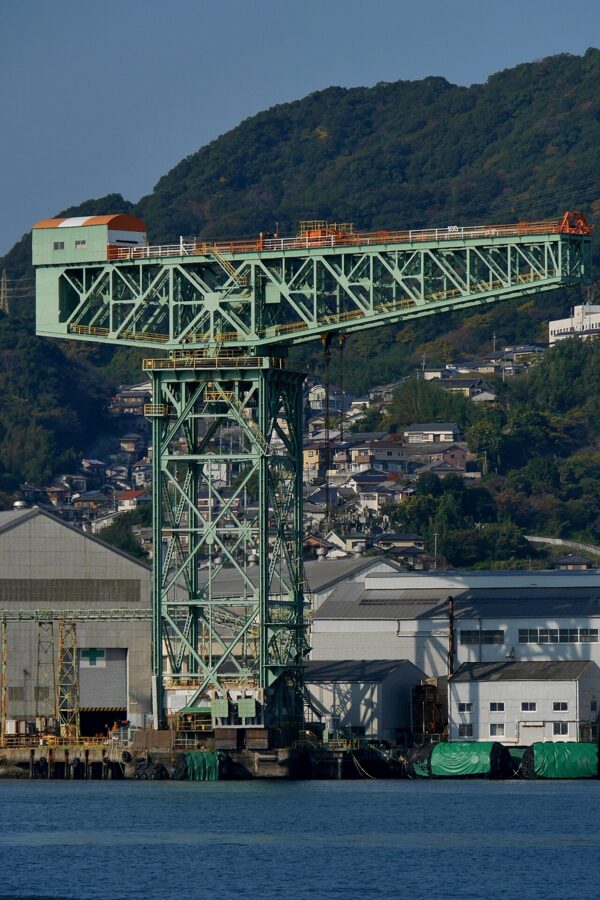
The shipyard is still working and mostly closed to the public, so Glover Garden’s terraces are the place to see it. For the Hidden Christian story beyond the city, the coastal villages of Sotome, also in the listing, are about an hour north by bus.
Chinatown, Megane-bashi and Teramachi
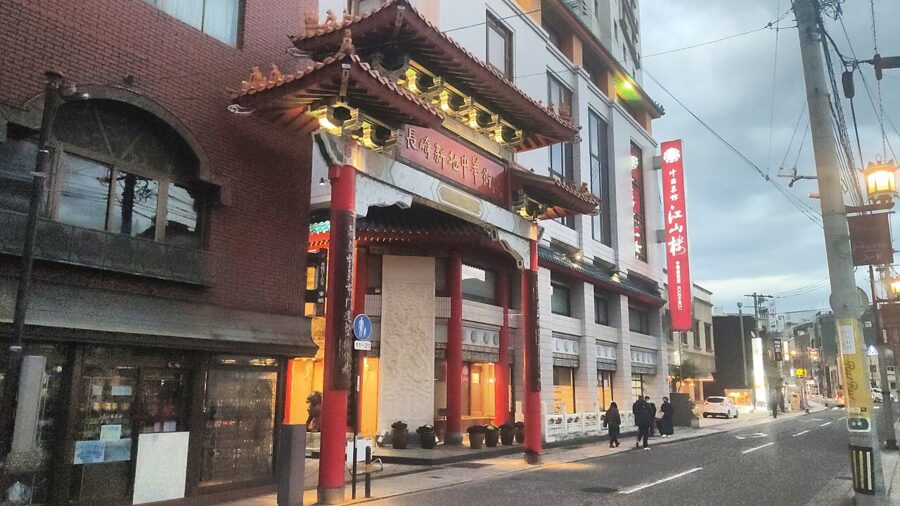
Chinese merchants were confined from 1689 in a walled quarter on the hill behind today’s Chinatown, and Shinchi Chinatown (新地中華街) grew from the warehouses built below it on reclaimed land. It is one of Japan’s three Chinatowns, with those of Yokohama and Kobe, and the smallest: two crossing streets with a gate at each end, packed with restaurants and steamed-bun counters. The Shinchi Chinatown stop on Routes 1 and 5 is at its south-western corner.
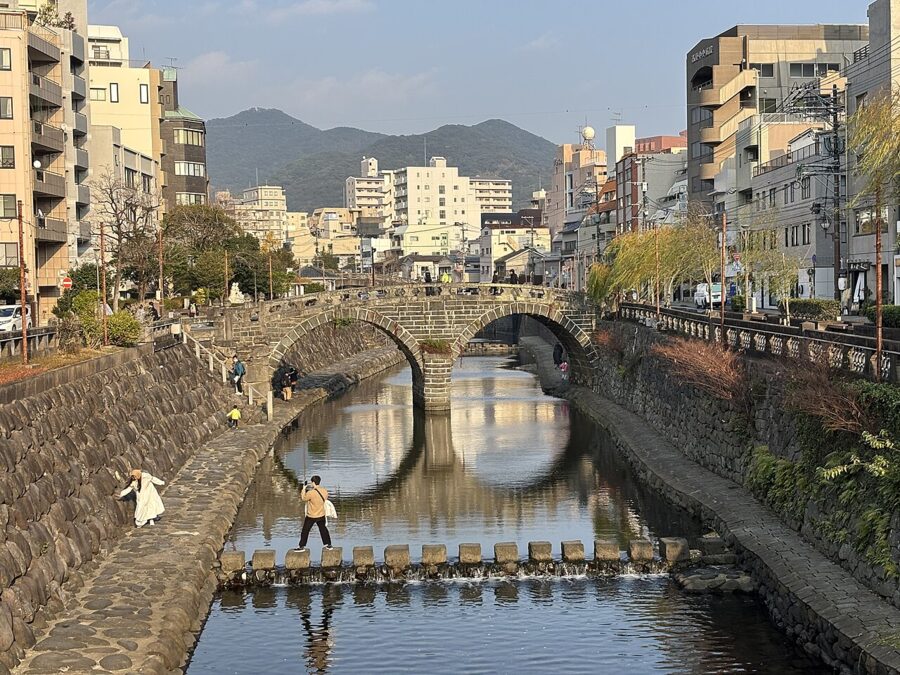
Ten minutes north-east, Megane-bashi (眼鏡橋) crosses the Nakashima River on two stone arches whose reflections make a pair of spectacles. The Chinese monk Mokusu Nyojo built it in 1634, and it is an Important Cultural Property. The flood of July 1982 tore part of it away, and it was restored with the recovered stones. Look for the heart-shaped stone set into the embankment downstream.
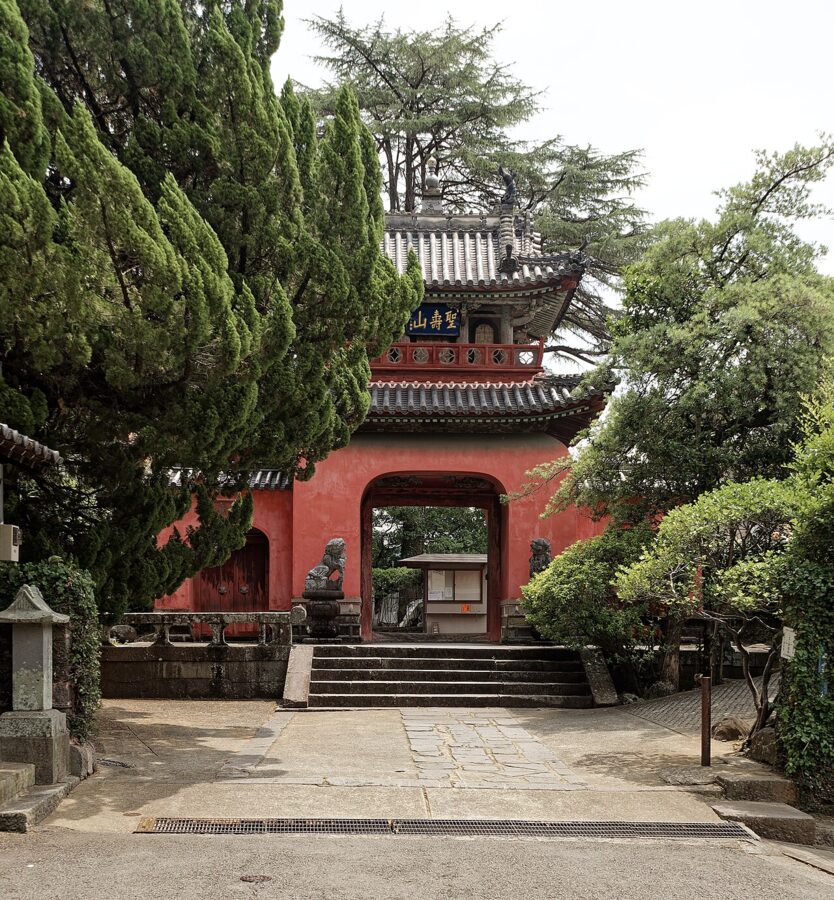
At the foot of the eastern hills runs Teramachi, the street of temples, and its two Chinese temples are the reason to walk it. Kofukuji, founded in the 1620s, is the oldest of the city’s Chinese temples. Sofukuji, at the end of Route 1, was founded in 1629 by merchants from Fujian, and its main hall and inner gate, both in southern Chinese style, are National Treasures.
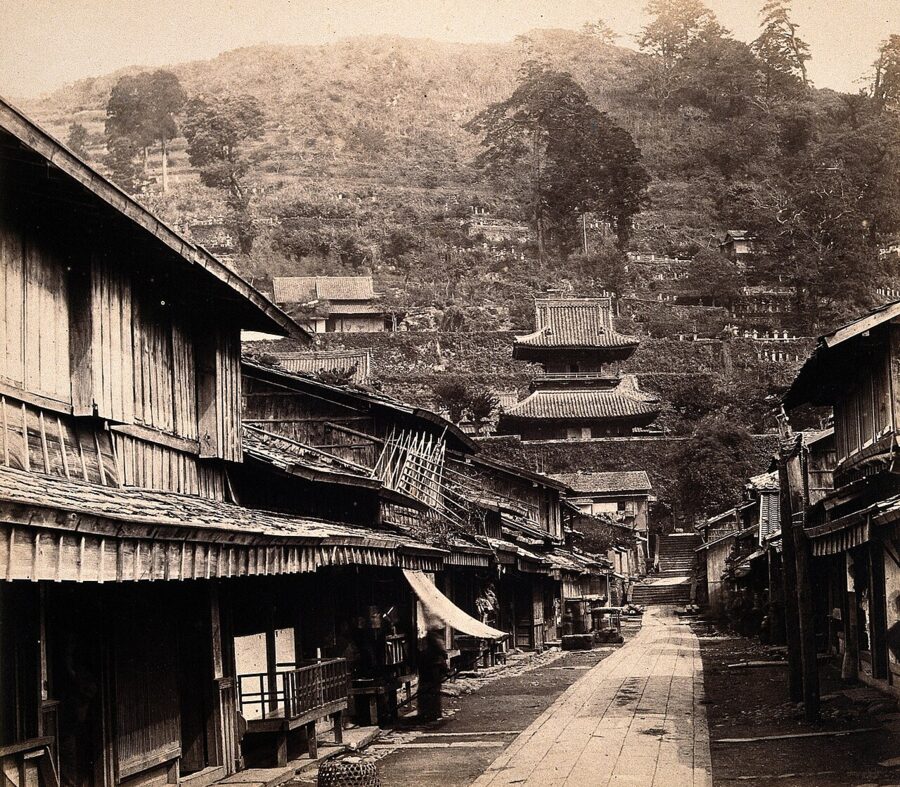


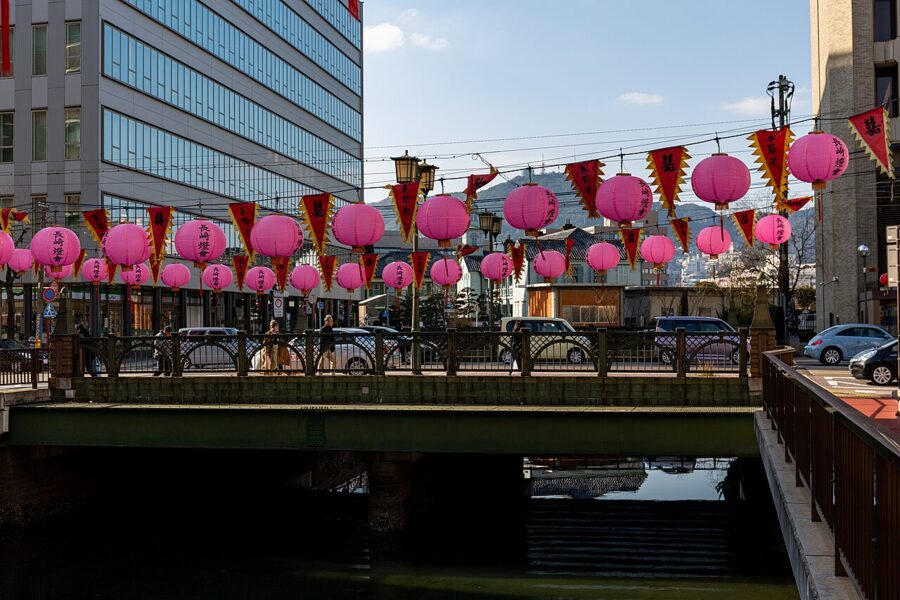
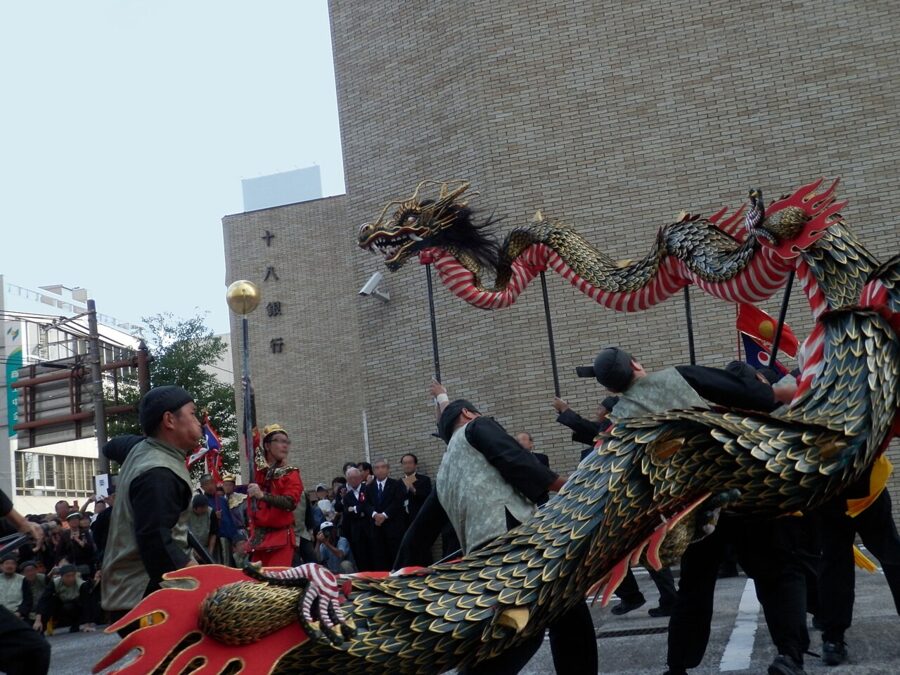
The Nagasaki Lantern Festival, which grew out of Chinatown’s New Year, hangs about 15,000 lanterns over these streets and the river for roughly two weeks between late January and late February, on dates that follow the lunar calendar. Nagasaki Kunchi, the festival of Suwa Shrine, fills the town every year from 7 to 9 October with dances, a Chinese dragon and ship floats hauled through the streets.

Mount Inasa after dark
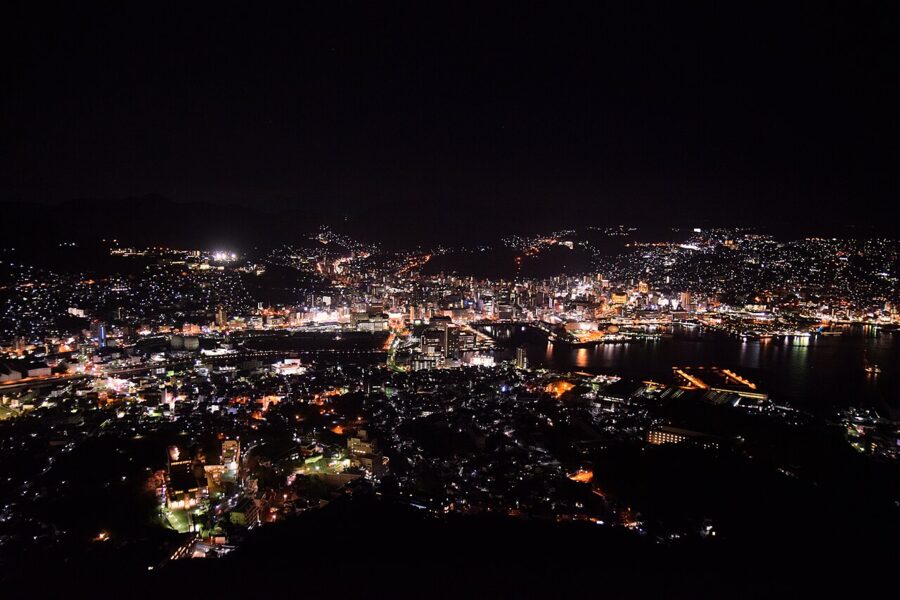
Mount Inasa rises 333 metres on the west shore, directly opposite the city. From the summit observatory you see the whole bowl at once: the harbour running inland, the Urakami valley to the left, the old port and the settlement hills to the right. After dark, with every slope lit to the ridgelines, it ranks with Hakodate and Kobe among Japan’s three great night views.
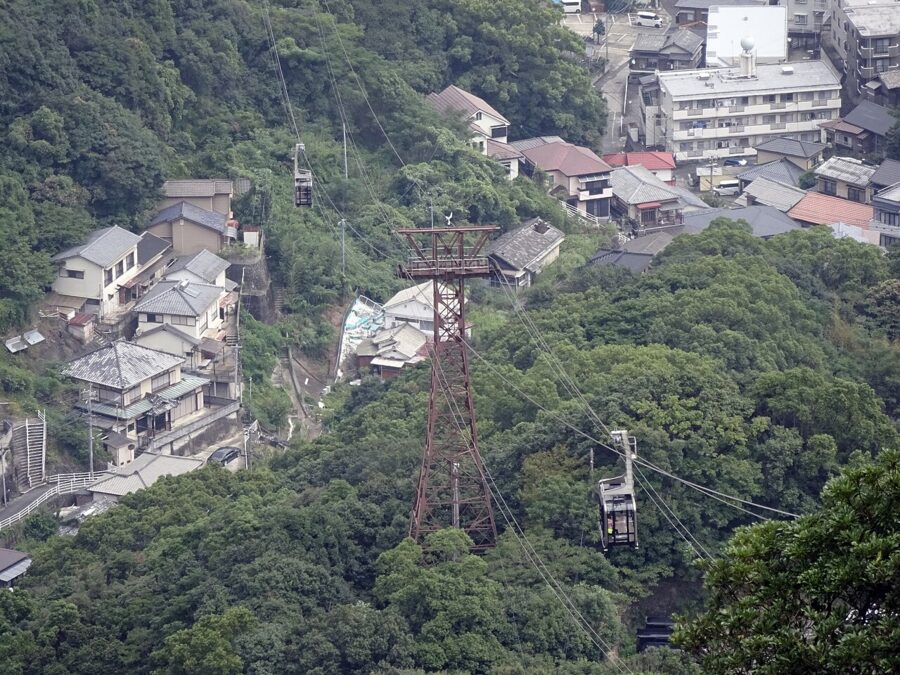

The Nagasaki Ropeway climbs from Fuchi-jinja station in about five minutes, and the observatory is three minutes’ walk from the top. As of April 2026 a return costs ¥1,900 (about £9 / $12) and a single ¥1,040. Nagasaki Bus No. 3 or 4 runs from Nagasaki-ekimae to the Ropeway-mae stop (¥190), and a free evening shuttle runs from the city between 19:00 and 22:00 if you book it in advance.
The slope car from the halfway car park is out of service for maintenance, with no reopening date. I would go up half an hour before sunset and stay until the city is fully lit. Take a jacket, as the wind at the top is cold even in summer.

Gunkanjima: the boat, the weather and the landing
Hashima (端島) is a reef about 19 kilometres south-west of the harbour that Mitsubishi built up with seawalls and stacked with mine shafts, apartment blocks, a school and a hospital. Around 1960 more than 5,000 people lived on an island about 480 metres long, one of the highest population densities ever recorded. Its outline from the sea earned it the name Gunkanjima (軍艦島), Battleship Island, and it has been empty since the mine closed in 1974.
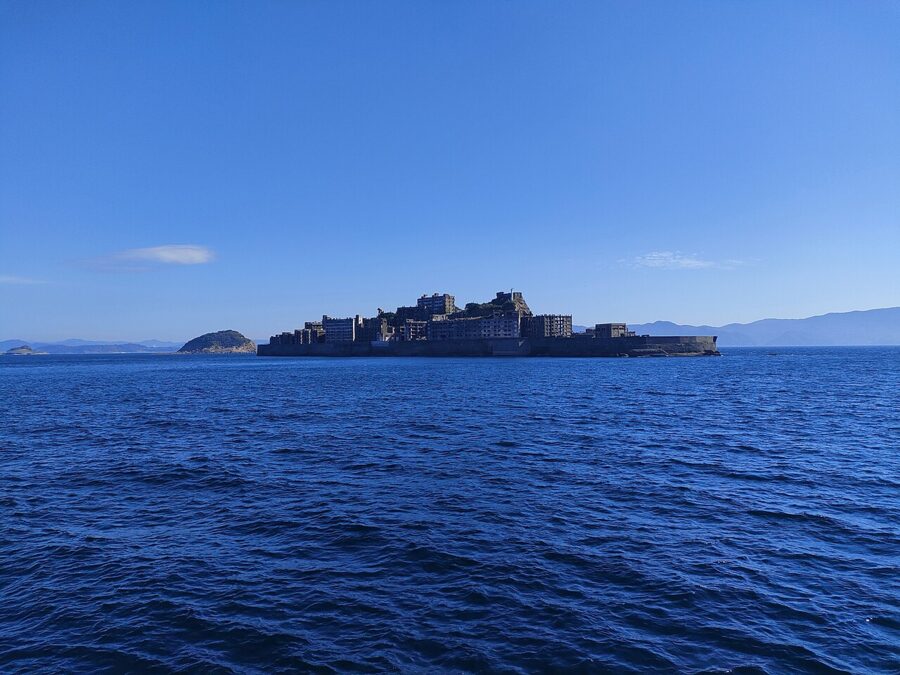

The island is part of the Meiji Industrial Revolution listing, and that listing has a harder side. At the 2015 inscription Japan acknowledged that in the 1940s many Koreans and others were brought to some of these sites against their will and forced to work under harsh conditions, Hashima among them. Guides on the boats vary in how much of this they tell.
You can land only with a licensed tour company, from piers near Ohato and Tokiwa below the city centre. Tours last about two and a half to three hours, and on the island you walk a fixed route along the southern side with three viewing areas. As of November 2026 a standard seat costs roughly ¥4,300 to ¥6,000 (about £21 to £29 / $27 to $38), plus the city’s landing fee, which doubled in April 2026 to ¥650 (about £3 / $4) for adults.
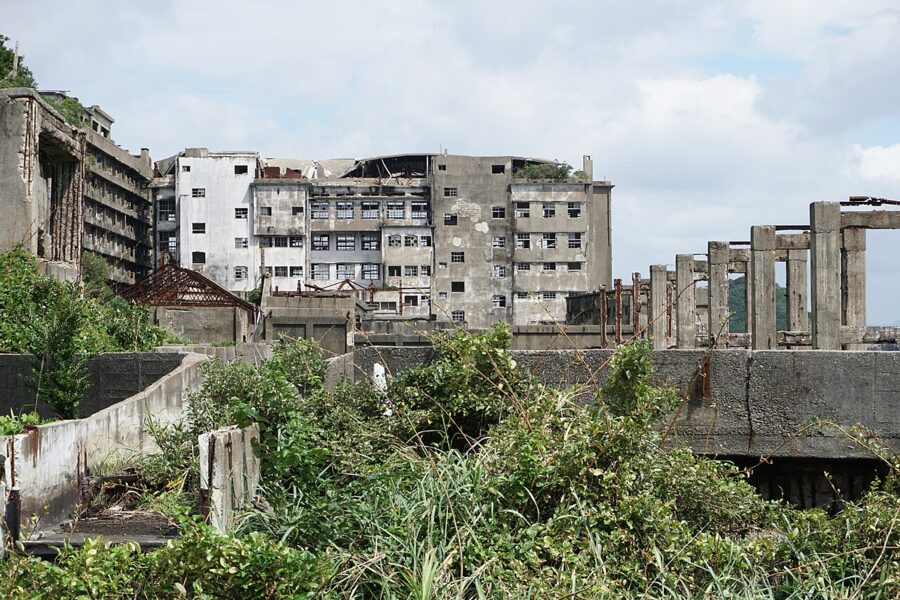

The captain decides on the day whether to land. The rules forbid it when the wind exceeds 5 metres per second, waves exceed half a metre or visibility falls below 500 metres. One operator reckons conditions allow a landing on only about 100 days a year; another, counting only the days it sailed, landed on 94 per cent of trips up to 2020.
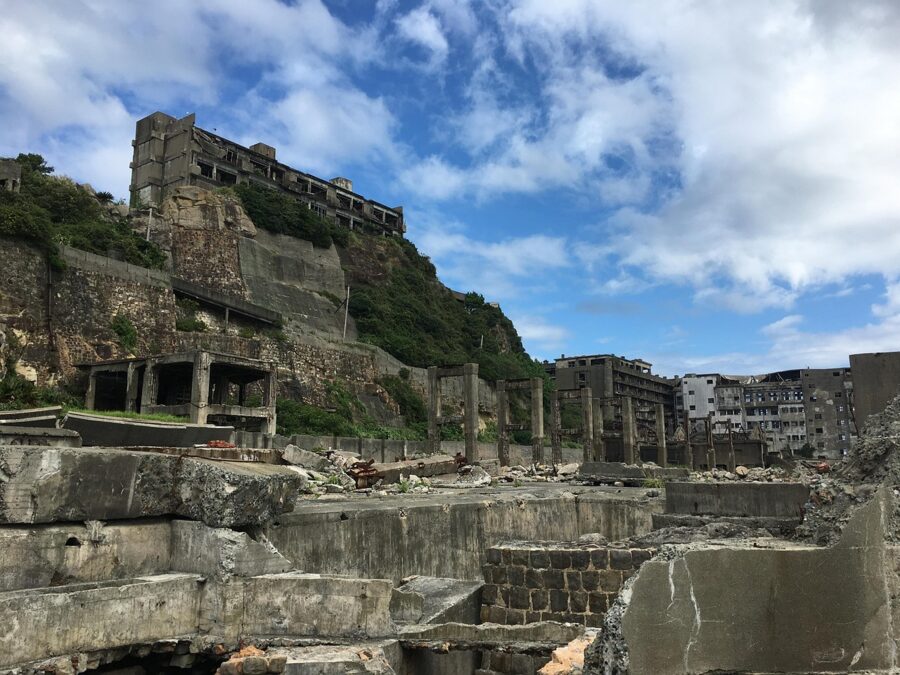
If the boat cannot land it circles the island and the companies refund the landing fee and part of the fare. Some do not take children under three. Book Gunkanjima for your first full morning and keep a later one free, because the boats are the one part of a Nagasaki trip the weather controls.
What Nagasaki eats
Three centuries as the open port left Nagasaki with a table that borrows from China, Portugal and the Netherlands. As a banquet it is shippoku, shared from a round table. For a visitor it comes down to four dishes and a cake.
Champon and sara udon
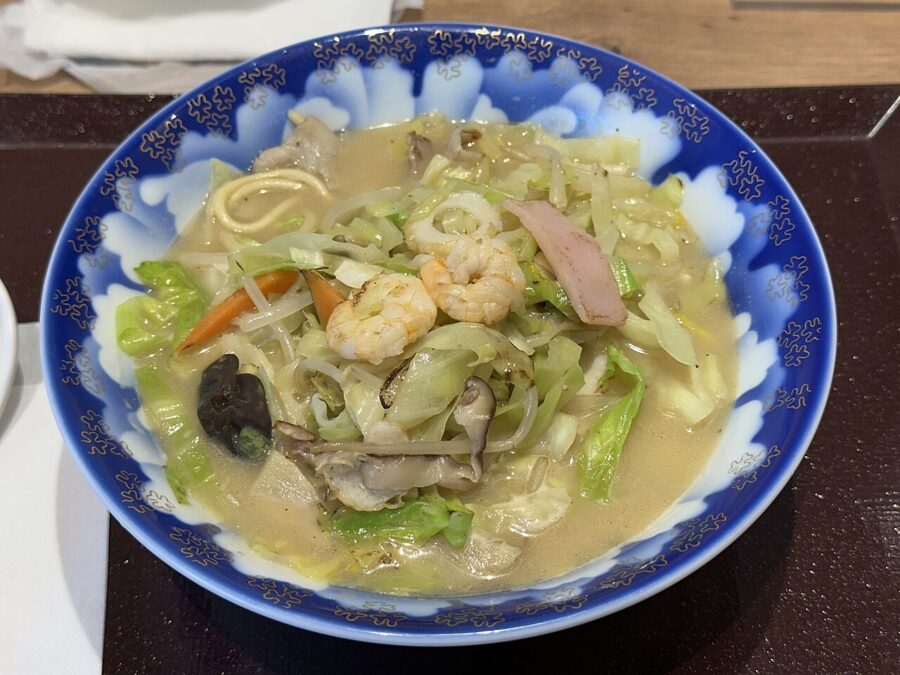
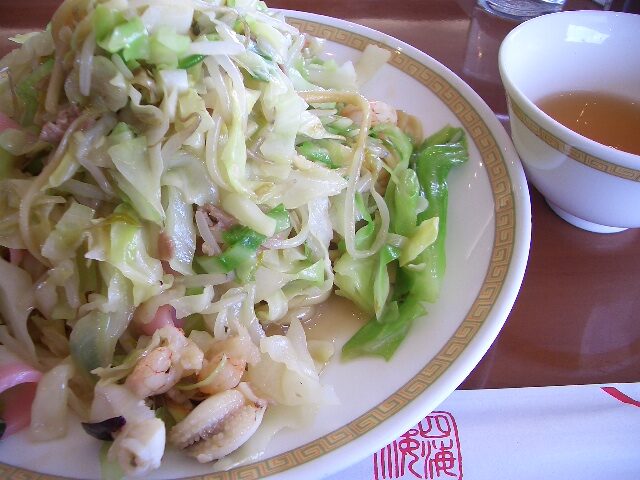
Champon is thick, springy noodles cooked in a milky pork and chicken broth with cabbage, bean sprouts, pork, squid and prawns. Chen Pingshun, who opened the restaurant Shikairo in 1899, is credited with inventing it as a cheap, filling meal for Chinese students, and Shikairo still serves it near the Oura Tenshudo stop. Sara udon is the same topping as a thick sauce over noodles, usually thin and crisp-fried, and locals shake Worcestershire sauce over it.


Castella
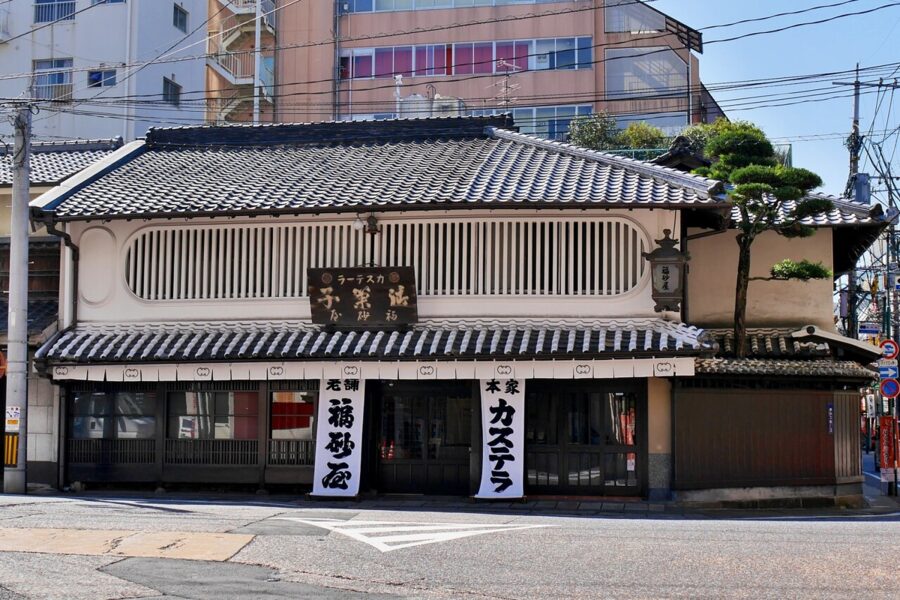
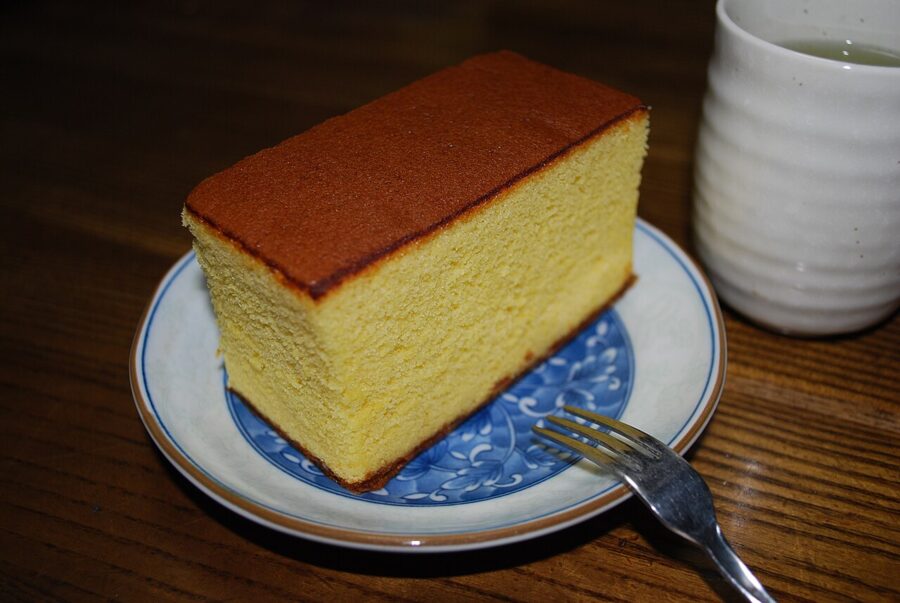
Castella (kasutera) is a dense, honeyed sponge baked in a wooden frame, descended from a cake the Portuguese brought in the 16th century. Coarse sugar crystals settle at the bottom and the brown top is the best part. Fukusaya, which dates its shop to 1624, is the best-known maker, and its old main shop near Shianbashi is worth seeing even if you buy your box at the station.

Toruko rice and kakuni manju
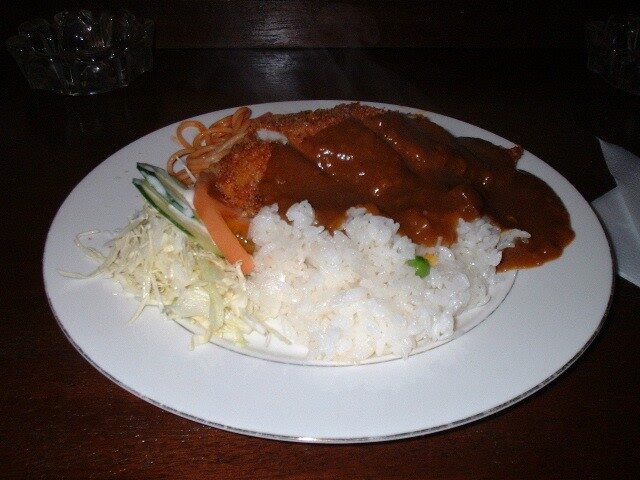
Toruko rice, “Turkish rice”, is the city’s cafe lunch: a breaded pork cutlet in sauce, pilaf and spaghetti on one plate, and nobody agrees what makes it Turkish. Kakuni manju, braised pork belly in a soft steamed bun, is the snack to carry around Chinatown.
Getting there and how long to stay
Since September 2022 the Nishi Kyushu Shinkansen has run the last stretch to Nagasaki from Takeo-Onsen. From Hakata in Fukuoka, the Relay Kamome express runs to Takeo-Onsen, where the Kamome shinkansen waits across the platform, and the fastest trip takes 1 hour 20 minutes. There are 22 trains a day each way; JR Kyushu’s online fares start at ¥3,400 (about £16 / $21), and the Japan Rail Pass covers both trains.
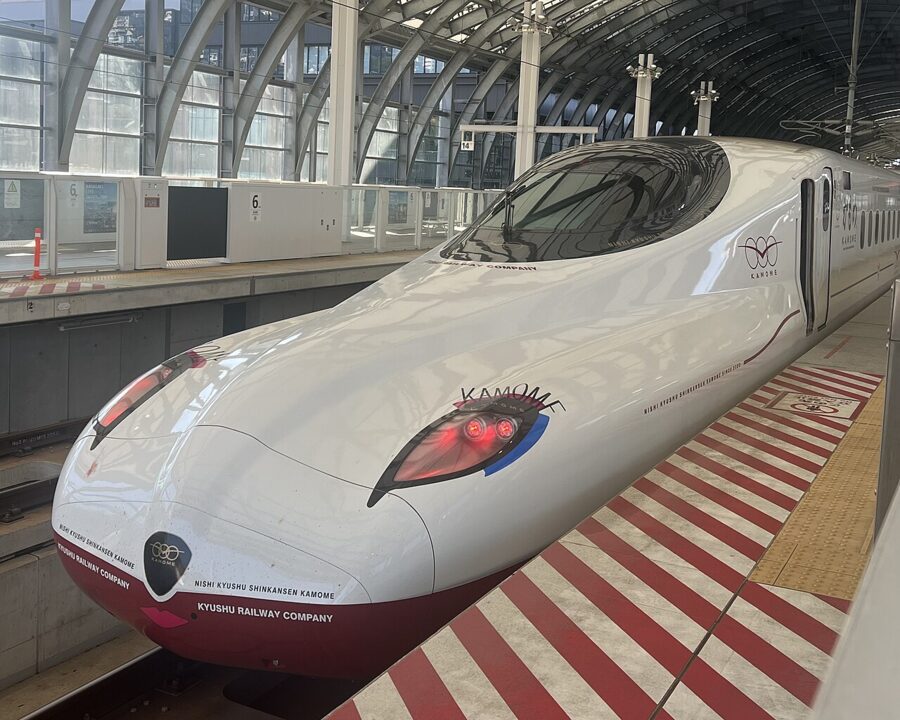

From Hiroshima, take the Sanyo Shinkansen to Hakata and change; the whole trip takes under three hours, and pairing the two cities is the natural way to see both memorials. From Tokyo the train takes most of a day, so most people take one of the domestic flights, about two hours from Haneda. Nagasaki Airport sits on an island in Omura Bay, about 40 minutes from the city by airport bus.
For a first visit I would plan it like this:
- Day one. Gunkanjima in the morning, lunch in Chinatown, Megane-bashi and Teramachi in the afternoon, Mount Inasa at sunset.
- Day two. The Peace Park, hypocentre and museum first thing, Urakami Cathedral and the one-legged torii, then Dejima after lunch and Oura Church and Glover Garden late in the day.
- Day three, if you have it. The Gunkanjima reserve, or a day out to Sotome, the Shimabara Peninsula or Sasebo.
One day covers the Urakami memorials and the old port but leaves out the island or the night view. Stay near the station for early starts, or between Dejima and Shianbashi for the evenings; business hotels cluster in both.
On the last evening, go back up the hill rather than out. From Glover Garden or the lanes of Higashiyamate the harbour that made Nagasaki is still in front of you, the cranes are still working across the water, and the lights come on up the valleys the trams follow.