
Kagawa Prefecture (香川県) is the smallest of Japan’s 47 prefectures, at about 1,877 square kilometres, and it is the one most often squeezed into a single day. In that small space sit one of the finest feudal gardens in the country, a mountain shrine reached by 785 stone steps, a scatter of farming and fishing islands where contemporary art moved in beside the rice terraces, and a noodle culture serious enough that the prefecture sells itself as Udon Prefecture. All of it lies within an hour or so of Takamatsu, the capital and the ferry port.
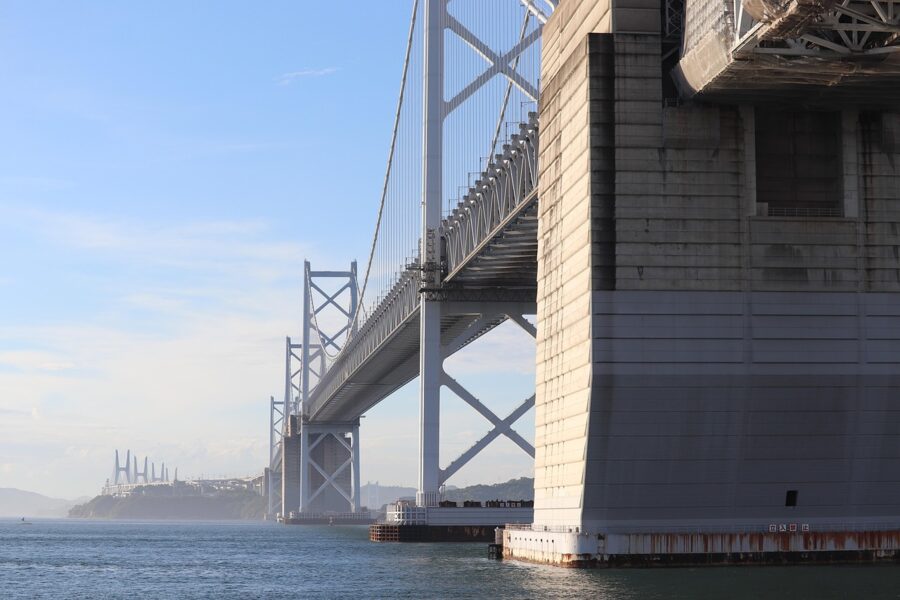
Kagawa is the north-east corner of Shikoku, facing Honshu across the Seto Inland Sea. Most people arrive over the Great Seto Bridge from Okayama, and the train window on that crossing is the best introduction: a calm sea crowded with islands and oyster rafts, then a green plain with odd little hills standing out of it.

Contents
- The shape of Kagawa: a dry plain, a thousand ponds and a sea of islands
- Takamatsu: the port, Ritsurin Garden and the sea castle
- Kotohira: Konpira-san's 785 steps and the old kabuki theatre
- The art islands: Naoshima, Teshima, Ogijima and Megijima
- Shodoshima: olives, a sandbar and a mountain gorge
- Sanuki udon: what makes it different and how to eat it
- Zentsuji and the pilgrim temples of Kagawa
- Getting to Kagawa and getting around
- How many days to give Kagawa
The shape of Kagawa: a dry plain, a thousand ponds and a sea of islands
On a map of Japan’s regions, Kagawa is a wedge between the Sanuki Mountains and the sea. The mountains run along the southern border with Tokushima and top out at Mount Ryuo, a little over 1,000 metres. North of them the Sanuki plain slopes gently to the coast, and almost everyone lives on it, fewer than a million people in all.
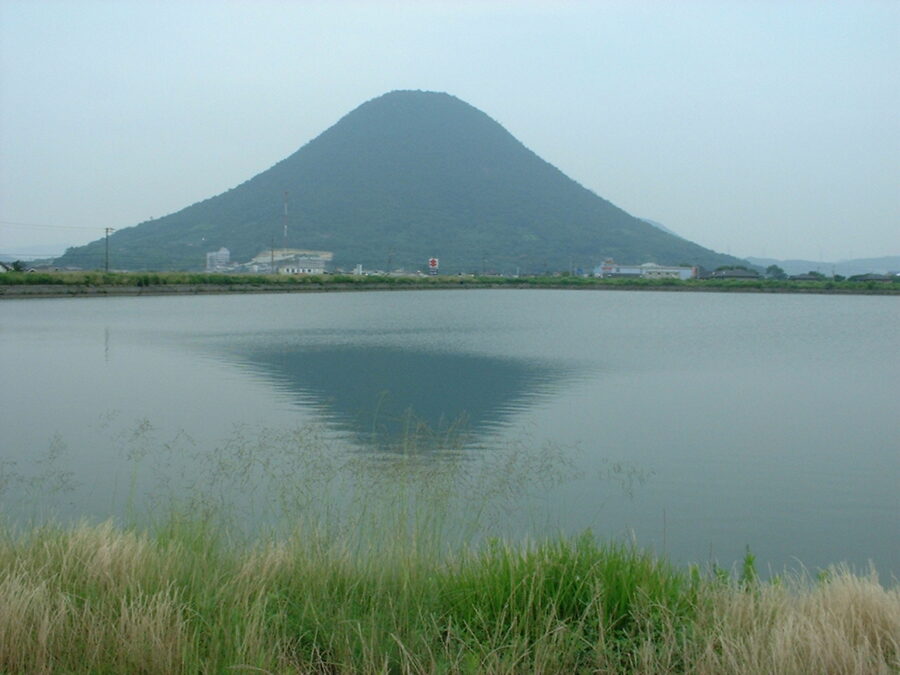
The plain is not quite flat. Small volcanic hills stand up out of the rice fields, some as perfect cones, some cut off level at the top where a hard cap of lava has protected them from erosion. The most famous cone is Mount Iino, called Sanuki Fuji, between Marugame and Sakaide; the most famous table mountain is Yashima, on the coast just east of Takamatsu.

This is one of the driest corners of Japan. The mountains of Shikoku catch the Pacific rain to the south and the hills of Chugoku catch the winter weather to the north, and Kagawa sits in the shelter between them with short rivers that run low in summer. The farmers’ answer, over more than a thousand years, was to dig. Thousands of irrigation ponds dot the plain, more for its size than in any other prefecture, and the largest, Manno-ike, is said to have been rebuilt in 821 under the direction of Kukai, the monk who was born not far away.
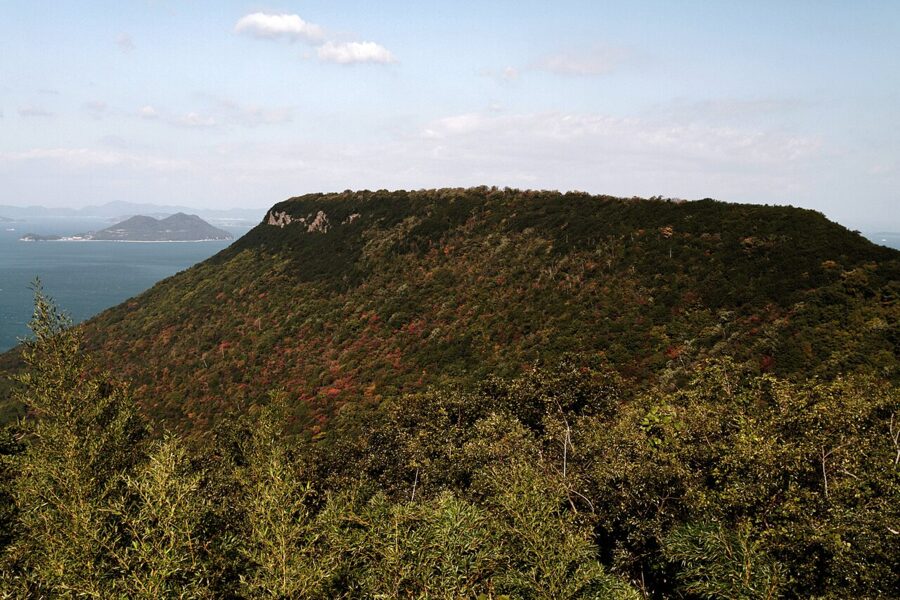

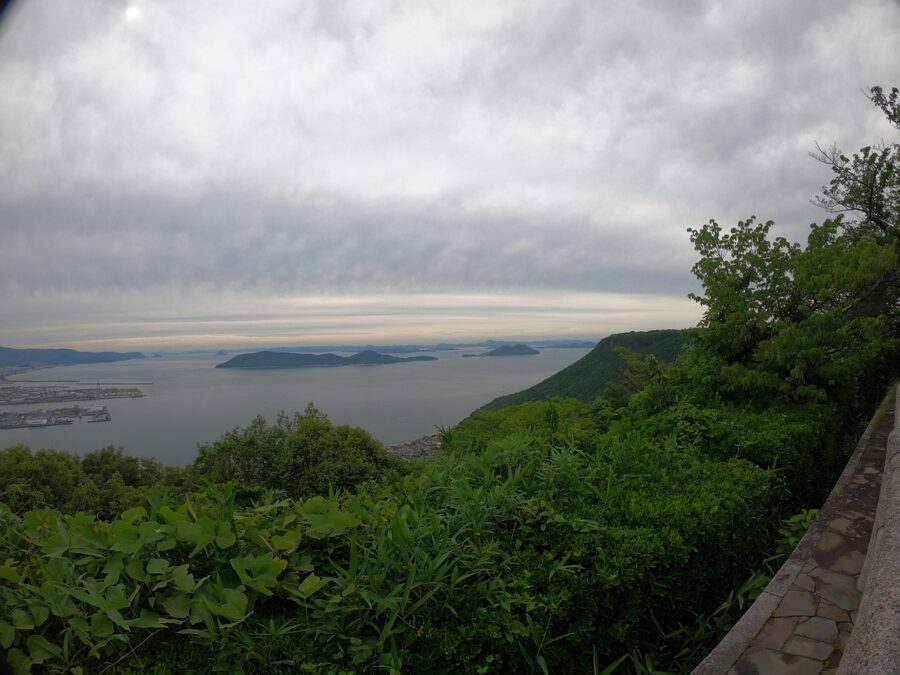
Offshore lie more than a hundred islands, from Shodoshima, the largest, to rocks with a single shrine on them. The waters between Kagawa and Okayama became part of the Setonaikai National Park in 1934, one of Japan’s first three national parks. Snow is rare on the plain, and on still summer days the sea looks like a sheet of glass.
Takamatsu: the port, Ritsurin Garden and the sea castle
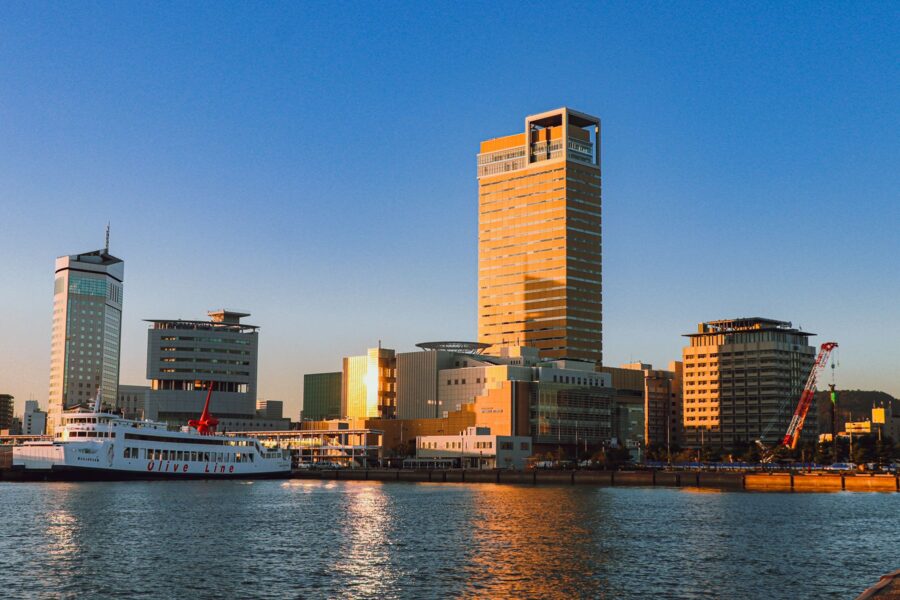
Takamatsu (高松) grew up as a castle town on the shore and is still built around its harbour. JR Takamatsu Station, the Kotoden terminus, the bus station and the ferry piers for the islands all sit within a five-minute walk of each other at Sunport, which makes the city an easy base: you can be on a boat to Naoshima ten minutes after stepping off the train.
Ritsurin Garden (栗林公園)
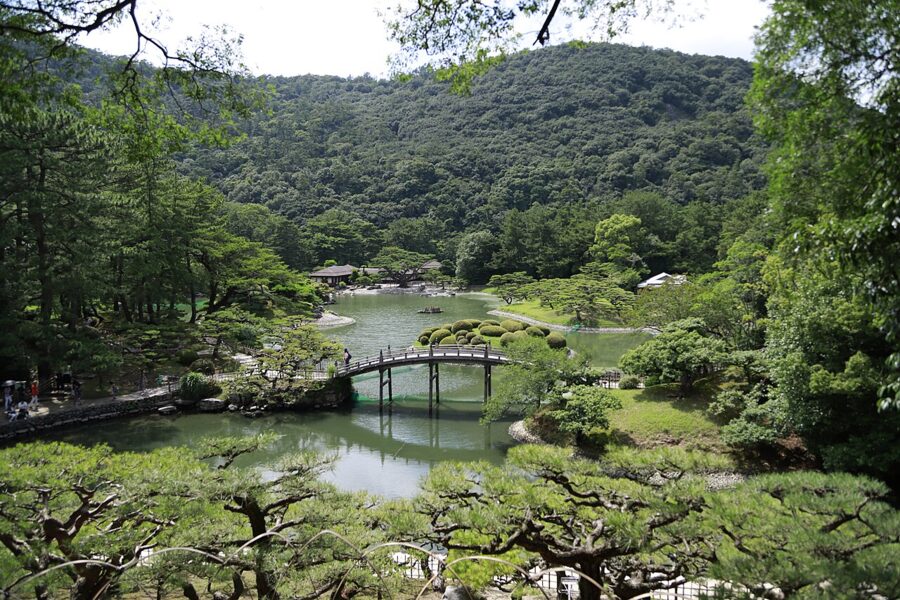
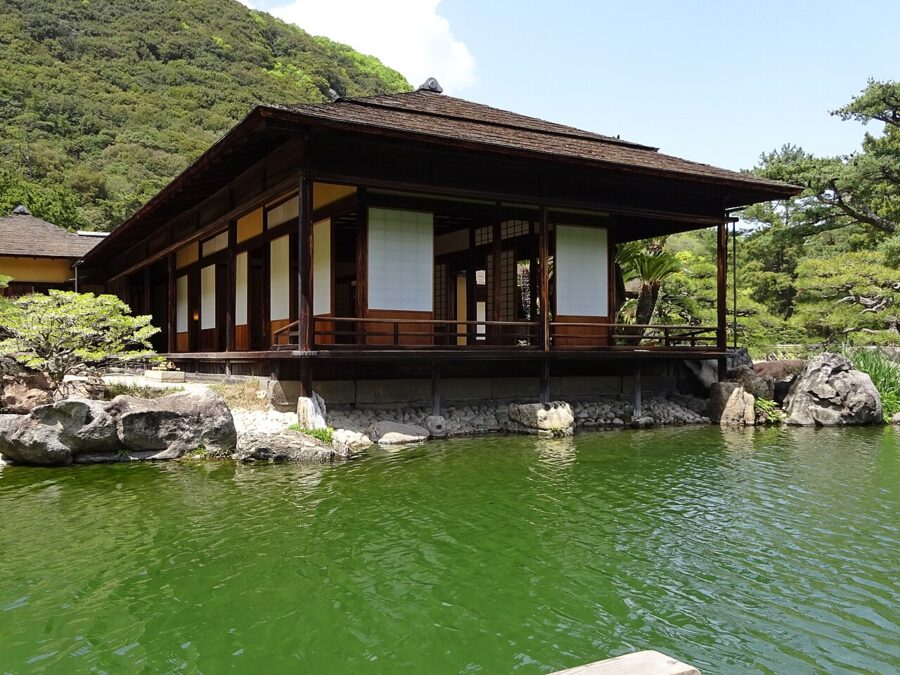
Ritsurin is the garden that makes Takamatsu worth a night. It was laid out by the lords of the Takamatsu domain and took more than a century to complete, finished in the Edo period as their country villa. Today it is a Special Place of Scenic Beauty, the highest designation Japan gives a garden, with six ponds, thirteen artificial hills and pine groves set against the slope of Mount Shiun.
The pines are the masterpiece: hundreds of them, trained over generations into low, spreading shapes that echo the islands of the Inland Sea. Climb Hiraiho, the low hill above the South Lake, for the view that appears on every poster of the garden.

As of November 2026, Ritsurin Garden’s admission is ¥500 (about £2.50 / $3) for adults, and the garden opens every day of the year. Hours follow the sun: 5:30 to 18:30 or 19:00 from April to September, 6:30 to 17:00 in November and 7:00 to 17:00 in December and January. Entry is free on New Year’s Day, on 16 March (the anniversary of its opening as a public park) and on 3 December, Kagawa Prefecture Day.
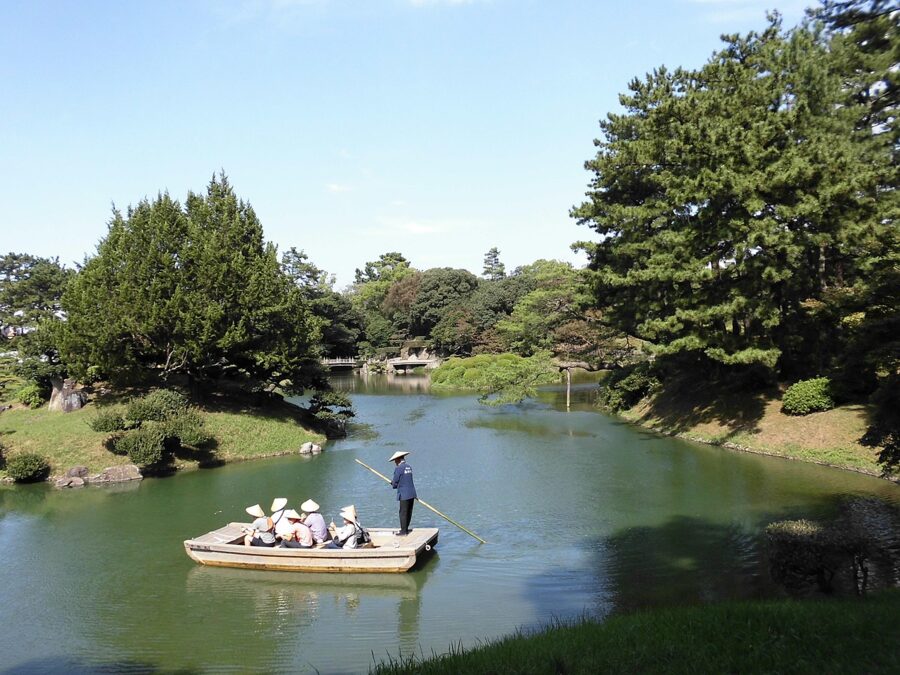
The autumn maples peak in late November, and the 2026 autumn light-up runs from 20 to 29 November, 17:00 to 21:00, with evening boat rides at ¥850 (about £4 / $6) on top of the entry fee. The garden is a 30-minute ride on the airport bus or a short walk from Ritsurin-koen Station on the Kotoden line.
Tamamo Park and Takamatsu Castle
Takamatsu Castle was built right on the shore at the end of the sixteenth century, and its moats are filled from the sea. It counts among the three great water castles of Japan, and sea bream swim in the moat, rising to the surface when visitors throw them food. The keep was pulled down in 1884, but the Tsukimi turret, the Ushitora turret and the sea gate survive as Important Cultural Properties, alongside Hiunkaku, a grand residence built for the Matsudaira family in 1917.
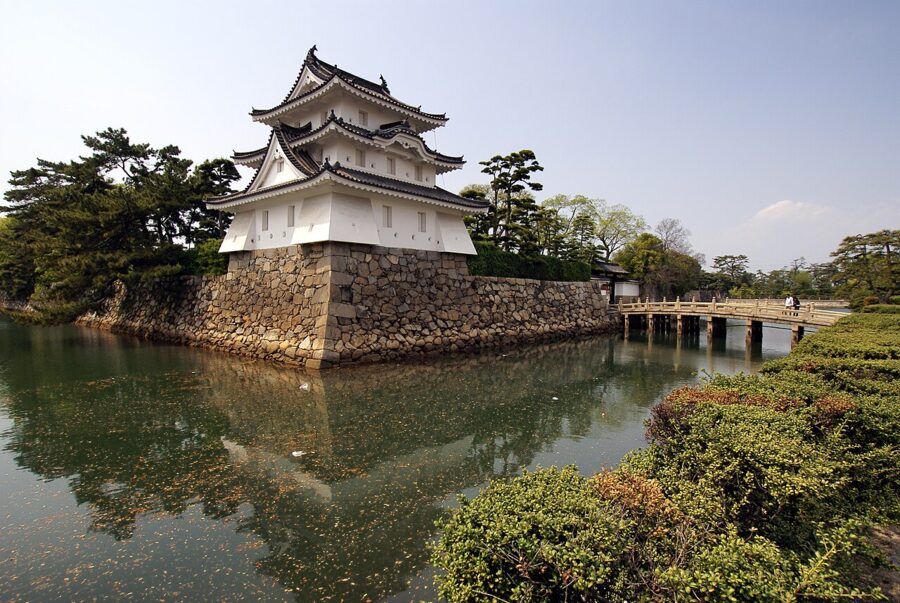

The castle grounds, now Tamamo Park, sit next to JR Takamatsu Station and the Kotoden terminus, so an hour here fits easily between trains and ferries.
Yashima and Yakuri-ji
Yashima, the table mountain east of the city, has a road and a bus up to the plateau, where Yashima-ji, temple 84 of the Shikoku pilgrimage, stands among the trees. The edge of the plateau looks over the city, the harbour and the islands, and down onto the bay where the Taira and Minamoto clans fought in 1185. On the next ridge east, Yakuri-ji, temple 85, sits beneath the jagged peaks of Mount Goken and has its own cable car.

Kotohira: Konpira-san’s 785 steps and the old kabuki theatre
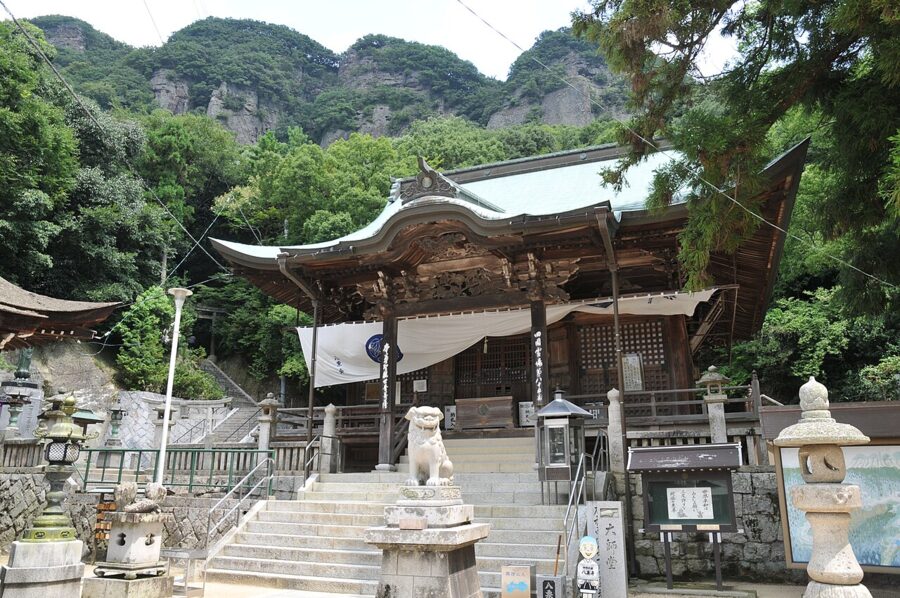
Kotohira (琴平) is a shrine town in the foothills about an hour south-west of Takamatsu, and it exists because of Kotohira-gu, known all over Japan as Konpira-san. The shrine stands high on Mount Zozu, the “elephant’s head”, as the guardian of sailors and everyone who works the sea. Those who could not make the pilgrimage sometimes sent a dog in their place, with money for the offering tied round its neck; the shrine still calls these proxy pilgrims konpira-inu.
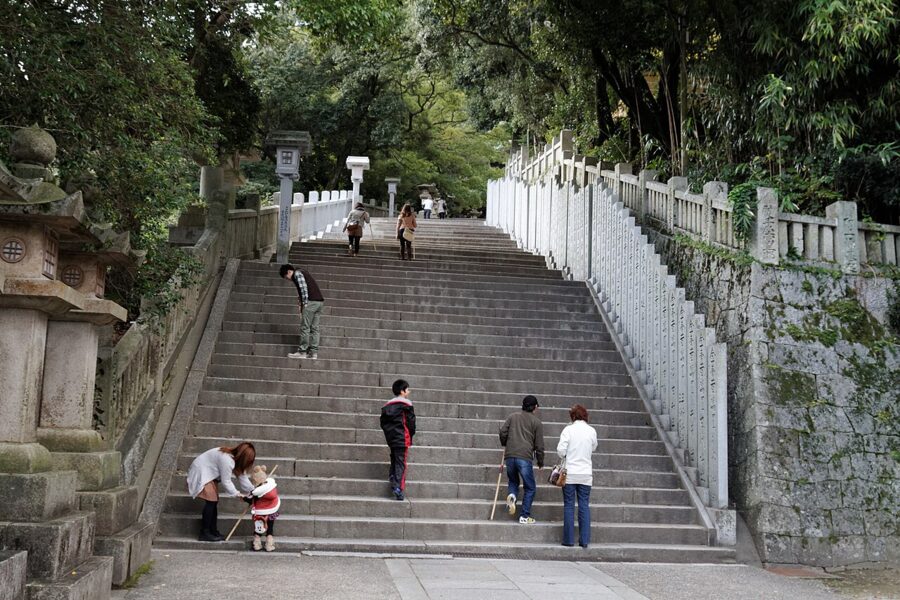

The approach begins among souvenir shops and udon counters in the town and climbs 785 stone steps to the main shrine, the Gohongu, with a further 583 to the inner shrine, Izutama-jinja, at step 1,368. The view from the terrace beside the Gohongu reaches across the Sanuki plain to Sanuki Fuji and, on a clear day, the Inland Sea.
The main shrine doors open at 7:00 and close at 17:00, and climbing to the main shrine costs nothing. Halfway up, the Omote-shoin hall holds painted screens by Maruyama Okyo and closes on Tuesdays. As of November 2026 the shrine is carrying out a major restoration of the Asahi-sha, the ornate hall passed on the way up, and the path to the inner shrine can be shut without notice after heavy rain.
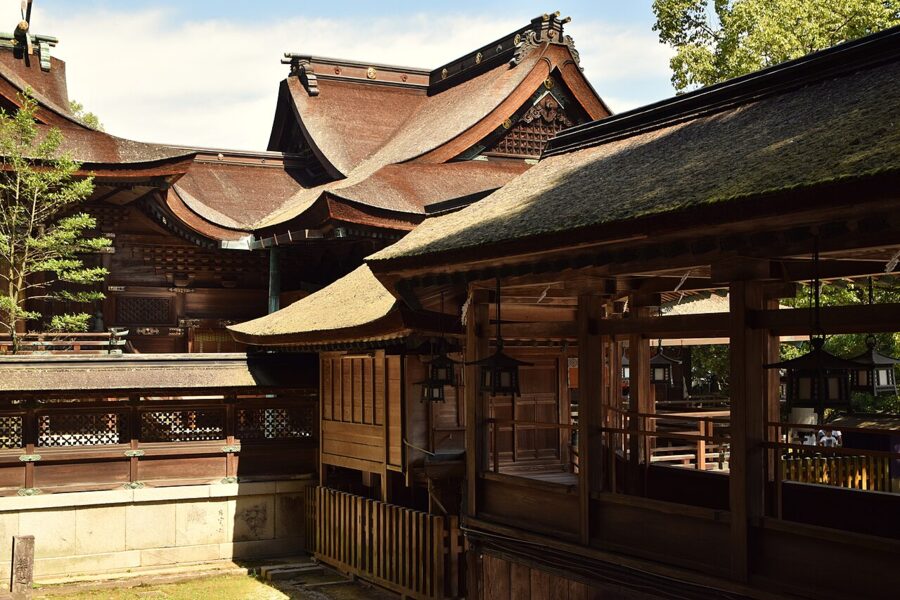

The Kanamaruza
At the foot of the steps stands the Kanamaruza, formally the Former Konpira Grand Theatre, built in 1835. It is the oldest kabuki theatre still standing in Japan and an Important Cultural Property, dismantled and rebuilt on its present site in the 1970s and strengthened against earthquakes in work finished in 2022. Inside, the audience sits on the floor in square wooden boxes, a raised runway carries actors through the crowd, and daylight comes in through shuttered windows along the galleries that stagehands opened and closed to light the stage.
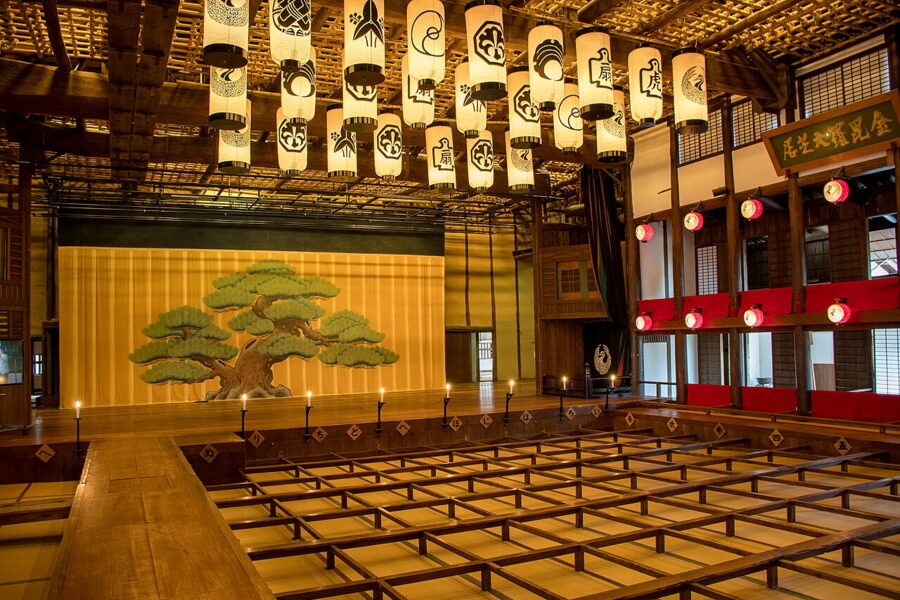
Every April the theatre hosts the Shikoku Konpira Kabuki season, with leading Tokyo actors performing by the light of those windows, and tickets go fast. Outside the season the building can usually be looked round, but hours change around rehearsals and events, so check with the Kotohira tourist office before you go.
The art islands: Naoshima, Teshima, Ogijima and Megijima
North of Takamatsu lies a cluster of small islands that were losing people for most of the twentieth century. Since the Benesse company opened a museum hotel on Naoshima in 1992, they have become one of the best places anywhere to see contemporary art set into fishing villages, rice terraces and hillsides. The islands belong to Kagawa, but Naoshima and Teshima lie nearer the Okayama shore, so you can reach them from either side.
Naoshima (直島)
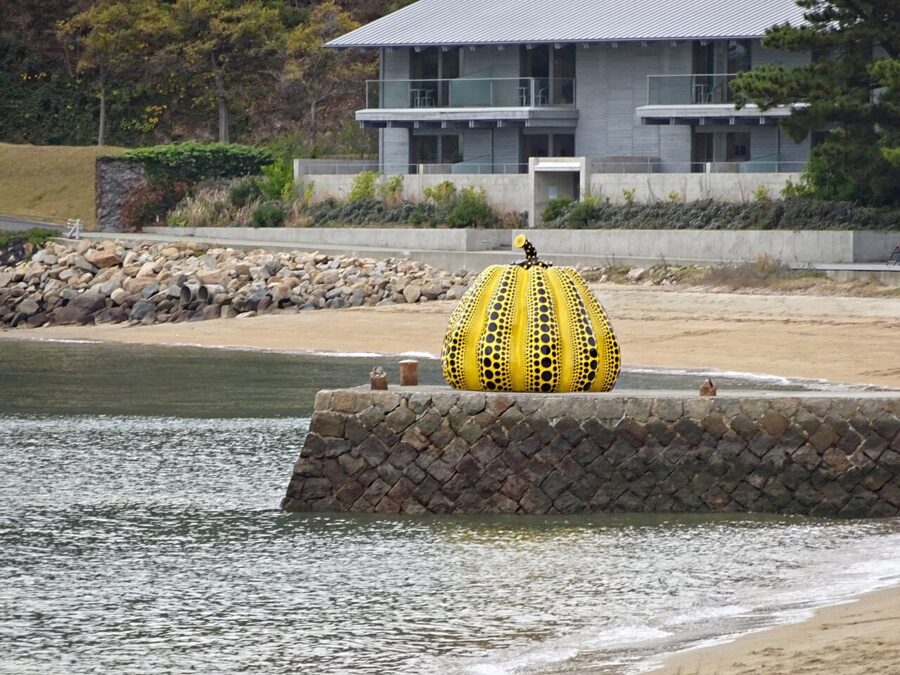
Naoshima has three areas. Miyanoura is the main port, with Kusama’s red pumpkin on the quay and Shinro Ohtake’s working bathhouse, I Love Yu. Honmura, on the east coast, is the old village where the Art House Project turned houses, a shrine and a dentist’s surgery into artworks. The south coast holds the museums: Benesse House, the Chichu Art Museum, the Lee Ufan Museum and the yellow pumpkin on its pier.
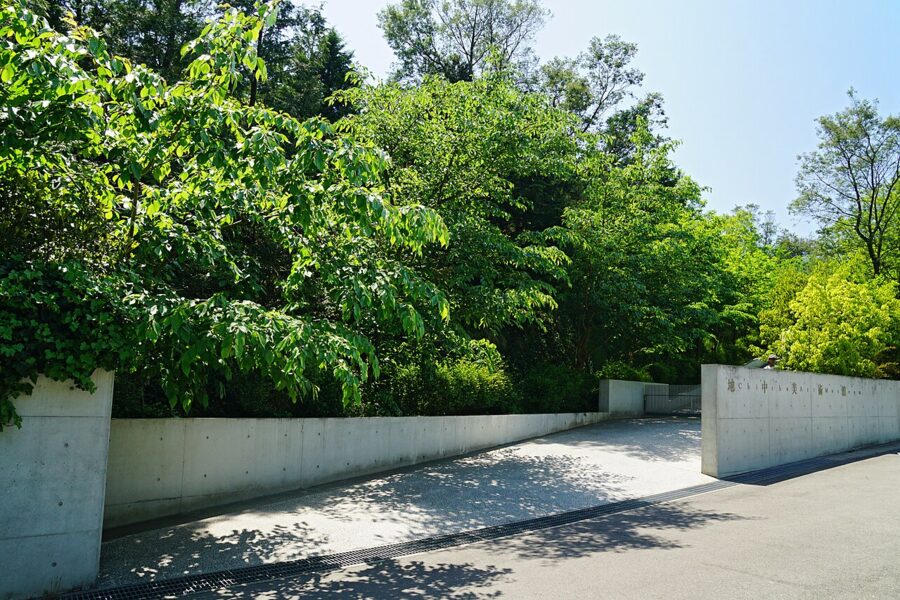

The Chichu Art Museum is the one to plan around. Opened in 2004 and buried in a hillside, it shows five of Monet’s Water Lilies, a room by Walter De Maria and three works by James Turrell, all lit by daylight from above. Entry needs a timed ticket booked in advance: as of November 2026 it costs ¥2,500 (about £12.50 / $17) online on weekdays and ¥2,700 (about £13.50 / $18) at weekends; on-site tickets cost more and are sold only if the day is not already full. It opens 10:00 to 17:00 and closes on Mondays.
The newest building is the Naoshima New Museum of Art, opened in spring 2025 on a hill above Honmura. It is Ando’s tenth building on the island, mostly underground, and shows artists from across Asia; tickets are ¥1,500 (about £7.50 / $10) online. The Art House Project costs ¥1,200 (about £6 / $8) online for five of its houses, with Minamidera, Turrell’s work in a building by Ando, booked separately at ¥600 (about £3 / $4). The bathhouse charges ¥660 (about £3.50 / $4.50) and opens 13:00 to 21:00.
Nearly everything on Naoshima closes on Mondays (Tuesday when Monday is a public holiday). Buses and rented electric bicycles connect the three areas, and a full day covers the island if you start on an early boat. Stay the night and you have it to yourself once the day visitors have gone.
Teshima (豊島)
Teshima is greener and quieter than Naoshima, a farming island with springs, terraced rice fields and two small villages. Most people come for the Teshima Art Museum, a single low concrete shell by the architect Ryue Nishizawa and the artist Rei Naito, about 40 by 60 metres and without a column inside. Two oval openings let in the sky, the wind and the birdsong, and across the floor tiny beads of water well up from the ground, run together and drain away all day.
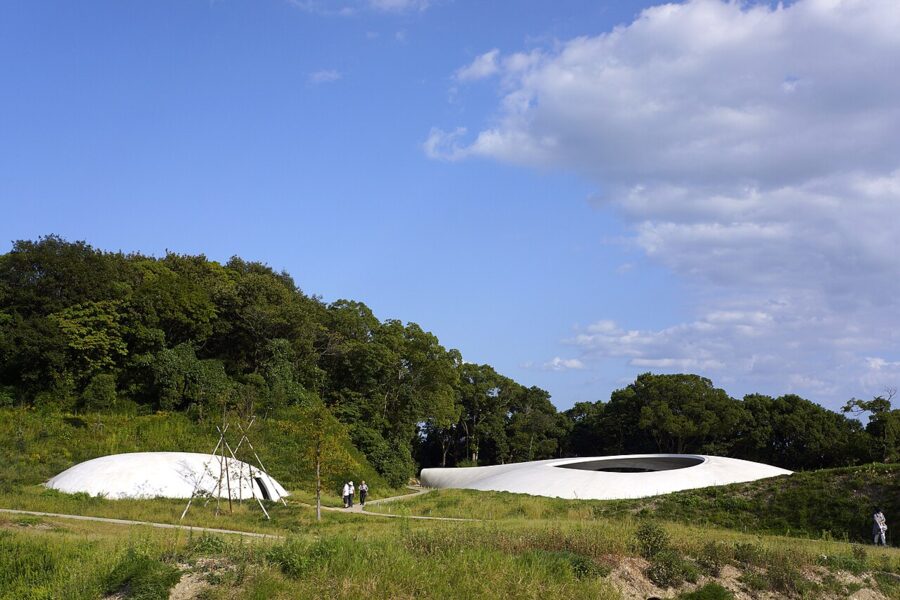

Tickets are timed and cost ¥1,800 (about £9 / $12) online or ¥2,000 (about £10 / $13) on the day, as of November 2026. The museum opens 10:00 to 17:00 from March to September and 10:00 to 16:00 from October to February. It closes on Tuesdays from March to November, and on Tuesdays, Wednesdays and Thursdays from December to February.
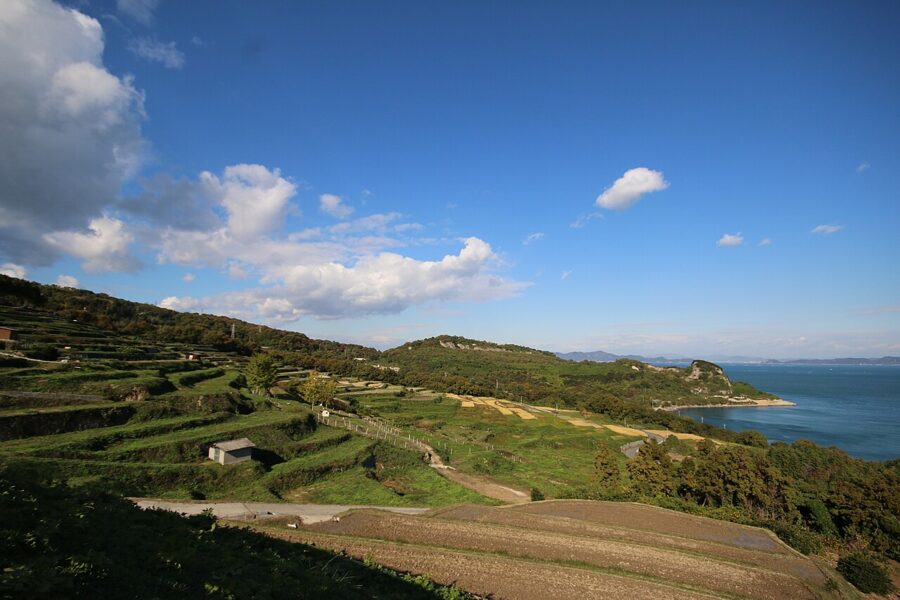

Teshima has two other permanent works worth the walk or the bus: Christian Boltanski’s Les Archives du Cœur, a beachside archive of recorded heartbeats on the far side of the island, and Teshima Yokoo House in Ieura, an old house rebuilt around the paintings of Tadanori Yokoo. Each costs ¥600 online and keeps the museum’s Tuesday closing.
Megijima (女木島) and Ogijima (男木島)
Two small islands lie just off Takamatsu, served by a single little red ferry, the Meon. Megijima, 20 minutes out, is the island local legend makes into Onigashima, the ogres’ island of the Momotaro folk tale, with a large cave in its hill that the ogres are supposed to have used. It has a sandy beach and a view back to the city from the top.
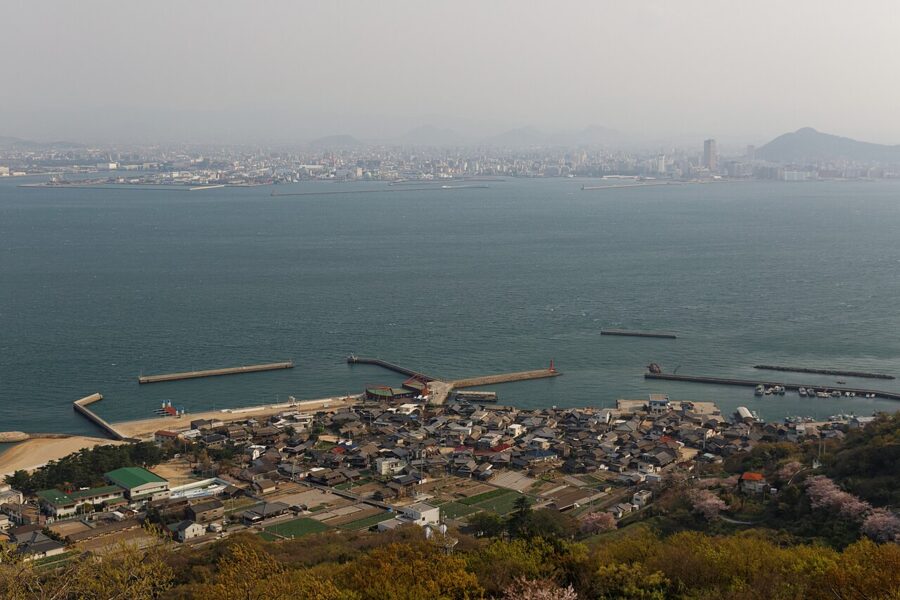

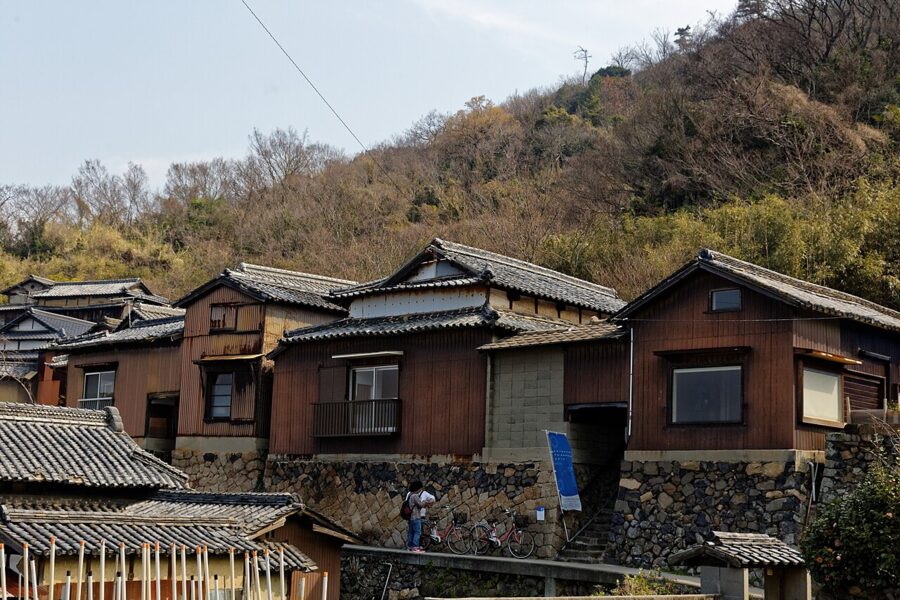
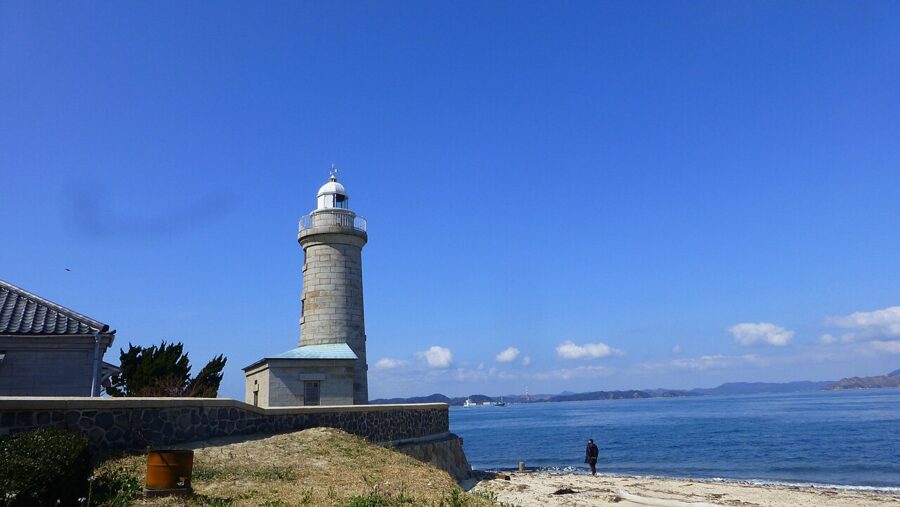
Ogijima, 20 minutes further on, is the one I would choose if you have a half day. Its single village climbs a steep hillside in tiers of tiled roofs, joined by stepped lanes too narrow for cars, and art works and cafés have settled into the old houses. A walk north along the coast road leads to the island’s granite lighthouse, built in the Meiji period.
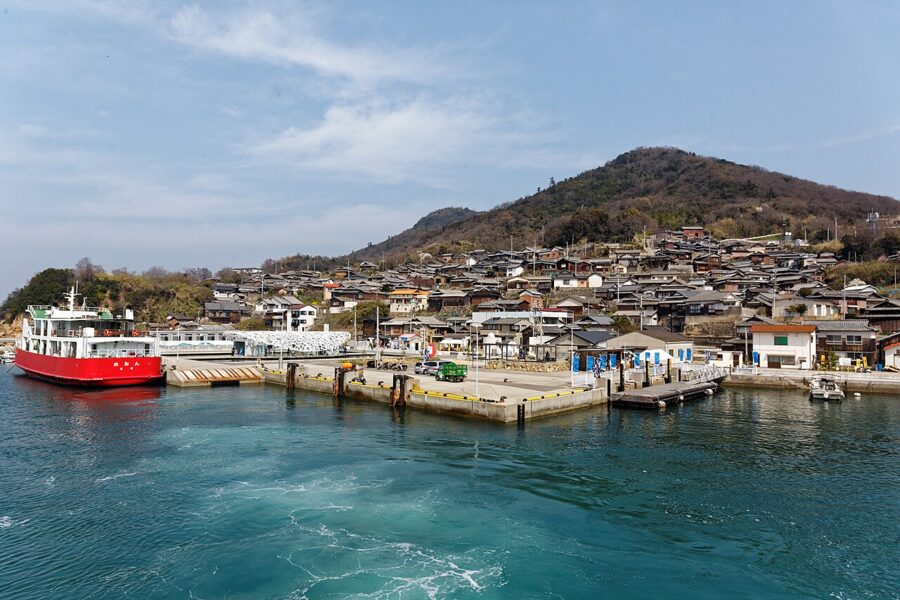


The Meon ferry makes six sailings a day, with extra boats in the summer peak. As of November 2026 the fare is ¥370 (about £2 / $2.50) to Megijima and ¥510 (about £2.50 / $3.50) to Ogijima, and there is no need to book.

Island ferries as of November 2026
No ferry on these routes takes reservations: you buy a ticket at the pier and board in order, so turn up early on weekends and holidays. These are the main routes to the art islands, with adult one-way fares.
| Route | Operator | Time | Adult fare |
|---|---|---|---|
| Takamatsu to Miyanoura (Naoshima), car ferry | Shikoku Kisen | 50 to 60 min | ¥680 (about £3.50 / $4.50) |
| Takamatsu to Miyanoura, high-speed boat | Shikoku Kisen | about 30 min | ¥1,590 (about £8 / $11) |
| Uno (Okayama) to Miyanoura | Shikoku Kisen | about 20 min | ¥370 |
| Takamatsu to Ieura (Teshima), high-speed boat | Teshima Ferry | about 35 min | ¥1,450 (about £7 / $10) |
| Miyanoura to Ieura, high-speed boat | Shikoku Kisen | about 30 min | ¥820 (about £4 / $5.50) |
| Takamatsu to Megijima and Ogijima | Meon (Shiyujima Kaiun) | 20 and 40 min | ¥370 and ¥510 |
| Takamatsu to Tonosho (Shodoshima), car ferry | Shodoshima Kyuko Ferry | about 60 min | ¥700 (about £3.50 / $5) |
| Takamatsu to Tonosho, high-speed boat | Shodoshima Kyuko Ferry | about 35 min | ¥1,400 (about £7 / $9) |
The Miyanoura to Ieura boat runs only on the days the Teshima and Inujima museums are open, so it does not sail on Tuesdays from March to November; and the last high-speed boats back to Takamatsu fill up on busy afternoons. Shikoku Kisen’s Takamatsu timetable posts cancellations on the morning they happen.
The Setouchi Triennale
Every three years since 2010 the islands host the Setouchi Triennale, when temporary works join the permanent ones on a string of islands and coastal towns, and the ferries and guesthouses fill. The 2025 edition closed on 9 November after 107 days. The 2028 Triennale will run in three sessions, from 14 April to 28 May, 25 July to 20 August and 29 September to 12 November, across 17 islands and areas, with each area closing one day a week.
Between festivals the permanent museums and many outdoor works stay open, and the islands are far calmer.
Shodoshima: olives, a sandbar and a mountain gorge
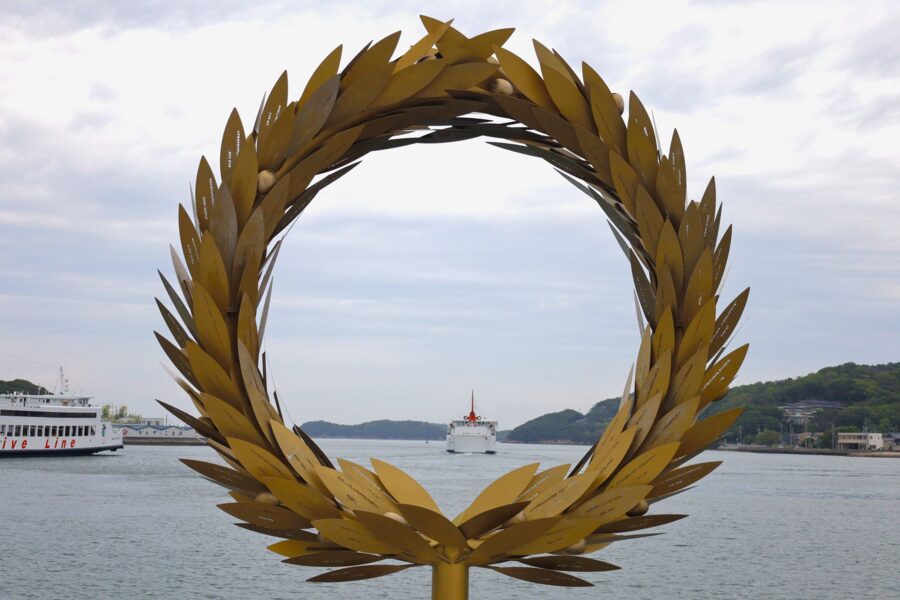
Shodoshima (小豆島) is the second largest island in the Inland Sea and a different world from the art islands: big enough for mountains, a gorge, rice terraces and a dozen villages. It is where Japan’s first olive trees took root in the early twentieth century, and olive groves still cover its southern slopes alongside old soy sauce breweries. Ferries from Takamatsu take an hour, or 35 minutes by high-speed boat, and there are direct boats from Okayama too.
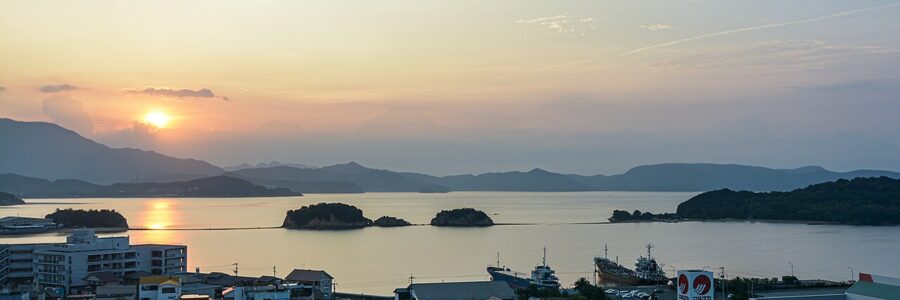

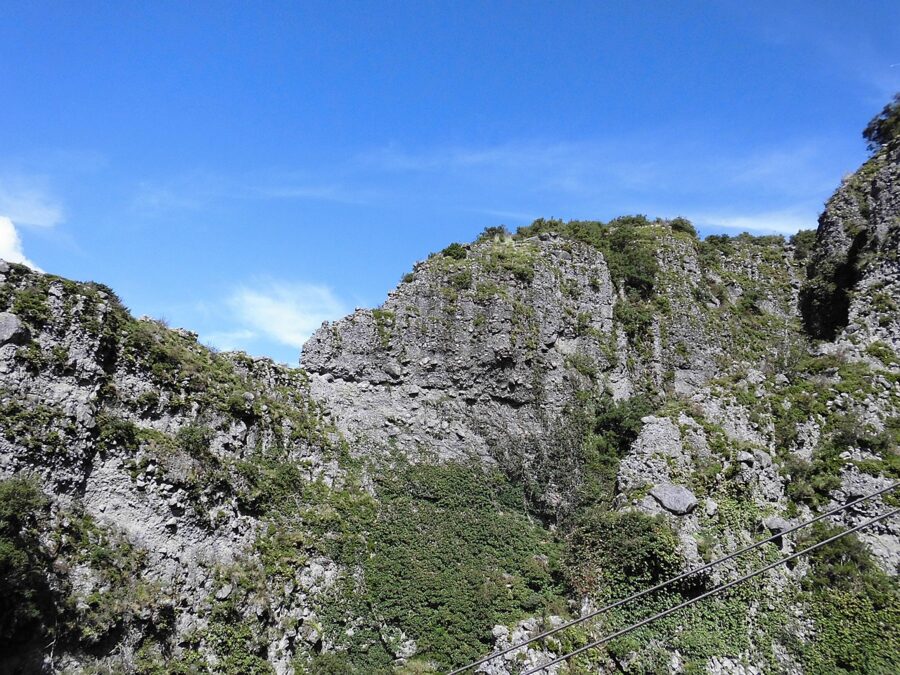
Near Tonosho, the main port, a sandbar called Angel Road emerges from the sea around low tide to join a chain of islets, and walking across it is the island’s best-known small pleasure. Inland, the Kankakei gorge cuts into volcanic rock, with a ropeway that is at its best when the maples turn in November.
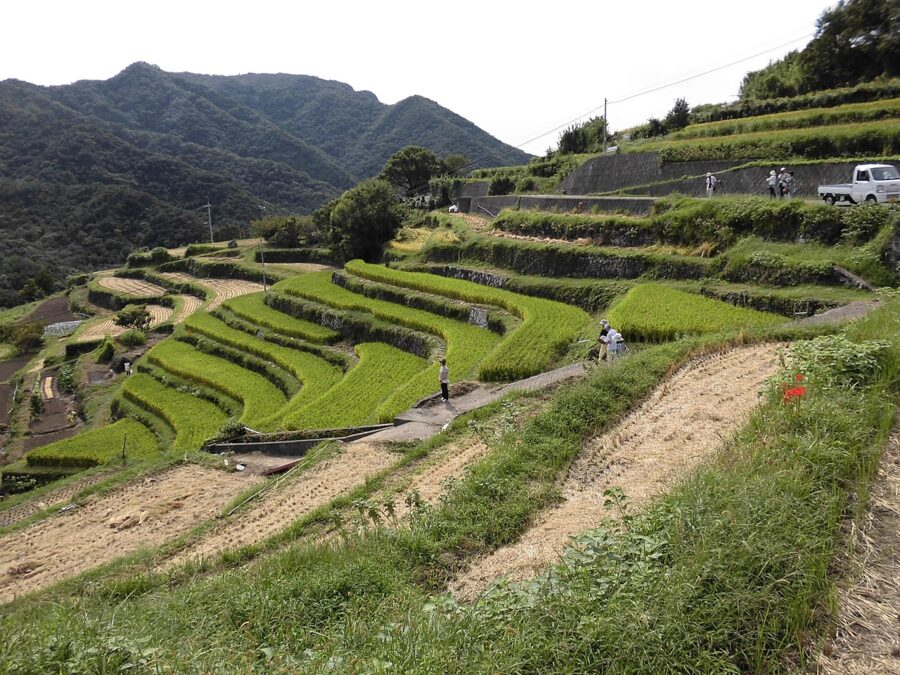
Shodoshima rewards a night rather than a day trip, and a car helps, since the buses are infrequent. You can leave by a different boat, crossing to Okayama or Teshima rather than back to Takamatsu.
Sanuki udon: what makes it different and how to eat it
Sanuki is the old name of the province, and Sanuki udon is the dish the prefecture is known for across Japan. The noodles are thick, square-edged and firm, with a springy bite that Japanese call koshi, made from wheat flour, salt and water and kneaded hard, traditionally by foot. They come in a light, clear broth made from iriko, dried baby sardines, the best of them from the island of Ibukijima off Kan’onji.
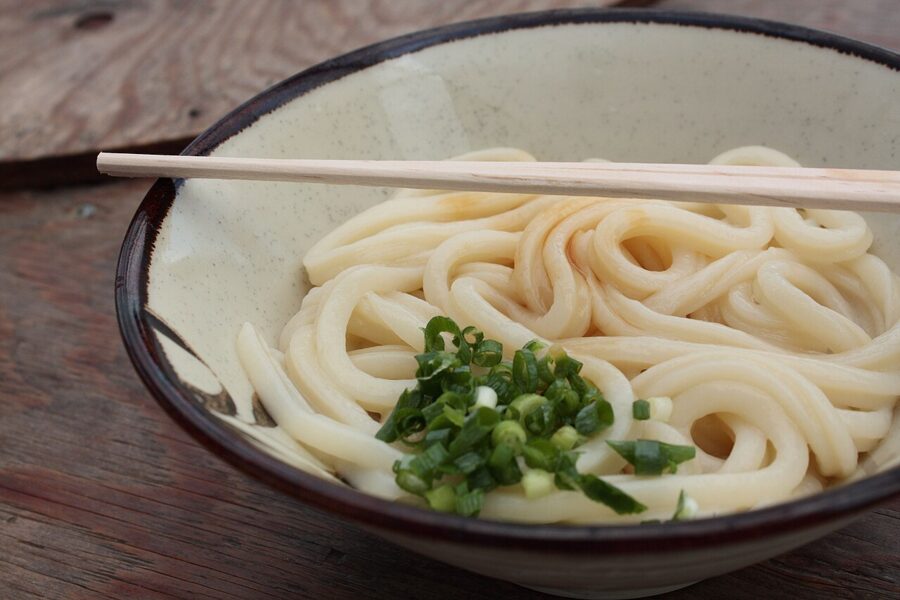

Geography explains much of it: the dry plain suited wheat as a second crop after rice, the coast had salt pans, the islands supplied sardines and Shodoshima the soy sauce. Local tradition credits Kukai with bringing the method back from China.
The names on the menu describe how the noodles meet the broth. Kake is udon in hot broth; bukkake comes with a smaller amount of stronger sauce poured over; kama-age is served straight from the pot to be dipped; zaru is cold, on a bamboo tray. Kamatama, hot noodles tossed with a raw egg and a splash of soy sauce, is the local breakfast and the one to try first.
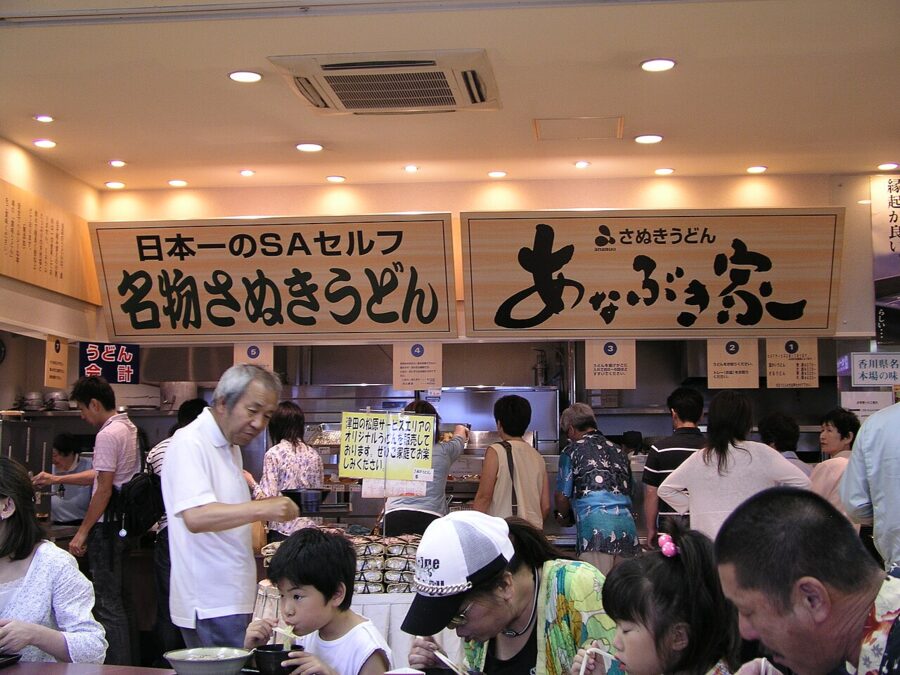

Many of the best shops are self-service. Order the size (small is usually one portion of noodles, large two) and say whether you want it hot or cold; in some shops you warm the noodles yourself in a basket in a pot of boiling water. Then add broth from a tap, help yourself to tempura, fishcake and spring onion, and pay at the till. A bowl costs a few hundred yen, and it is normal to eat at two or three shops in a morning.
The country shops open early, often from breakfast time, and close when the noodles run out, sometimes by early afternoon. If you want a guide, the udon taxi takes you round shops chosen by drivers who have passed a written test on udon, a guiding test and a noodle-making exam. As of November 2026 a 120-minute tour costs ¥12,000 (about £60 / $80) for the car, from Takamatsu or Kotohira, and some drivers speak English.
Zentsuji and the pilgrim temples of Kagawa
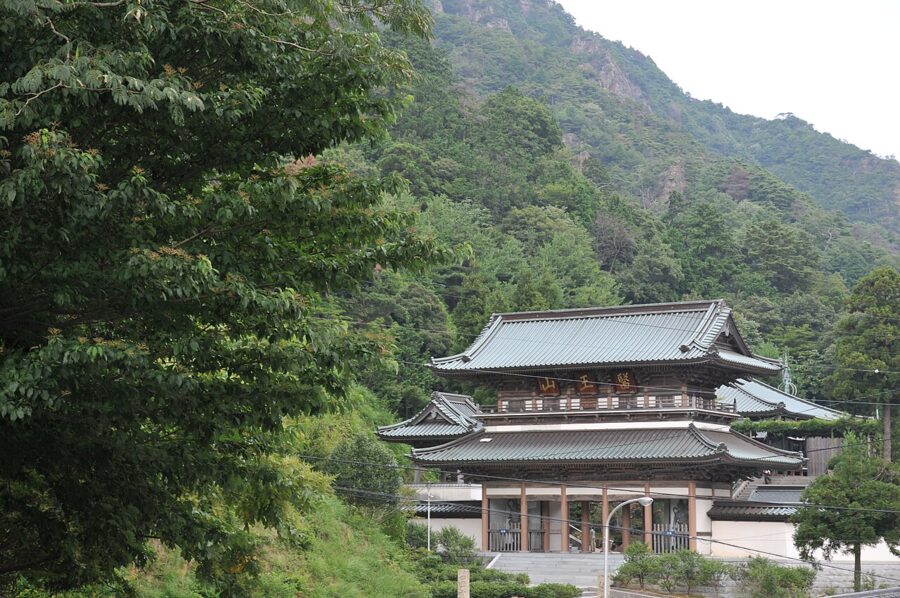
The Shikoku pilgrimage circles the island through 88 temples associated with Kukai, and Kagawa holds the last stretch, temples 66 to 88, known to pilgrims as the Dojo of Nirvana. Temple 66, Unpenji, stands on a mountain just over the border in Tokushima but belongs to the Kagawa section. You will see pilgrims in white with staffs and sedge hats on the roads all year.
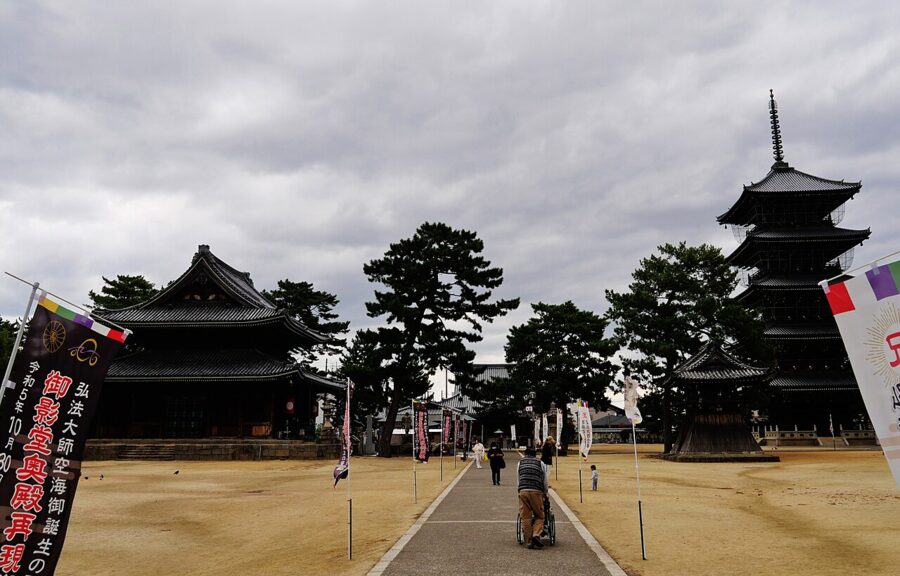

Zentsu-ji (善通寺), temple 75, is the one to see if you see only one. Kukai, later known as Kobo Daishi, was born here in 774, and the temple ranks with Koyasan in Wakayama among the great centres of his Shingon school. Its two precincts fill the centre of the town of the same name, with a tall five-storey pagoda, giant camphor trees and a pitch-dark passage beneath the founder’s hall that pilgrims walk through by touch.
The temple is about 20 minutes on foot from Zentsuji Station on the JR Dosan line, on the way between Takamatsu and Kotohira, so it pairs naturally with Konpira-san in a single day. Pilgrims finish at Okubo-ji, temple 88, in the hills south-east of Takamatsu, where many leave their walking staffs in the hall as a sign the circuit is complete. Read up on Japanese etiquette before visiting the temples and shrines.

Marugame and the west coast
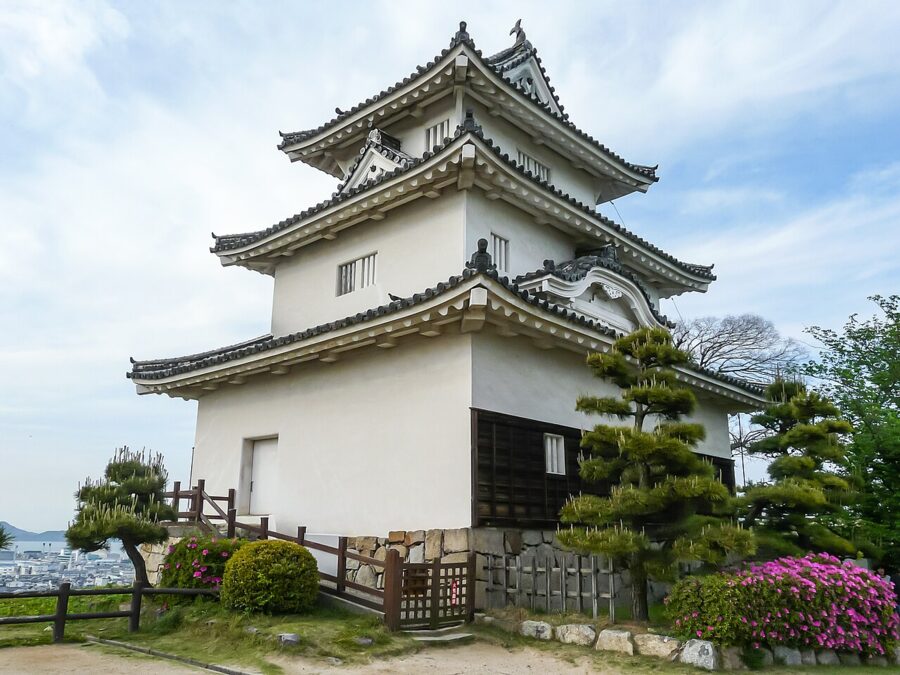
West of Takamatsu the JR Yosan line follows the coast to Marugame (丸亀), whose castle keeps one of the twelve original keeps left in Japan. It is a small keep on top of some of the tallest stone walls of any castle in the country. Marugame also makes most of Japan’s round paper fans, and a museum of contemporary art stands outside the station.

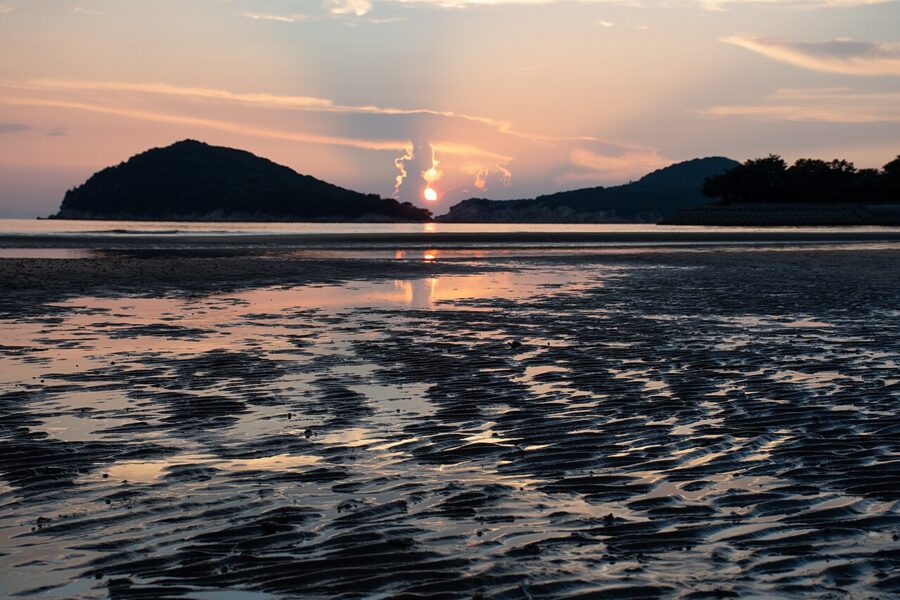
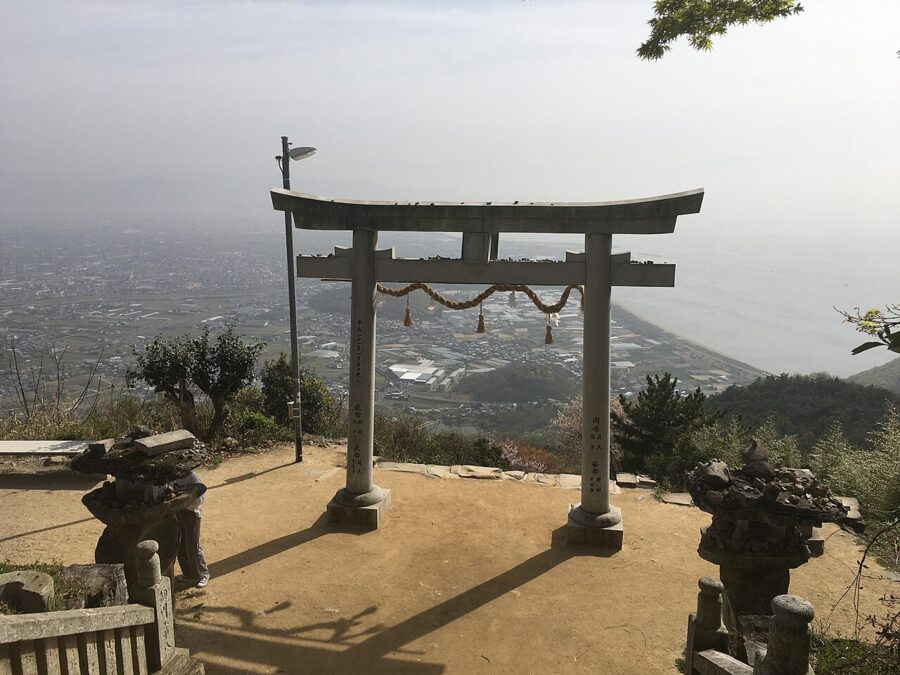
Further west, two places have become famous through photographs. Chichibugahama, a long beach in Mitoyo, turns into a mirror at low tide when the wind drops, and the tide pools reflect the sky and anyone standing in them; it is best in the hour around sunset. Above Kan’onji, Takaya Shrine stands on the summit of Mount Inazumi, about 400 metres up, and its stone torii frames the coast and the sea so that it seems to stand in the sky.
Both are easiest by car, and the road up to Takaya Shrine is steep and narrow, so if you are driving read up on car hire in Japan before you book. Near the shrine, in Kotohiki Park, the Zenigata is a giant coin drawn in sand on the shore, best seen from the lookout above it.

Getting to Kagawa and getting around
Kagawa is not near Tokyo; it is a little over an hour’s flight or about four hours by train. The fastest rail route goes by Okayama, in Chugoku, which the Sanyo Shinkansen reaches in about three and a quarter hours from Tokyo and about 45 minutes from Shin-Osaka. From Okayama the Marine Liner rapid crosses the Great Seto Bridge to Takamatsu in about 55 minutes; ride in the front car for the view of the islands.
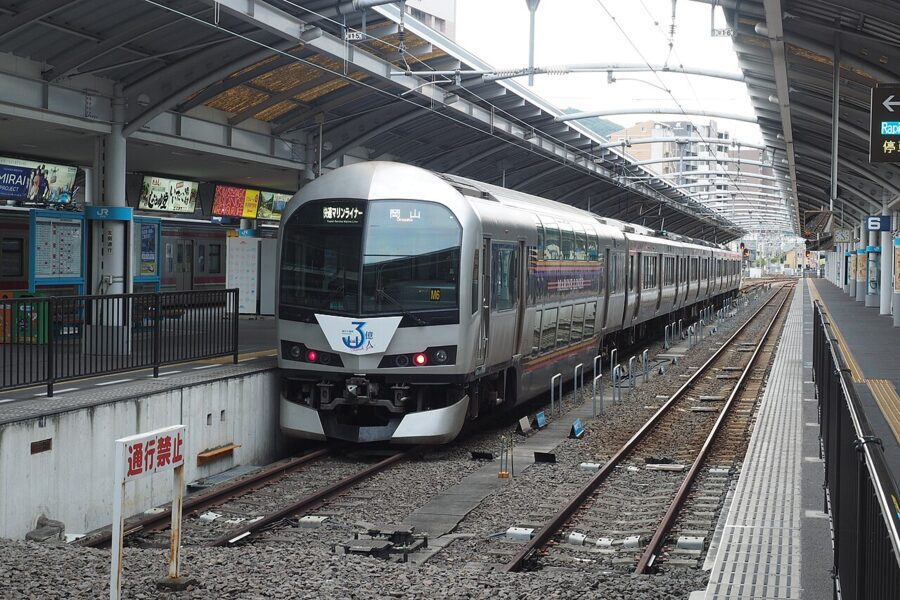

Takamatsu Airport has flights from Haneda and Narita in Tokyo, from Naha in Okinawa, and from Seoul, Shanghai, Taipei and Hong Kong. As of November 2026 the airport limousine bus reaches Ritsurin Garden in about 30 minutes for ¥1,000 (about £5 / $7) and Takamatsu Station in about 45 minutes for ¥1,300 (about £6.50 / $9), and a separate bus runs to JR Kotohira Station in about 48 minutes for ¥2,000 (about £10 / $13). From Kansai, the Jumbo Ferry sails from Kobe in Hyogo to Takamatsu, and highway buses run from Osaka and Kobe across Awaji Island.
From the west, the Shimanami Kaido from Hiroshima lands you in Ehime, with a limited express on to Takamatsu. For routes into the country, see flights to Japan.
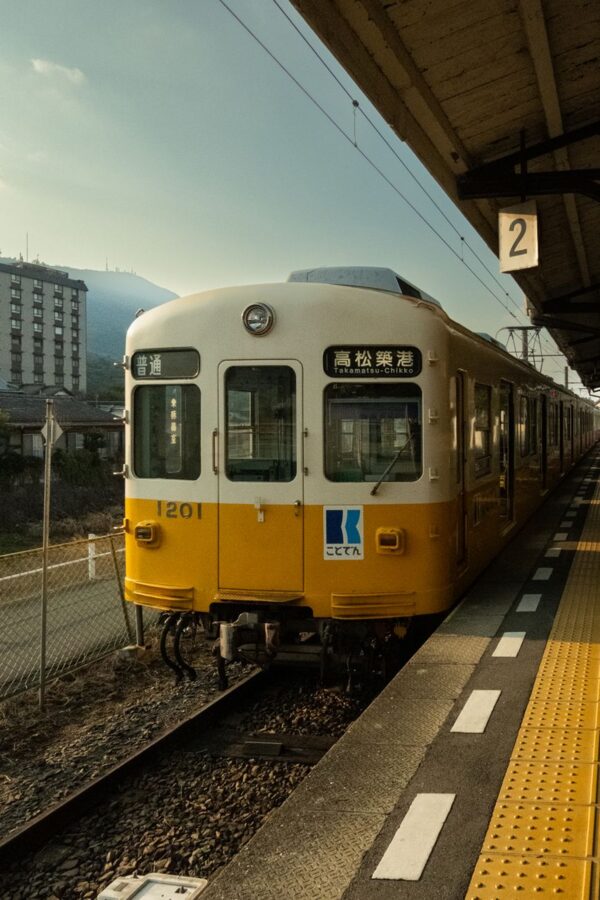
Inside the prefecture, JR lines fan out from Takamatsu: the Yosan line west to Sakaide, Marugame and Kan’onji, the Dosan line south to Zentsuji and Kotohira, and the Kotoku line east along the coast. The private Kotoden railway runs three lines from its terminus beside the castle, including the Kotohira line, which reaches Kotohira in about an hour and stops at Ritsurin-koen. Carry cash for country udon shops and island buses; the practical information on money applies here too.
How many days to give Kagawa
One day covers Takamatsu: Ritsurin in the morning, the castle and a bowl of udon, and an afternoon boat to Ogijima. Two days adds Kotohira and Zentsuji, by train, with an udon crawl on the way. Three or four days is what I would give the prefecture, with a full day on Naoshima, a night on the islands and a day on Teshima or Shodoshima.
Plan the islands around their closing days. Naoshima’s museums close on Mondays and Teshima’s on Tuesdays, so Tuesday suits Naoshima and Monday or Wednesday suits Teshima; Kotohira works on any day except that the Omote-shoin shuts on Tuesdays. Add a day with a car for the west coast if Chichibugahama and Takaya Shrine appeal, and book a place to stay early for weekends in spring, in November and in any Triennale year.
Much of the best of Kagawa is free: the climb to Konpira-san’s main shrine, Chichibugahama, the lanes of Ogijima and the outdoor art along the island shores. The ferries are cheap, and self-service udon is among the least expensive good meals in Japan.
Kagawa is small enough to cross in an afternoon on the train. Give it four days anyway, and then take the ferry or the limited express on into the rest of Japan’s sights, with Tokushima, Kochi and Ehime waiting a few hours down the line.