
Every year before the start of spring, the households of medieval Kyoto carried their worn-out things into the lanes and left them there: cracked bowls, frayed brushes, a rosary with a broken clasp. A thing that reached its hundredth year, people said, could gain a spirit and turn on the house that had used it, so it was safer to throw it out first.
That is the opening of the Tsukumogami-ki, a Muromachi-period picture-scroll tale, and it gave Japan the word for these creatures. Tsukumogami (付喪神) are household objects come alive with age: the umbrella that hops on one leg, the lantern that splits into a grin, the sandal that runs off in the night. They are funny on the page and slightly sad underneath, because almost every one starts as something a person stopped caring for.
You can still follow them. The street where the Kyoto tale sets their parade is a short walk from Kitano Tenmangu, temples hold services for needles and dolls on fixed days, and a museum in the hills of Hiroshima Prefecture keeps the country’s largest yokai collection.
Contents
- A hundred years less one: the word and its pun
- The Tsukumogami-ki: Kyoto's thrown-out tools take revenge
- The night parade on the scrolls
- Toriyama Sekien's catalogue of object spirits
- Umbrella, lantern, sandal, cloth: the famous four
- Needles, dolls and the year-end sweep
- Tsukumogami today
- Where to see tsukumogami in Japan
A hundred years less one: the word and its pun
The kanji 付喪神 are there mostly for their sound. Tsukumo is an old word for ninety-nine, usually written 九十九, and the scroll says its objects change at “a hundred years less one”. The creatures are named for the year before the change, the last year you can safely keep a thing.
The pun comes from poetry. In section 63 of the Tales of Ise, an old woman’s hair is tsukumo-gami (九十九髪) in a poem that begins “a hundred years less one”. Take the top stroke 一 off 百 (a hundred) and you are left with 白 (white), so tsukumo hair is white hair, and the tale-teller swapped hair (髪, kami) for spirit (神, also kami).
Are they gods, then, like the “eight million kami” of Shinto? Not quite. Those kami are already present in mountains, rivers and rocks; a tsukumogami earns its spirit through age and use, and the scroll calls them monsters, not gods. The joke of the story is that they go off and found a shrine to a god of their own.
The folklorist Komatsu Kazuhiko argues that tsukumogami as a belief peaked in the Middle Ages and faded in the Edo period, when object monsters came back as a comic subject for prints and toys, cut loose from the fear behind them. Most of the cheerful umbrellas you will meet in Japan today belong to that second, playful life.
The Tsukumogami-ki: Kyoto’s thrown-out tools take revenge
The oldest surviving copy of the tale, from the sixteenth century, belongs to Sofuku-ji in Gifu City in Chubu, under the title Hijo Jobutsu-e, roughly “pictures of the unfeeling attaining buddhahood”. A courtier’s diary records a “tsukumogami picture” in two scrolls in 1485, so some version is older. Copies made from a 1666 transcription are in the National Diet Library and in Kyoto University Library’s two-scroll Tsukumogami emaki, which you can page through online.
“The Onmyo Zakki says: when a utensil passes a hundred years it changes, gains a spirit and leads human hearts astray. This is called tsukumogami.”
That is the first line, and the book it quotes has never been found. The story is set in the Koho era (964 to 968), at the year-end sweep.

The plot
Dumped at the roadside and kicked by oxen, the tools hold a meeting. A rosary, Ichiren Nyudo, urges them to repay wrong with kindness, and a hand-staff called Aratarō beats him until his clasp breaks. An old document, Kobun Sensei, has the plan: on Setsubun night, when yin and yang change places, they will give up their lives and let the god of creation remake them.
It works. The tools become monsters shaped like people, demons and beasts, settle behind Funaokayama, raid the capital for people and cattle, and build a shrine to their maker, Henge Daimyojin. On the fifth night of the fourth month they carry a portable shrine east along Ichijo, the city’s northern avenue.
Coming west along the same avenue is the Kampaku, the emperor’s regent. A charm he wears, the Sonsho Darani written by a senior monk, bursts into flame and routs them. After a palace rite, armed child-guardians of the Buddhist law fly to the hideout and the tools beg for their lives.
Then comes the point of it all. The tools seek out the rosary they beat, who forgives them and teaches them Shingon Buddhism; he dies at 108, and each tool trains alone in the mountains and becomes a buddha. If a discarded pot can reach enlightenment, the last lines ask, why not you?
The night parade on the scrolls
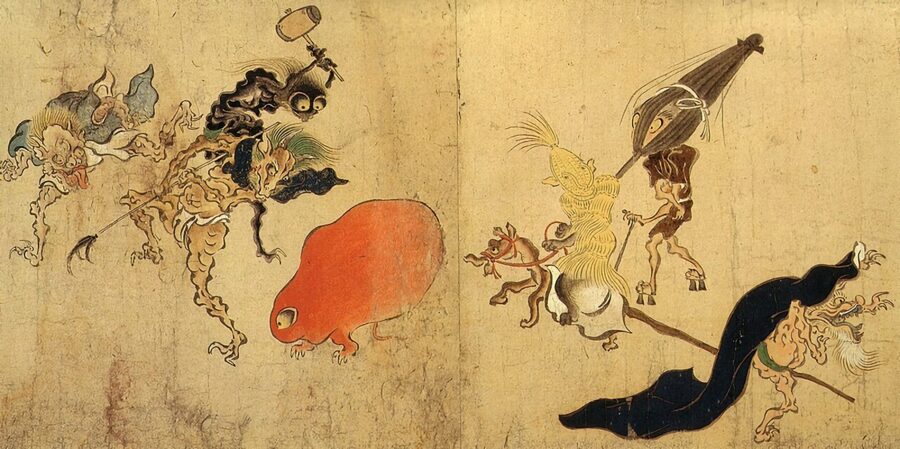
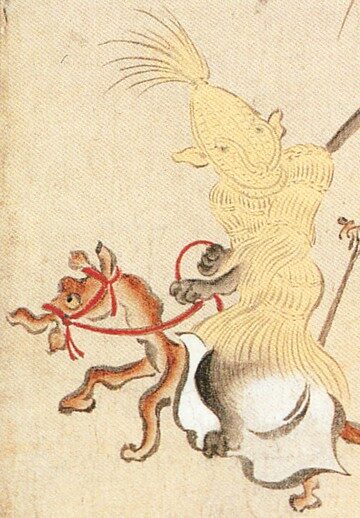
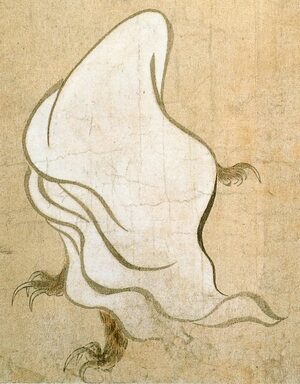
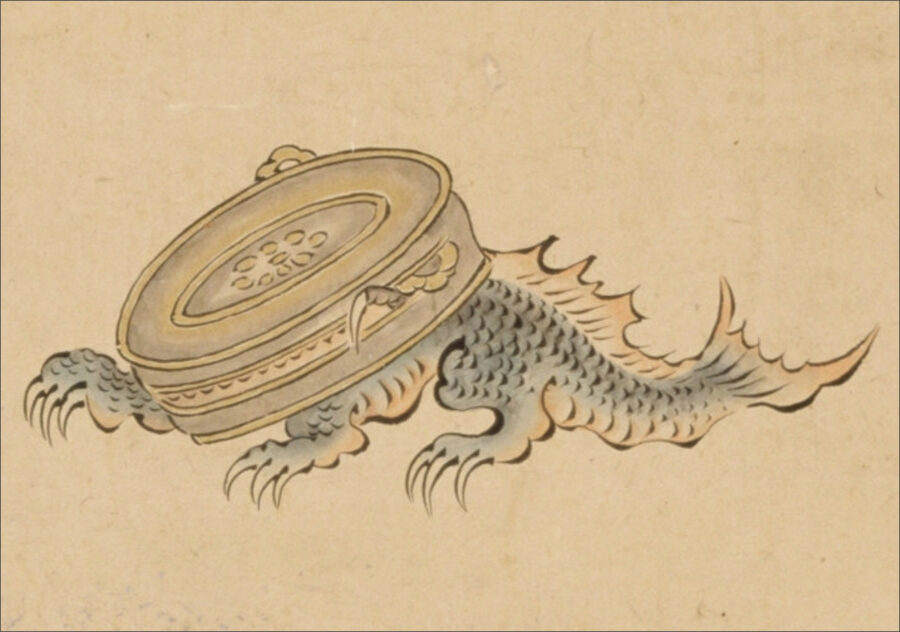
The tale has a silent twin. The Hyakki Yagyo emaki, the “night parade of a hundred demons” scrolls, show creatures moving right to left with no words at all, and many of them are objects: pots on legs, a gong with a lizard’s body, a length of cloth with claws. Scholars have suggested the parade may be the tools’ festival procession from the Tsukumogami-ki, painted on its own.
The best-known version belongs to Shinju-an, a sub-temple of Daitoku-ji in Kyoto, and is an Important Cultural Property. It dates from the sixteenth century and is credited by tradition, without proof, to the court painter Tosa Mitsunobu. It was copied until the Meiji era, which is why near-identical monsters turn up in Osaka, Tokyo, Sakura and New York.
In Heian-period tale collections, hyakki yagyo was a procession of demons in the night streets, a thing to be feared. The scrolls turned that fear into a crowd scene you could laugh at.
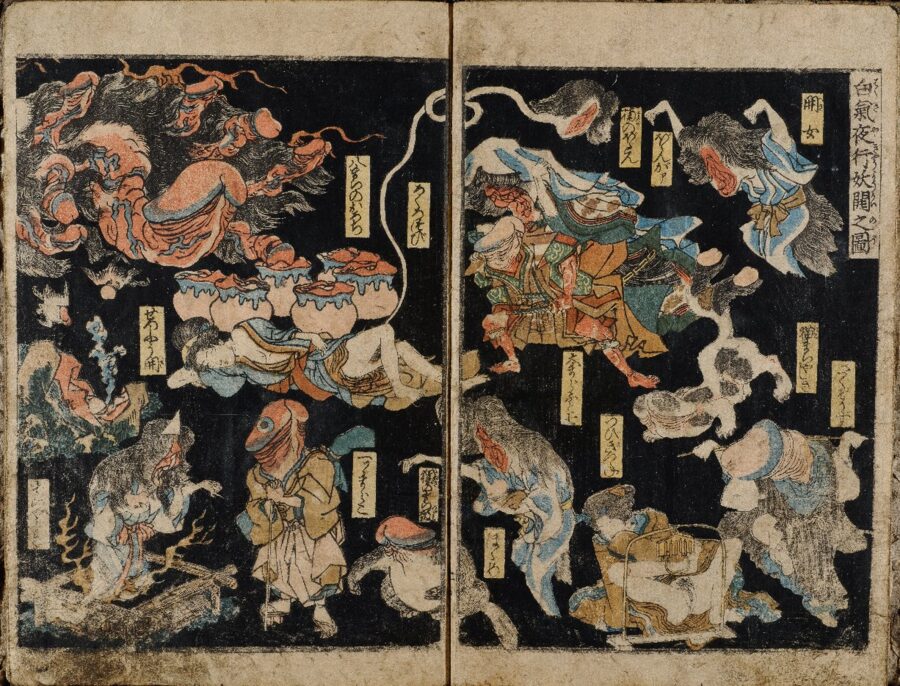
Toriyama Sekien’s catalogue of object spirits
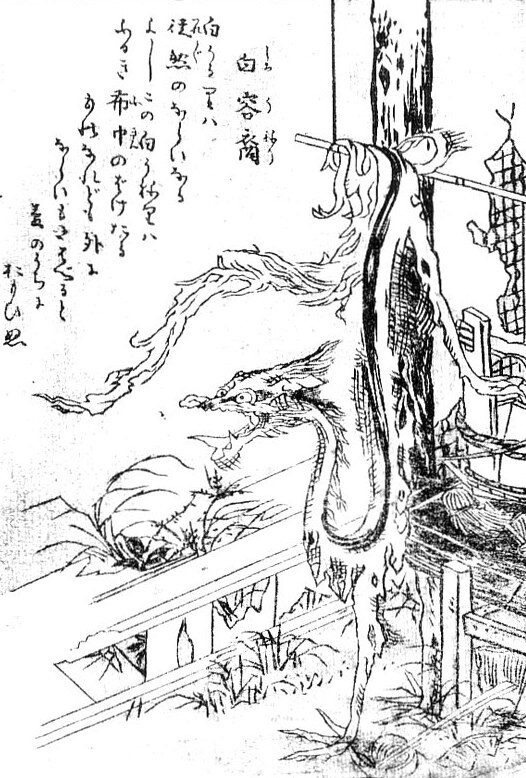
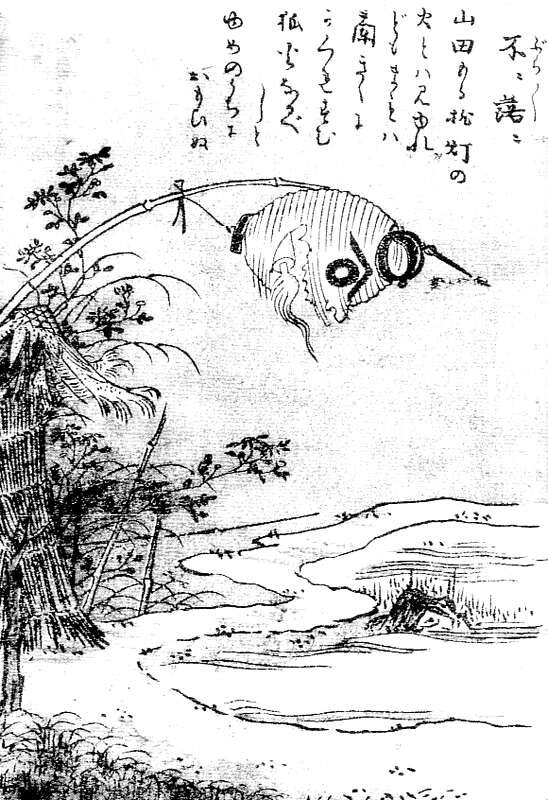
In the 1770s and 1780s the Edo painter Toriyama Sekien did for yokai what a naturalist does for birds: one to a page, named and printed. Four collections came out between 1776 and 1784, and the last, Hyakki Tsurezure Bukuro, is almost all objects. In his preface Sekien says he looked at the old night-parade scrolls, fell asleep and drew what came to him in a dream.
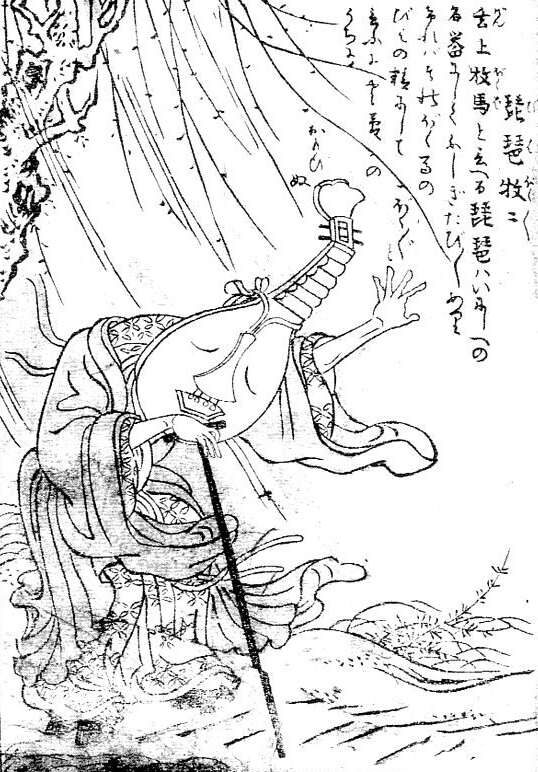
Many of the names are his own inventions, built on puns and classical lines, but they stuck. Modern yokai books and the manga of Mizuki Shigeru drew heavily on his pages, so a tsukumogami with a proper name was very likely born in his studio.
Umbrella, lantern, sandal, cloth: the famous four
Kasa-obake, the umbrella ghost
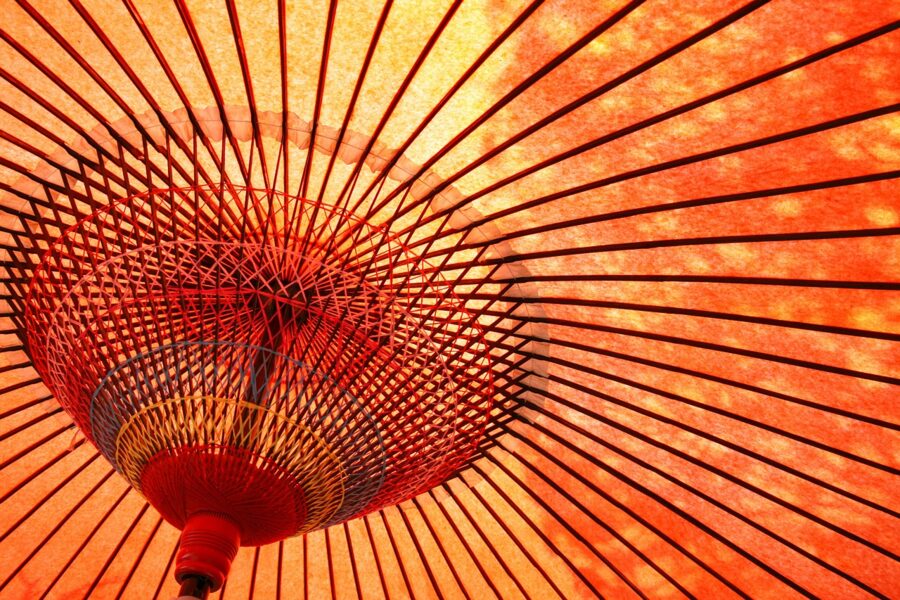
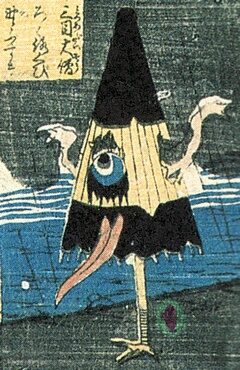
Ask someone in Japan to draw a ghost and you may well get an umbrella: one eye, a long tongue, a single leg. This is kasa-obake, also karakasa-obake. It has no great legend and no part in the Tsukumogami-ki; it became famous because it was easy to draw.
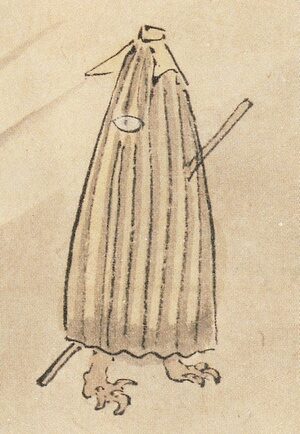
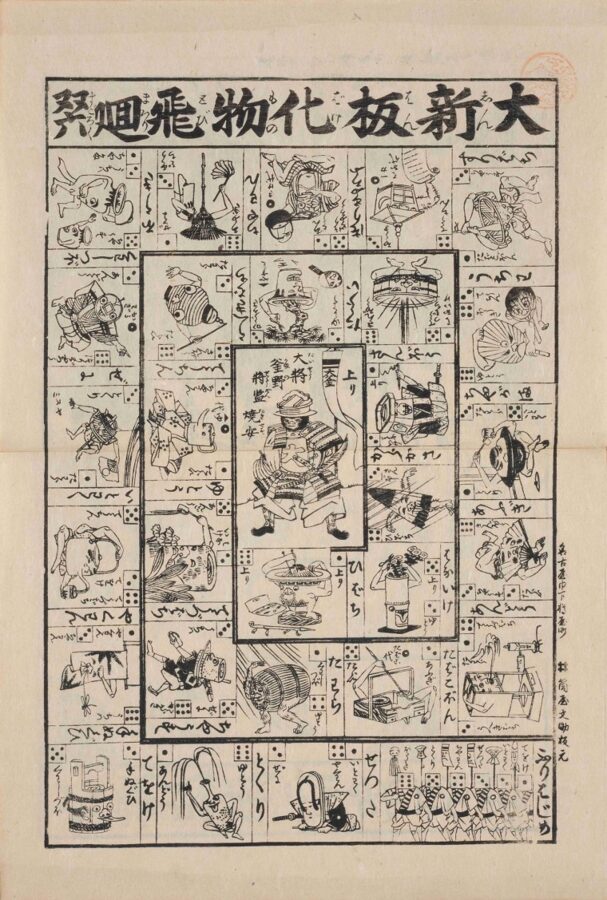
The one-legged form belongs to Edo-period toy prints and games. Children met it on obake karuta cards and on sugoroku boards, a dice race much like snakes and ladders.
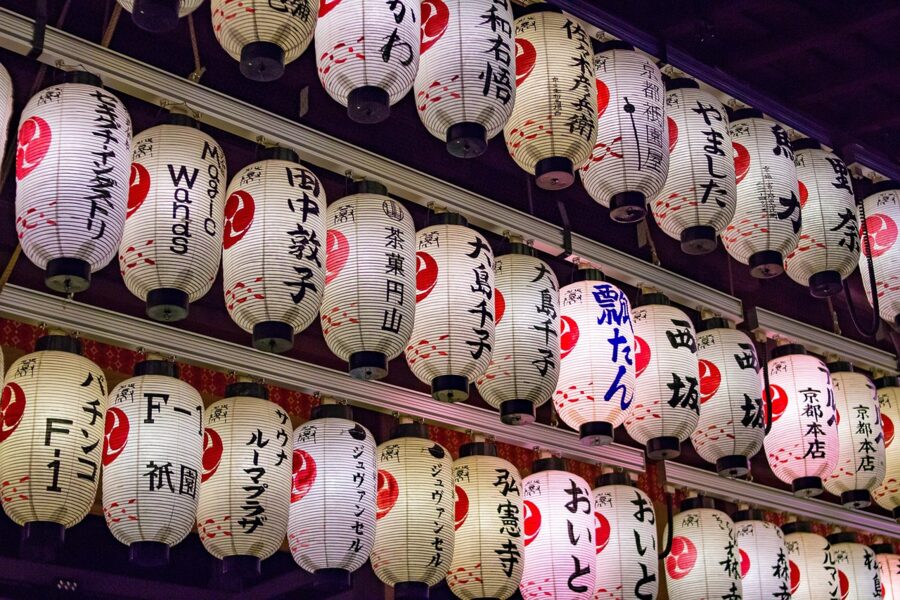
Chochin-obake, the lantern ghost
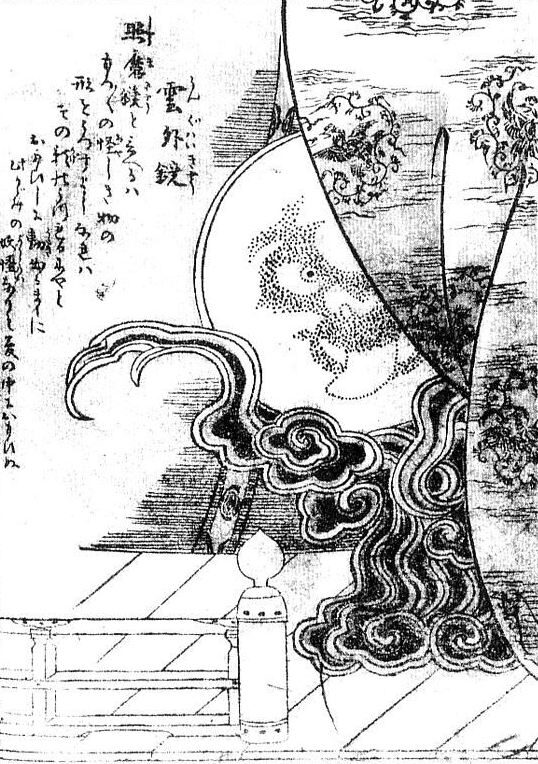
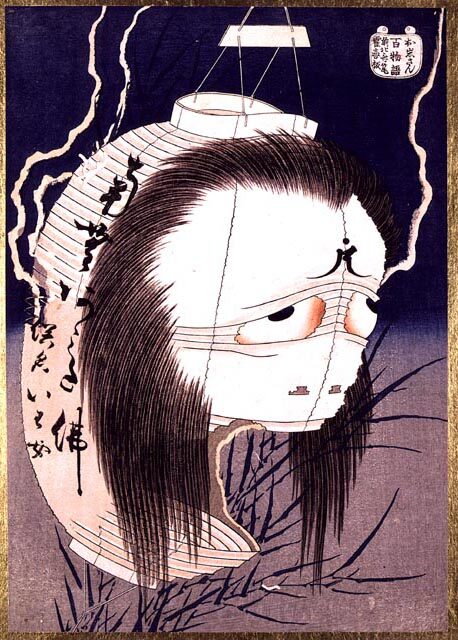
The lantern ghost splits along a rib to make a mouth. The most famous lantern in Japanese art is not a pure tsukumogami, though: in Hokusai’s print for his One Hundred Tales series, the face in the lantern is Oiwa, the murdered wife of the kabuki play Yotsuya Kaidan.
Bakezori, the sandal that runs off
Straw sandals were cheap and thrown away often. The bakezori, a sandal with arms and legs, runs about the house at night in stories that tell children to look after their footwear.
Ittan-momen, the flying cloth
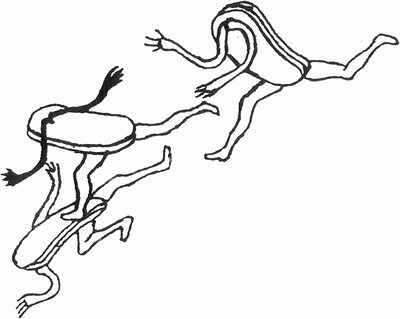
Ittan-momen is a single tan of cotton, roughly ten metres, that flies at dusk and wraps itself around a traveller’s face. It comes from Kimotsuki in Kagoshima Prefecture, in southern Kyushu, and strictly it is a local yokai, not an object aged into life. It belongs on this list because Mizuki Shigeru made it one of Kitaro’s companions in GeGeGe no Kitaro, and you can meet it in bronze on the Mizuki Shigeru Road in Sakaiminato, Tottori, in Chugoku.

Needles, dolls and the year-end sweep
The tale is fantasy, but the habits around it are real. Japan has many kuyo, Buddhist memorial services for objects, and the logic is the scroll’s: a thing that served you deserves a farewell, not the roadside.
Susu-harai: the great sweep
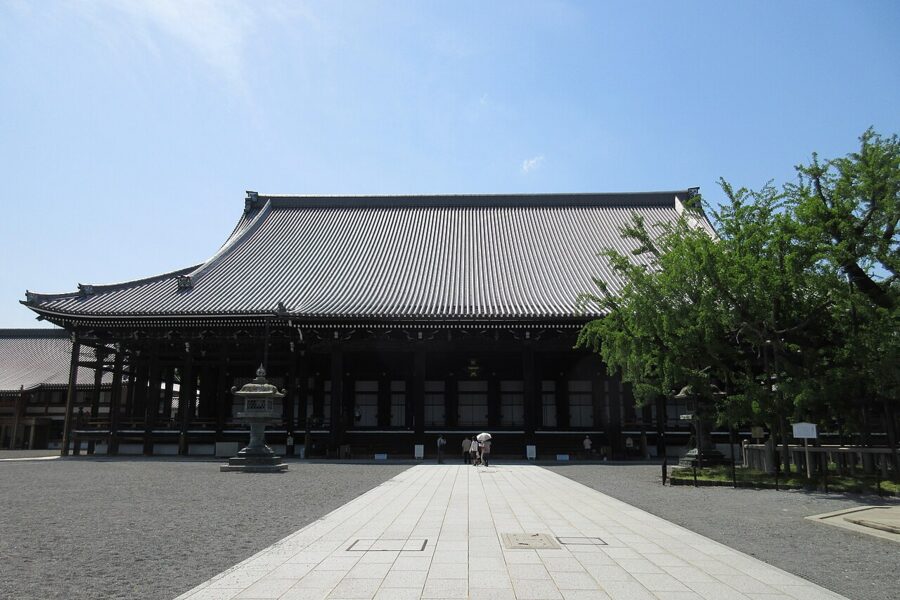
In the Tsukumogami-ki, susu-harai, the “soot sweeping” before the new year, is what sets the tools off. At Nishi Hongan-ji in Kyoto, the year-end Osusuharai falls on 20 December, when lines of people beat a year’s dust out of the Goeido and Amidado halls. In 2026 it runs from about 7am to 7.40am, and anyone may join in (as of November 2026).

Hari-kuyo: a rest for broken needles
At hari-kuyo, anyone who sews brings broken and bent needles and pushes them into something soft, so that after a hard working life they can rest. The Kanto date is 8 February; in Kansai many temples keep 8 December, and some do both.
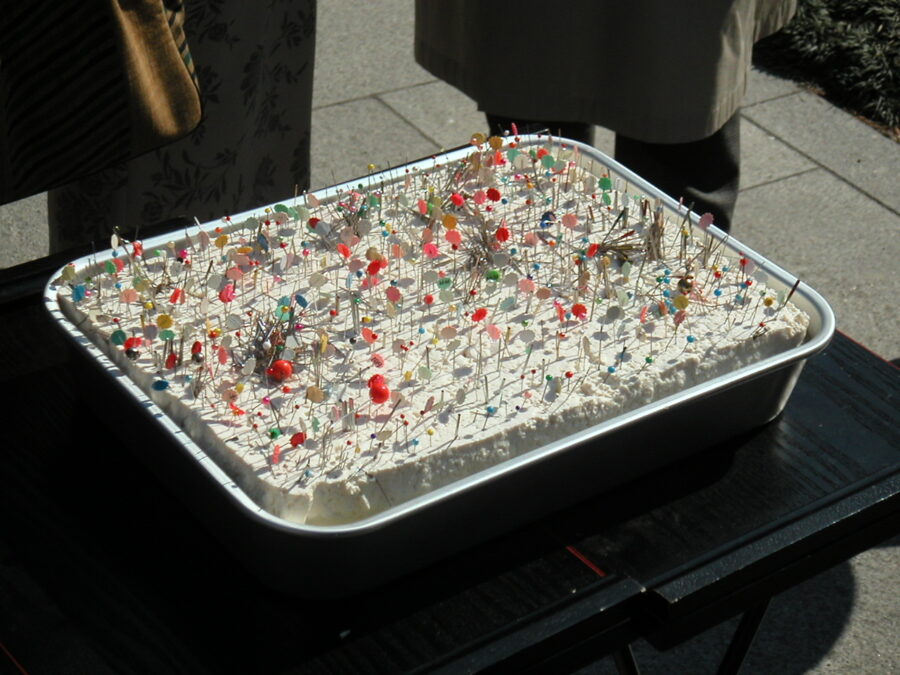

In Tokyo, Senso-ji in Asakusa lists the hari-kuyo at Awashima-do on 8 February in its calendar of annual events. In Kyoto, Horin-ji, the Kokuzo temple on the hill across the river from Arashiyama, holds its needle service at 1pm on 8 February and 8 December. Here the needles go into konnyaku, and the temple says the December service still includes needles from the imperial household. Bring used needles on the day only; hypodermic needles are not accepted (as of November 2026).
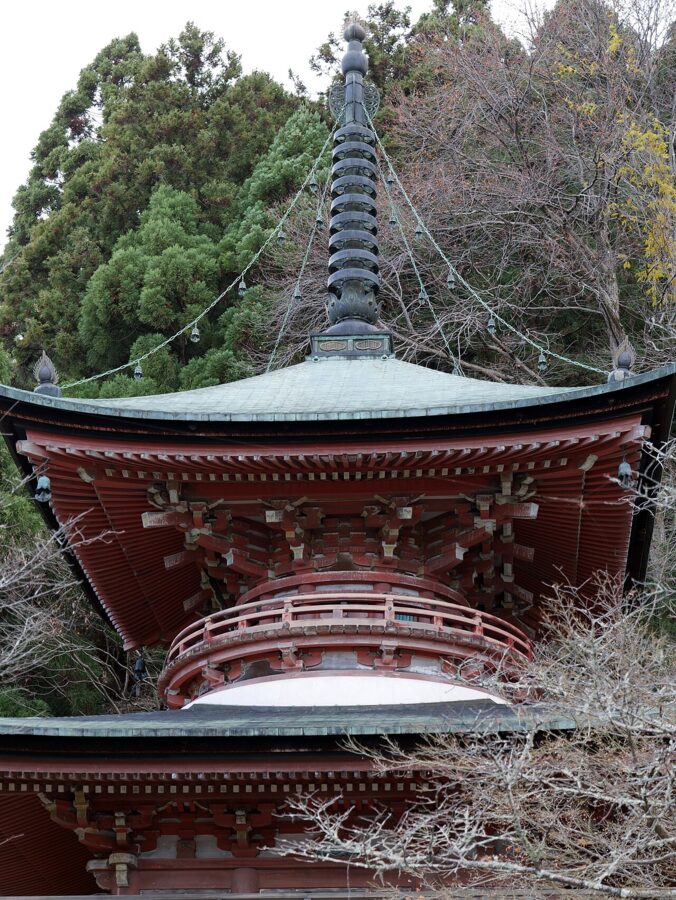

Ningyo-kuyo: dolls you cannot throw away
Dolls have faces and were usually gifts, so many families cannot bring themselves to bin them; temples take them in and hold a service first. Hokyo-ji in Kamigyo-ku, a convent long headed by imperial princesses and known as the doll temple, holds its ningyo-kuyo on 14 October. Dolls are accepted that morning from 10am to 10.30am, and the service at the doll mound follows at 10.30am.
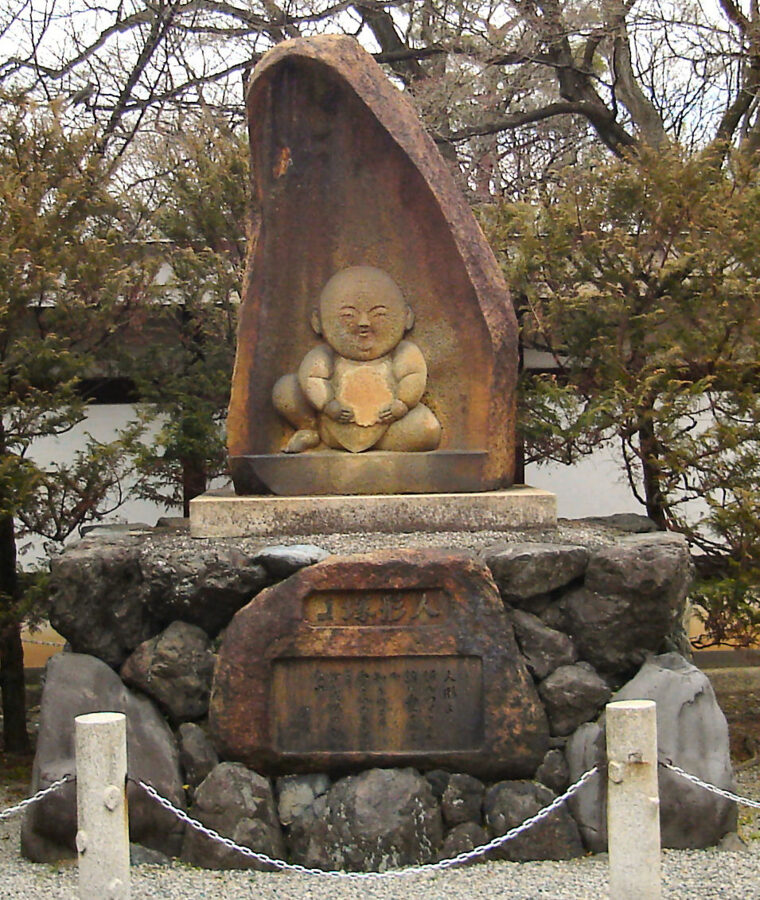

Its next special showing of hina dolls runs from 8 January to 28 February 2027, 10am to 4.30pm (last entry 4pm), for ¥800 (about £4 / $5.50), as of November 2026. At any service, keep to the edges and keep quiet; the usual manners apply.
Tsukumogami today
In the Edo period the object monsters moved from sermons to the toy shop. In the twentieth century Mizuki Shigeru turned Sekien’s catalogue and regional lore into the cast of GeGeGe no Kitaro, which is why ittan-momen and the umbrella ghost are as familiar to Japanese children as any cartoon animal.
Since then the idea has become a plot device across anime, manga and games. The game Touken Ranbu explains its warriors as the spirits of famous old swords, and the 2018 anime Tsukumogami Kashimasu follows two Edo shopkeepers whose rental stock gossips behind their backs.
There is a gentler modern reading too. In a country of convenience stores and 100-yen shops, people use tsukumogami to explain mottainai, the feeling that waste is wrong. The scroll would half agree: its cure is not keeping everything, but saying goodbye properly.
Where to see tsukumogami in Japan
Ichijo-dori and Daishogun Hachi Shrine, Kyoto
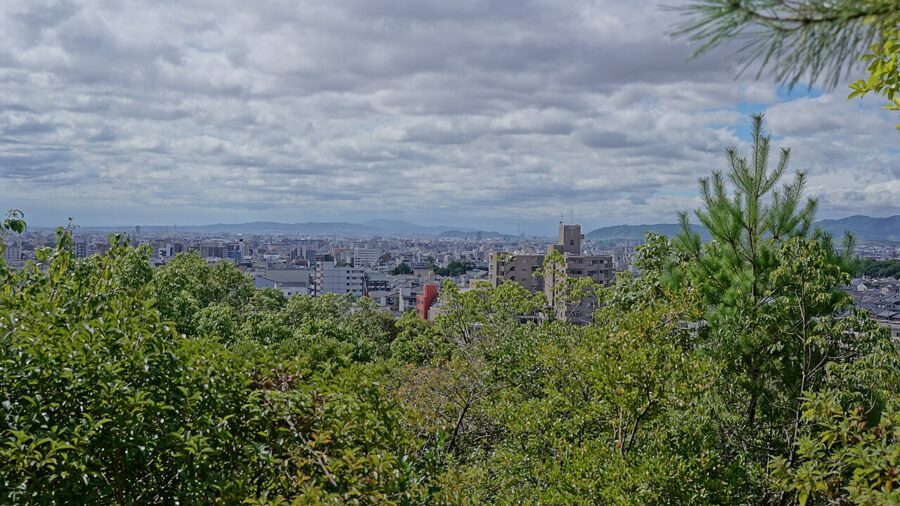
The Tsukumogami-ki sends its procession along Ichijo, the northern avenue of Heian-kyo, and today’s Ichijo-dori follows much the same line. The stretch by Daishogun Hachi Shrine, the Taishogun shopping street, has called itself “Yokai Street” since 2005, and shopkeepers put handmade yokai figures outside their doors among the bakeries and everyday shops.
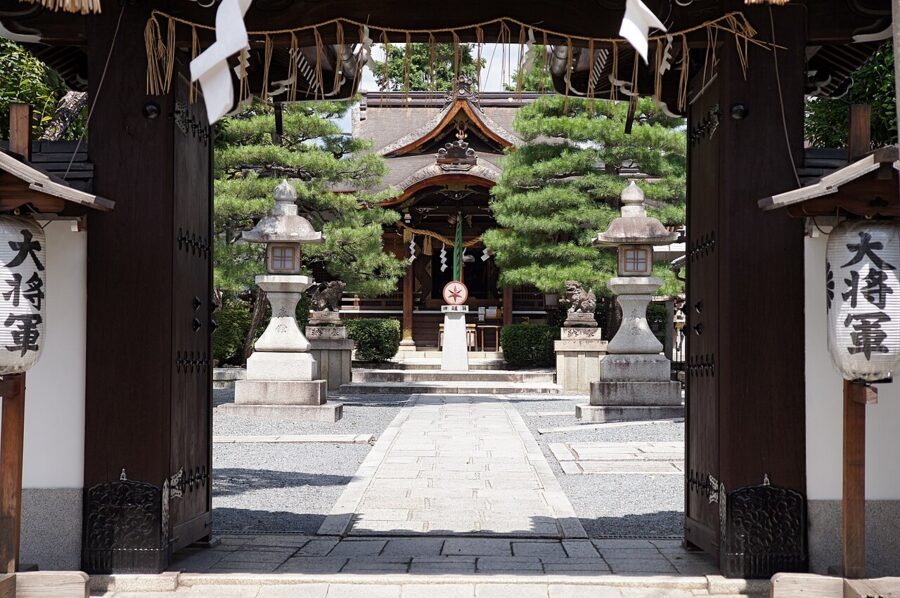

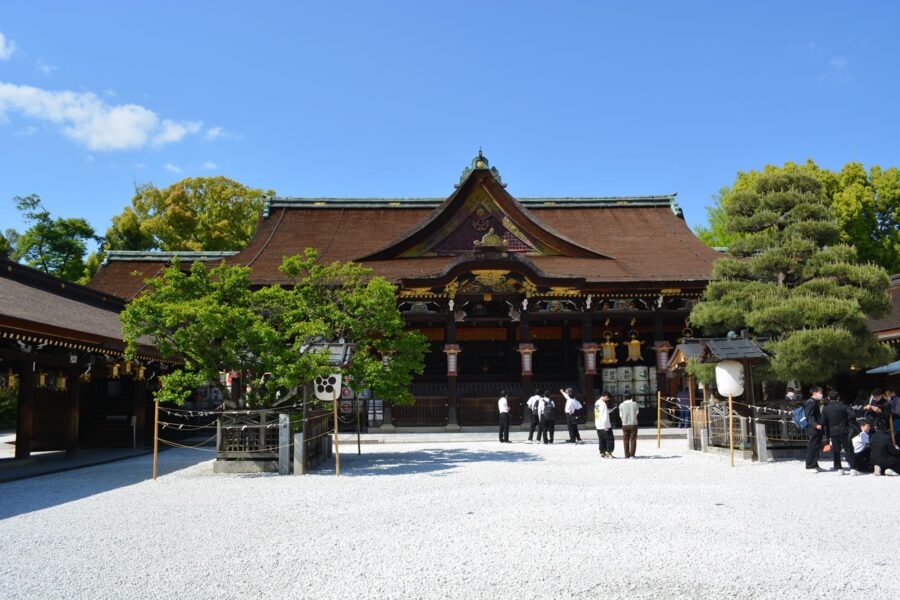
The shrine has nothing to do with yokai. It was founded in 794 to guard the capital’s north-west, and its treasure hall, the Hotokuden, holds some eighty wooden statues of the Daishogun gods from the tenth to thirteenth centuries, together an Important Cultural Property. The hall opens from 1 to 5 May and 1 to 5 November, 10am to 4pm, for ¥500 (about £2.50 / $3.50), or by arrangement; the grounds are open 6am to 6pm daily (as of November 2026).
- Getting there: Kyoto City Bus to Kitano Tenmangu-mae, then 200 metres south-west, or to Kitano Hakubaicho, then 300 metres south-east. The shrine puts the bus ride from Kyoto Station at about 50 minutes. The Randen tram’s Kitano Hakubaicho terminus is a few minutes away.
- Combine with: Kitano Tenmangu next door, and Mount Funaoka about twenty minutes’ walk north-east, where the tools made their camp.
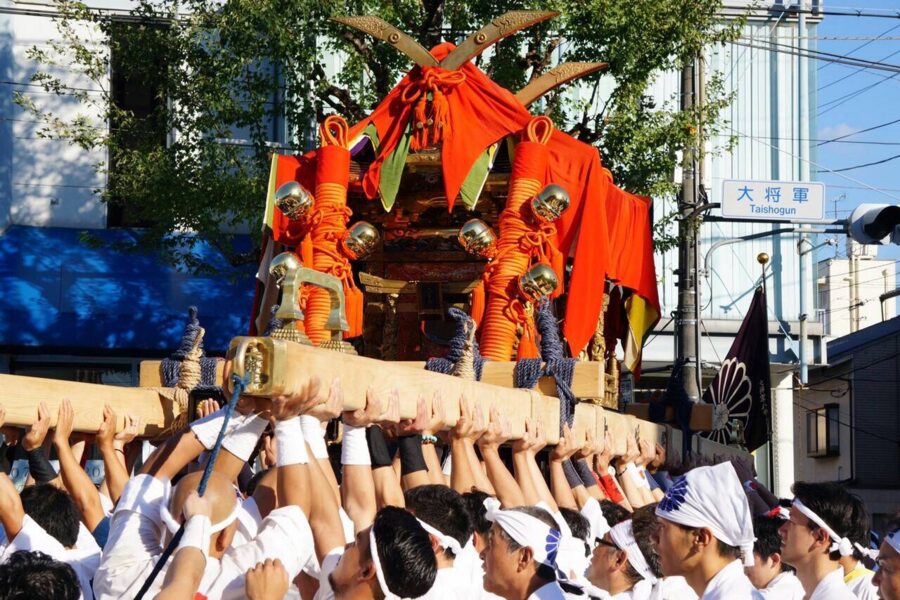
The street began a yokai costume parade, the Ichijo Hyakki Yagyo, in 2005, on the eve of the shrine’s autumn festival. It does not run every year, so check locally before planning around it. The shrine’s own Tenmonsai falls on the third Sunday of October, when about 150 bearers carry an Edo-period portable shrine through the area; in 2026 it was held on 17 and 18 October.

Miyoshi Mononoke Museum, Hiroshima Prefecture
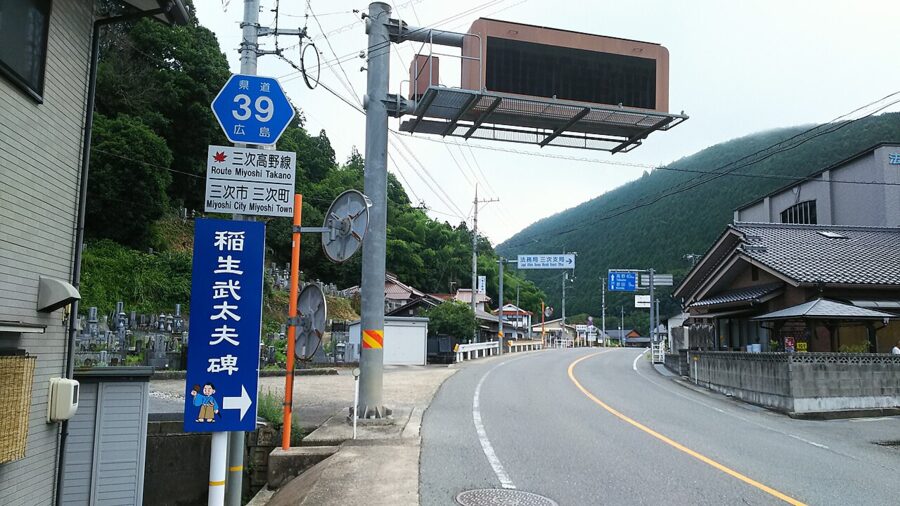
To stand in front of the real things, go to Miyoshi. The Miyoshi Mononoke Museum, officially the Yumoto Koichi Memorial Japan Yokai Museum, opened in 2019 around some 5,000 pieces collected by the folklorist Yumoto Koichi: prints, scrolls, toys, netsuke and household goods. Miyoshi is the setting of the Ino Mononoke Roku, an Edo-period tale of a young samurai haunted for thirty days, which has a gallery of its own.
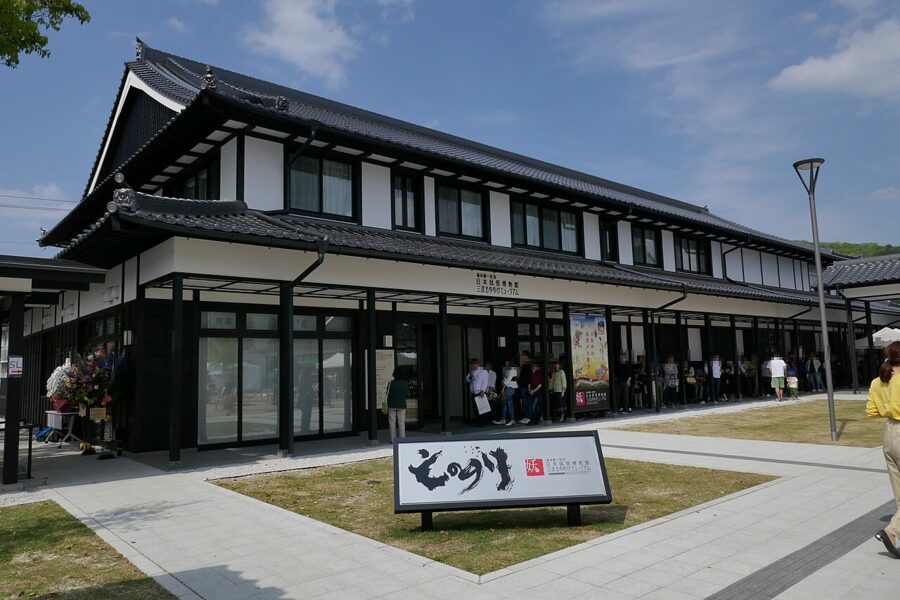

The current exhibition, “Kaiun Mononoke Ippin-ten”, runs from 13 November 2026 to 9 March 2027 and shows the playful side of the collection: yokai toy prints, karuta, spinning tops and 36 carved wooden yokai, with a change of display on 14 January. Photography is allowed in most galleries, without flash.
- Hours: 9.30am to 5pm, last entry 4.30pm. Closed Wednesdays (the next day after a holiday) and over the new year; this winter it closes 26 December to 1 January but opens on 23 December.
- Admission: ¥1,000 (about £5 / $7) for adults, ¥600 for high school and university students, ¥300 for younger pupils; under-sixes free (as of November 2026).
- Getting there: the JR Geibi Line rapid from Hiroshima to Miyoshi takes about 1 hour 20 minutes, and a highway bus from Hiroshima Bus Center reaches the museum in about 1 hour 30 minutes. From Miyoshi Station it is about ten minutes by local bus. More in trains in Japan.

The scrolls themselves
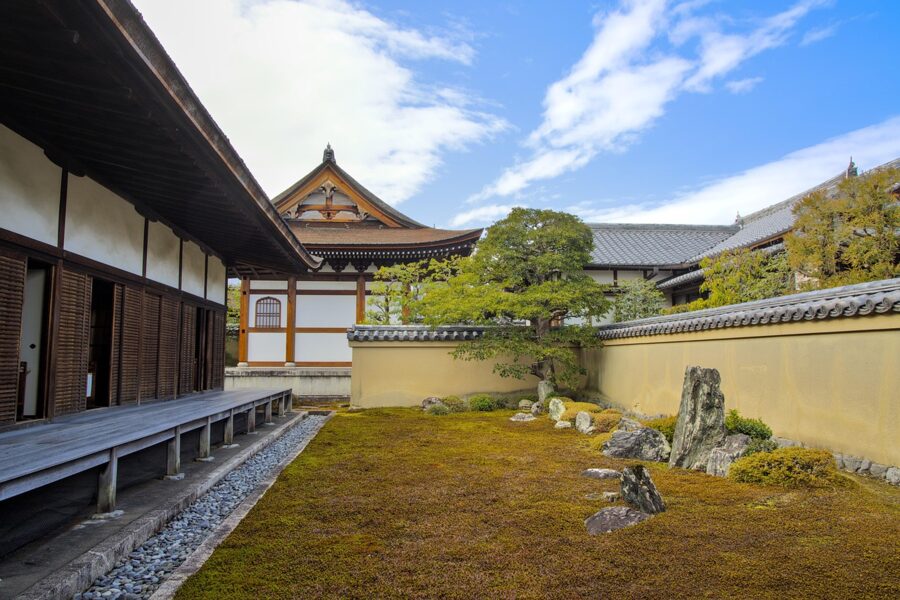
The great originals are rarely shown. The Shinju-an scroll stays in its sub-temple at Daitoku-ji, normally closed to the public, and the oldest Tsukumogami-ki is kept at Sofuku-ji in Gifu. Other night-parade scrolls belong to museums in Osaka, Tokyo and Sakura and appear on rotation, so watch exhibition calendars.
The easiest way to read them is online. Alongside Kyoto University’s scroll and the National Museum of Japanese History’s gallery, the International Research Center for Japanese Studies runs a yokai image database drawn from scrolls and picture books in many collections.
The other Miyoshi, in Shikoku
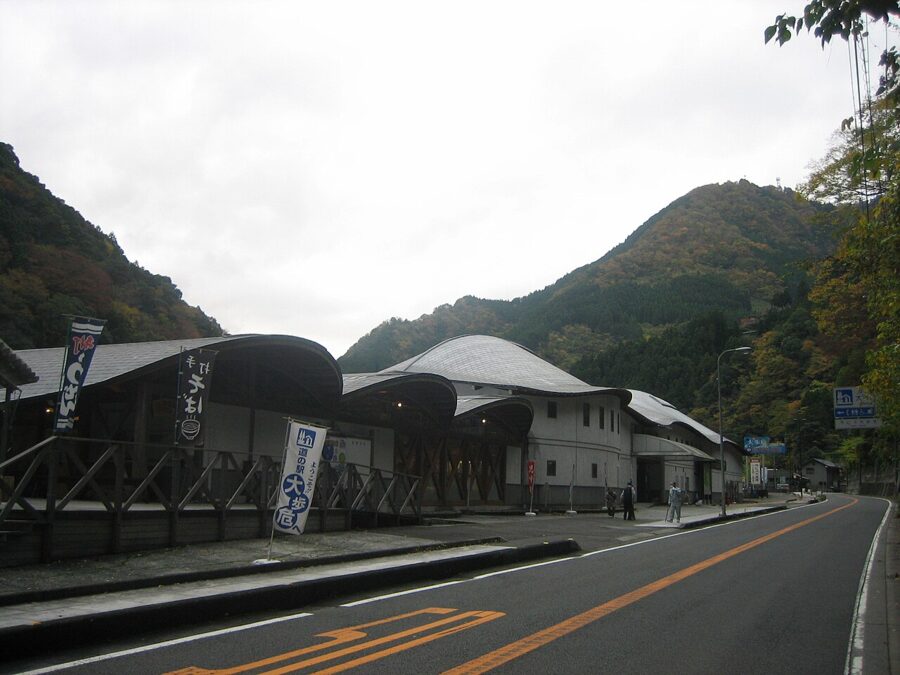
Do not confuse the Hiroshima museum with Miyoshi City in Tokushima Prefecture, in Shikoku. Around the Oboke gorge, villages have gathered local yokai legends since the late 1990s, claim the crying-baby ghost konaki-jiji, and run a Yokai Yashiki display at the Oboke roadside station. These are mountain and river spirits rather than tsukumogami, and I could not confirm current hours or prices on an official page.
Wherever you start, end on Ichijo-dori. Walk west towards Daishogun Hachi Shrine at dusk, like the regent on his way home, past the figures in the shop doorways, and imagine a pot, a rosary and a broken umbrella coming the other way.