
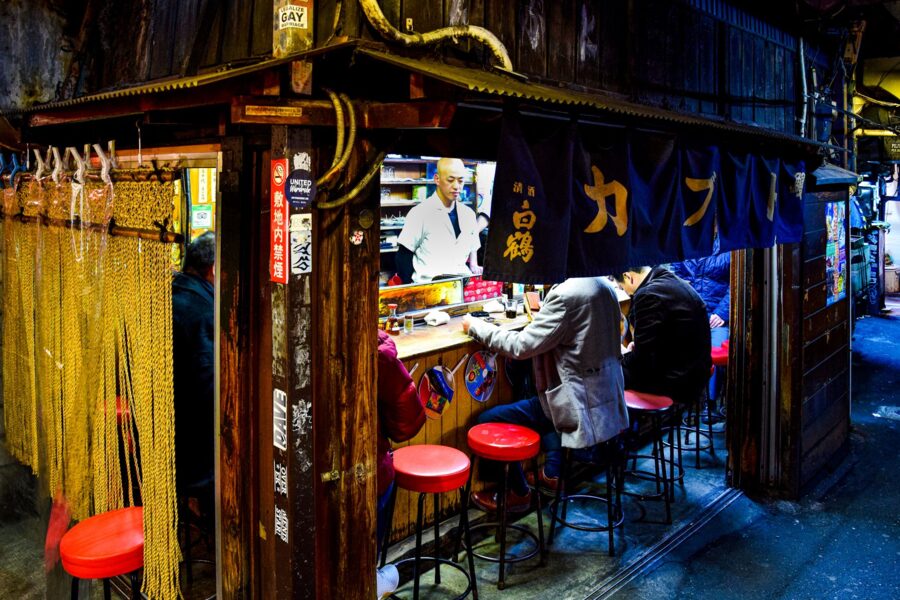
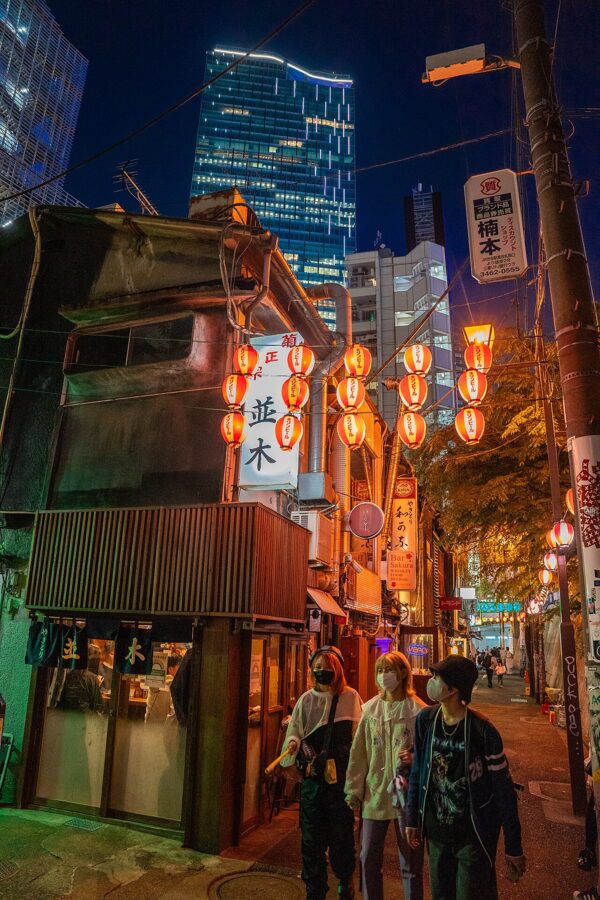
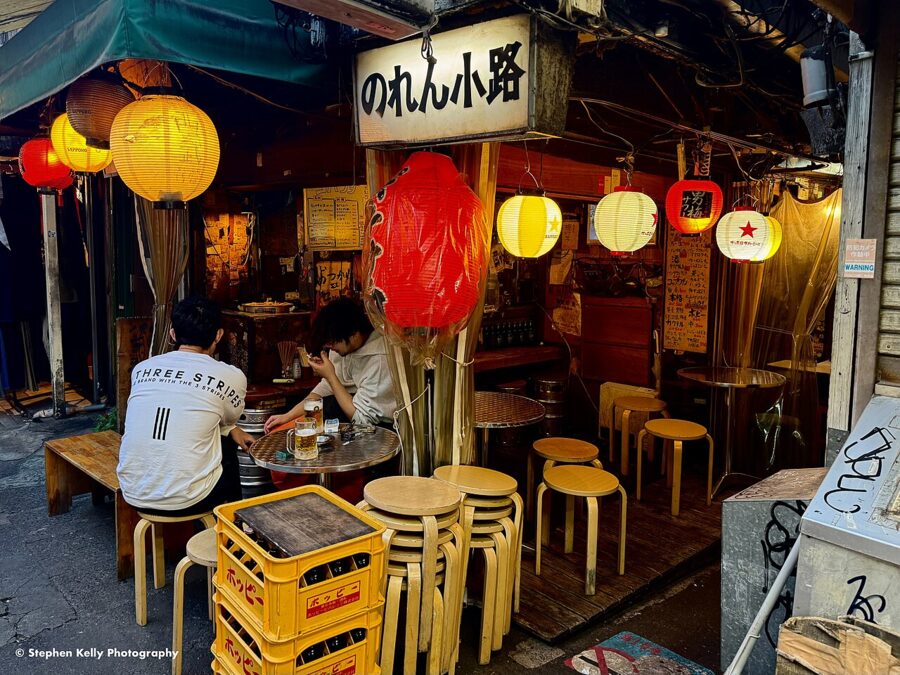
Omoide Yokocho, the lanes beside the West Exit of Shinjuku Station, fits about 60 bars and grills onto some 2,000 square metres of land, and many of its counters seat five or six people. It began as an open-air market in the ruins of Tokyo after the Second World War, and the scale has hardly changed. That is the shape of a night out in Japan: small rooms, a short menu, smoke from a charcoal grill and a stranger’s elbow beside yours.
Almost every evening in Japan starts in an izakaya. From there the night branches: the bar alleys of Tokyo, Osaka and Kyoto and the street stalls of Fukuoka, a karaoke box, a basement gig, a theatre or a summer riverbank. A handful of rules catch people out along the way, from the last train to the smoking laws and the ID check at a club door. Prices and hours here are as of November 2026.

Contents
How an izakaya evening runs
The word izakaya (居酒屋) is three characters: stay, sake, shop. It is a pub that feeds you, with small plates meant for sharing and a drinks list that runs from draught beer to shochu. In Tokyo most open at 17:00 or 18:00 and close at 23:00 or midnight, around the time the last trains leave, though some stay open into the small hours.
The Tokyo izakaya routine holds anywhere in the country. Staff ask how many you are, and holding up fingers is a perfectly good answer. You sit at a counter, a low table or a tatami room (shoes off, into a cubby), and a hot towel arrives at once.
Otoshi: the dish you did not order
With the towel comes a small dish called otoshi, and with the otoshi comes a seat charge, the otoshidai. It usually runs from ¥200 to ¥1,000 per person (about £1 to £5 / $1.30 to $6), and it is not a trick played on foreigners: the regulars pay it too. It might be simmered vegetables, a few slices of fish or a spoon of potato salad.
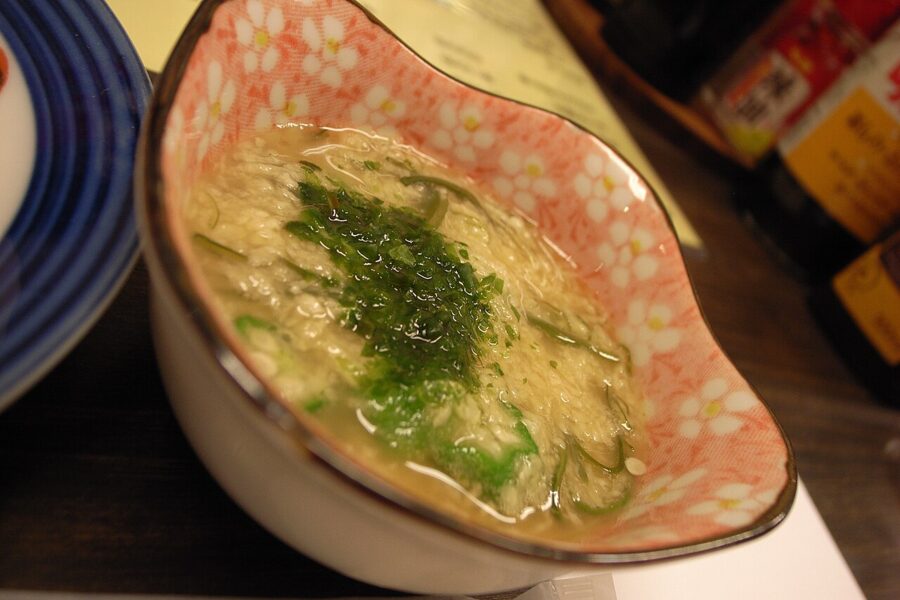

Because it often contains fish or meat, tell the staff early if you do not eat either. Vegetarians should check every dish: a salad in an izakaya can arrive under bacon or cheese, and the dashi stock in most broths is made with fish.
Ordering a round at a time
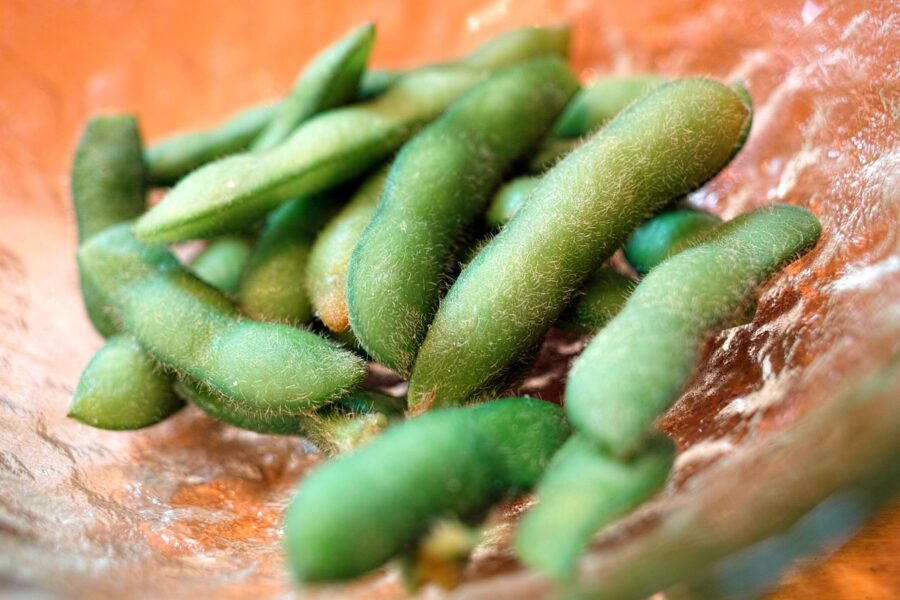
“Toriaezu nama,” draught beer for now, is how half the country starts. Then you order in small rounds rather than all at once, a few plates with each round of drinks. Yakitori, karaage fried chicken, edamame, sashimi and grilled rice balls to finish are the safe ground; the handwritten board on the wall usually holds the day’s specials.
Chains take orders on a tablet. Small places have a paper menu in Japanese, sometimes handwritten, and pointing at what the next stool is eating works well. The drinks to know are the highball (whisky and soda), the sour (shochu, soda and fruit), sake served cold or warm, and shochu itself, on the rocks or cut with hot water.
Nomihodai, the bill and the house rules
Nomihodai means all you can drink. You pay a fixed price for a set time, usually one or two hours, with last orders about 30 minutes before the end; plans in Tokyo usually cost ¥1,500 to ¥2,500 a head (about £7 to £12 / $9.50 to $16). It suits a group that wants beer and sours. If you came for sake, I would skip it and pay by the glass for something better than the house bottle.
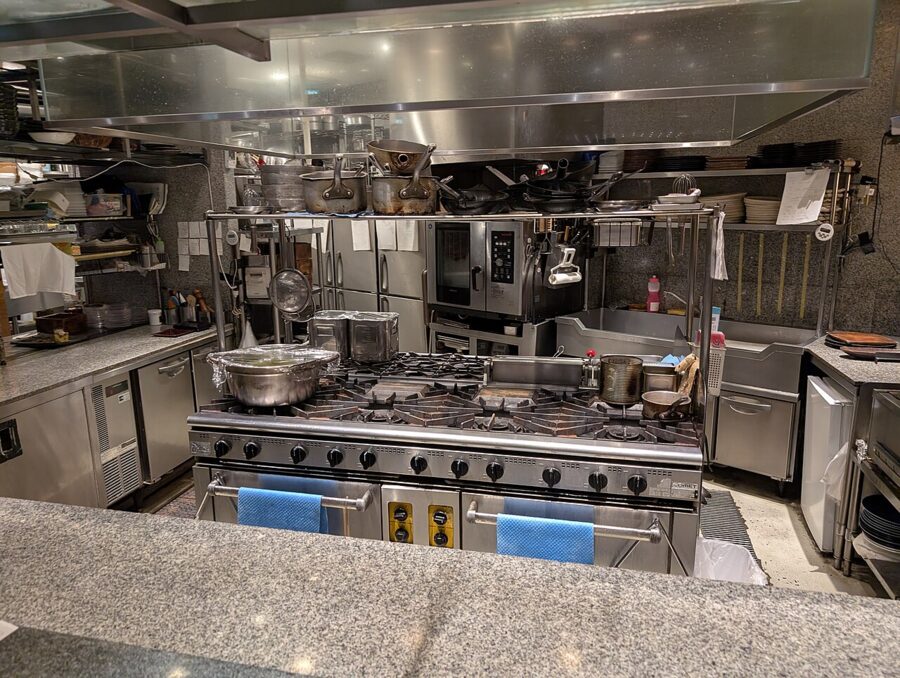
To pay, say “okaikei onegaishimasu” or cross two index fingers into an X. The bill is rarely itemised, so groups split it evenly, and there is no tipping. A budget of ¥2,000 to ¥4,000 per person (about £10 to £19 / $13 to $25) covers an ordinary evening with drinks. Carry cash, and read up on practical information such as money before you go: the old lanes are where cards are least welcome.
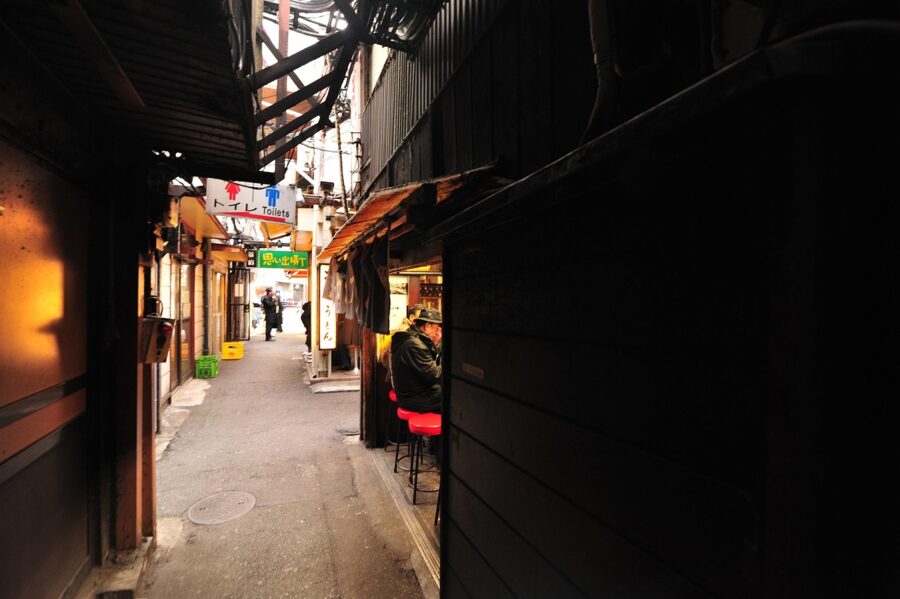
Some bars keep their own rules. The Omoide Yokocho association warns first-timers that some of its shops charge a seat fee, some ask each person for one dish and one drink on entry, and some limit a group to 90 minutes. Shops on its middle lane share a communal toilet.
The drinking districts, city by city
Every Japanese city has a yokocho, an alley of tiny bars near a station, and many grew out of the open-air markets that sprang up after the Second World War. They reward manners more than money: walk the lane once before choosing and keep the group small.
Tokyo: Golden Gai, Omoide Yokocho and the rest
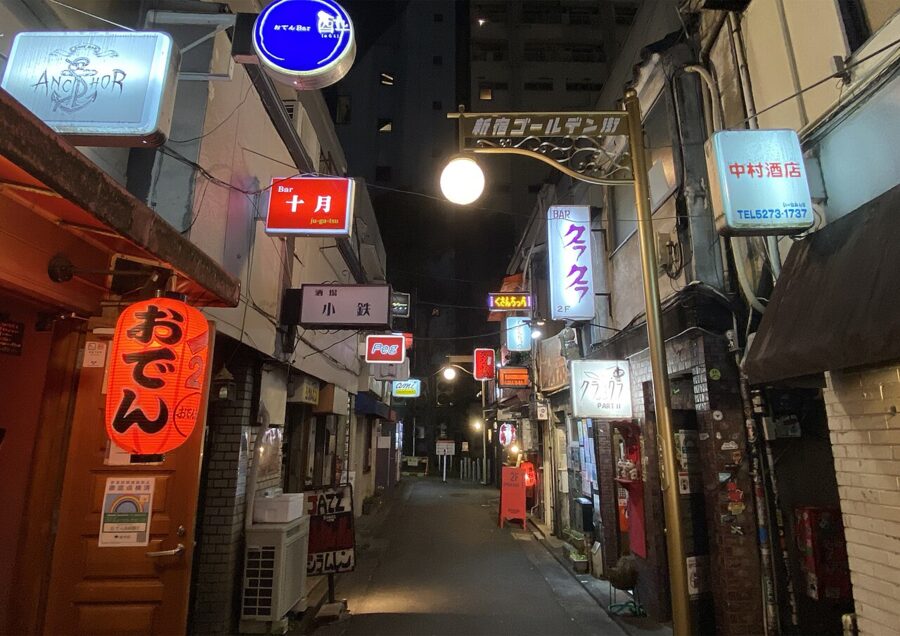
Golden Gai is a few minutes’ walk from the East Exit of Shinjuku Station, on the edge of Kabukicho. Around 280 bars share a handful of narrow lanes, most opening at about 20:00 and trading until near dawn. Some are for members only, many welcome anyone, and some charge a cover on top of the drinks, so ask before you sit.
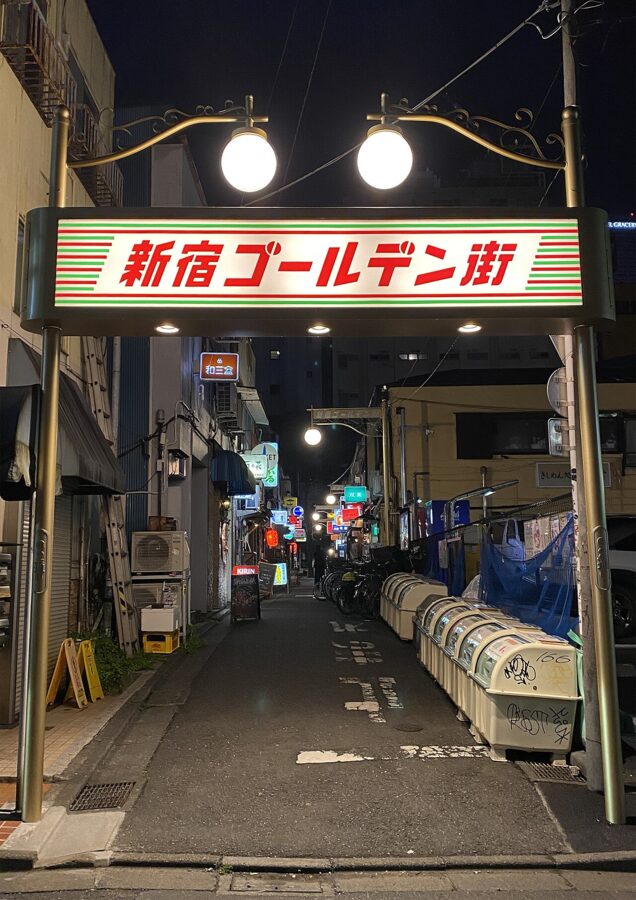

The lanes are private roads. The shopkeepers’ association behind much of the district sets its own rules on photography: filming or photographing the street needs its permission, it will charge for unauthorised shoots, and smoking or drinking in the lane is banned. Photographs inside a bar are a matter for that bar. My advice is simple: drink first, and ask the person behind the counter before you lift a phone.
Omoide Yokocho, on the other side of the station, is where to eat. Its grills do motsuyaki and yakitori, and the smoke tells you which are busy. A fire on 24 November 1999 burned about a third of the lanes, so the association bans smoking anywhere outside the shops that allow it, and it marks the date every year with a fire drill.
Shibuya’s Nonbei Yokocho, right next to Shibuya Station, dates from the early 1950s and has about 40 bars, some for four or five people. Shibuya bans drinking in the street in designated areas around the station from 18:00 to 05:00, so the bars are the place for it. Further out, Harmonica Yokocho by Kichijoji Station began as a post-war market and turns into a run of standing bars after dark.

The city’s yokocho list runs on from there. Ebisu Yokocho is a covered alley of about 20 small eateries, most open all night. Shimbashi is the salaryman’s district, with standing bars under the arches toward Yurakucho, and Ameyoko between Ueno and Okachimachi trades market stalls for izakaya in the evening.

Osaka: Dotonbori, Hozenji Yokocho and Ura Namba
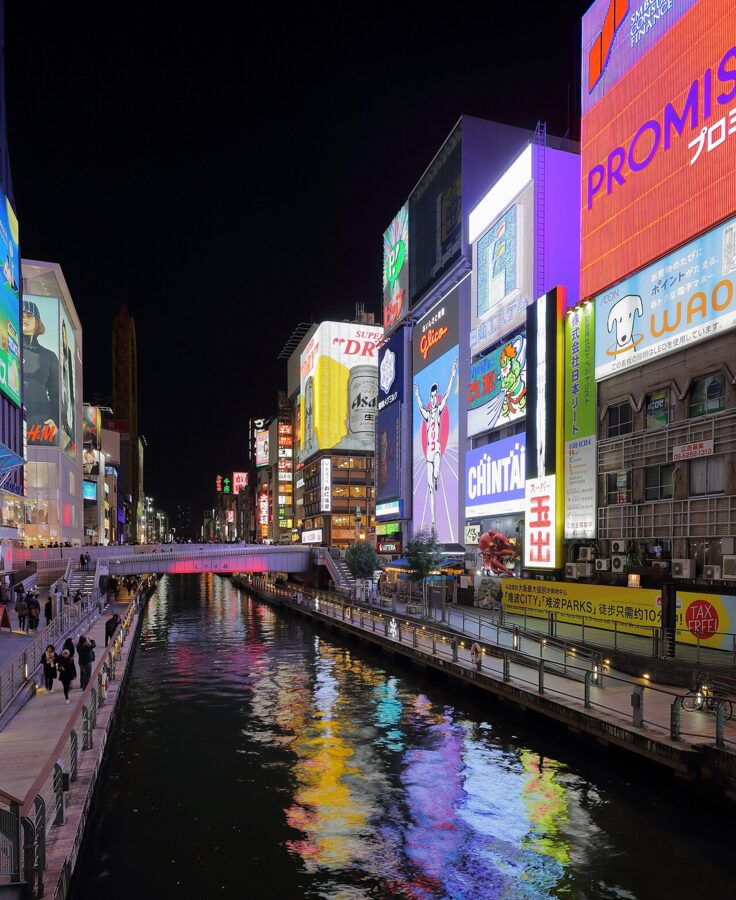
Osaka eats as hard as it drinks, and the night begins on the Dotonbori Canal in Namba, under the stacked neon of the Ebisu Bridge. Dotonbori is for looking and snacking. For drinking, walk a block south.

Hozenji Yokocho is a stone-paved alley beside the small temple of Hozenji, where people splash water over a moss-covered statue of Fudo before going on to dinner. The alley holds small restaurants and bars under paper lanterns, and I like it best after nine, when the day-trippers have gone.
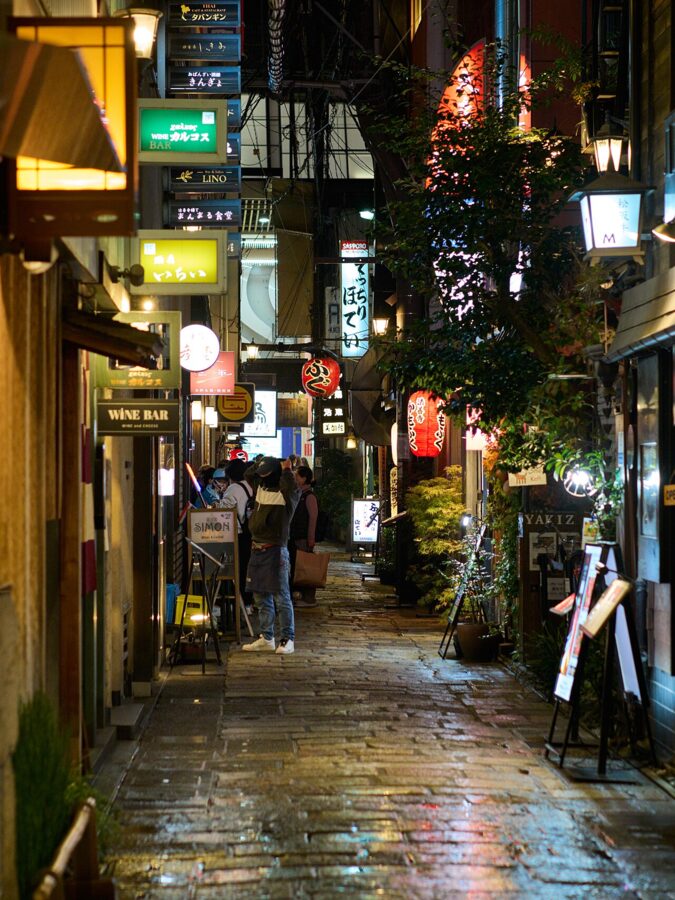
Ura Namba, back-side Namba, is a grid of narrow streets and alleys between the Sennichimae Doguyasuji arcade and Namba Station, with Sennichi Jizoson-dori at its centre. Osaka’s own tourism body counts food from Okinawan to Chinese here, and more than enough bars. I would take it over Dotonbori for an evening: the bars are small and close together, and the second round is a short walk.
Kyoto: Pontocho and the river
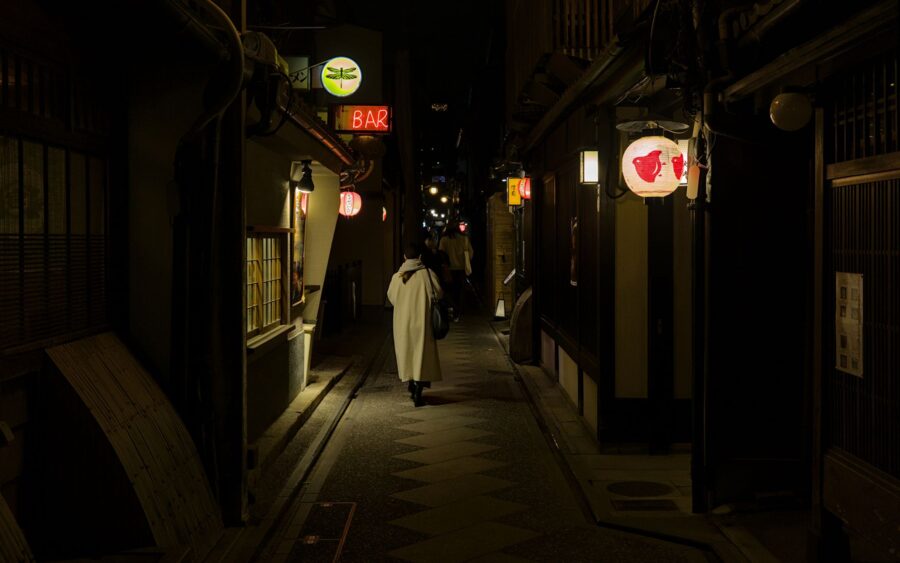
Pontocho is a narrow stone-paved lane running along the west bank of the Kamo River from Sanjo to Shijo in Kyoto. It is a hanamachi, one of the city’s geiko districts, and the Pontocho Noren-kai of its shopkeepers lists everything from meat kaiseki and yakitori to bars, snack bars and karaoke.
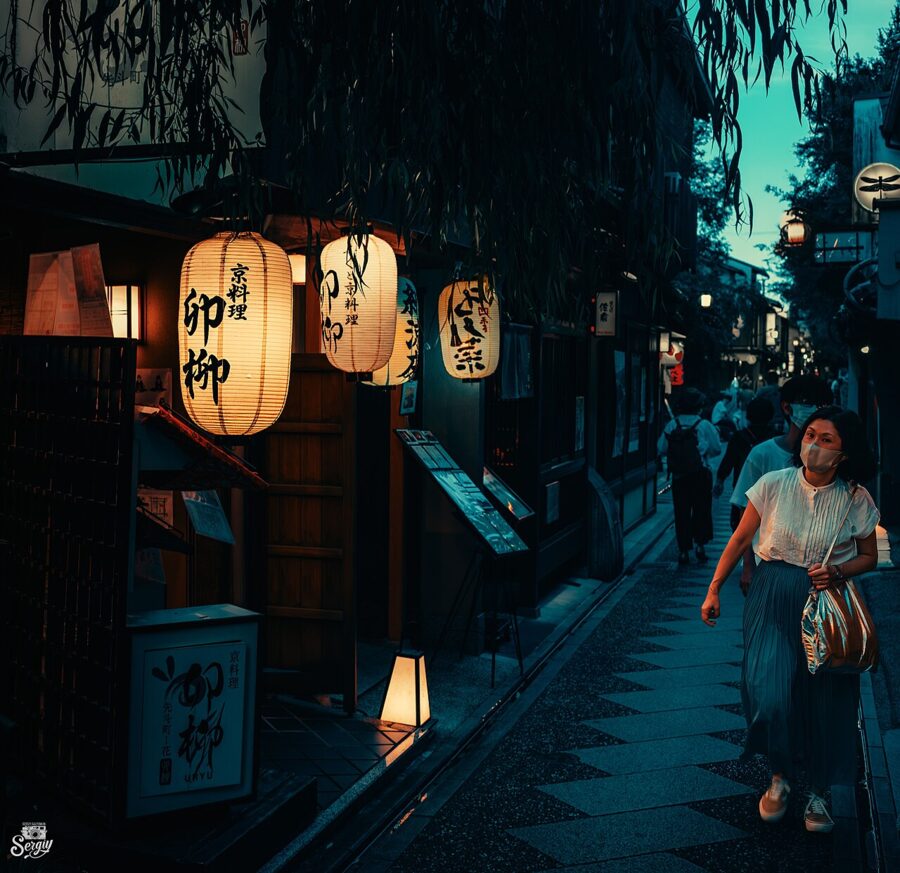

To my mind Kyoto drinks more quietly than Tokyo or Osaka, and Pontocho is the place to hear it: low voices, wooden lattices, a door sliding shut. If a door shows no menu or price, ask before you sit. For a wider choice of ordinary bars, Kiyamachi, the canal street one block west, is the next stop.
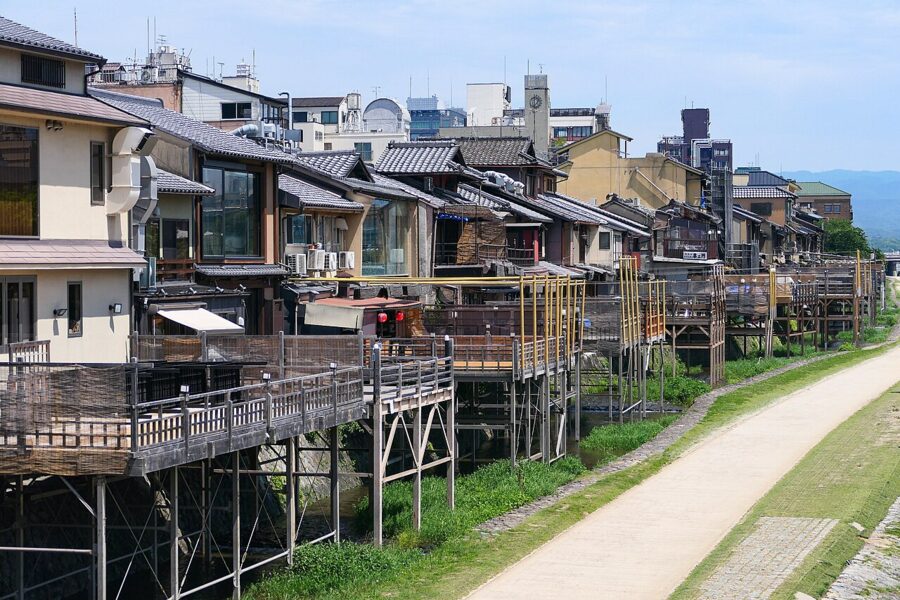
In summer the restaurants on the river side build raised wooden platforms over the Kamo, the noryo-yuka. The Kamogawa noryo-yuka cooperative set the 2026 season at 1 May to 15 October, with some places stopping at the end of September and some opening the platform at lunch. Each restaurant sets its own hours and menu for the platform, so book ahead.
Fukuoka: the yatai
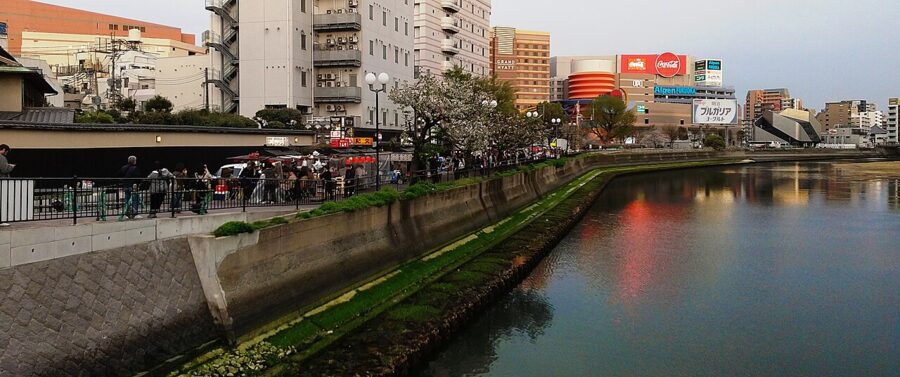
Fukuoka is the city where the night moves outdoors. Its yatai are wheeled food stalls towed into place each evening at Nakasu, Tenjin and Nagahama, each with a counter, a curtain, a few stools and a cook who works in full view. They are a city institution with a city ordinance behind them.
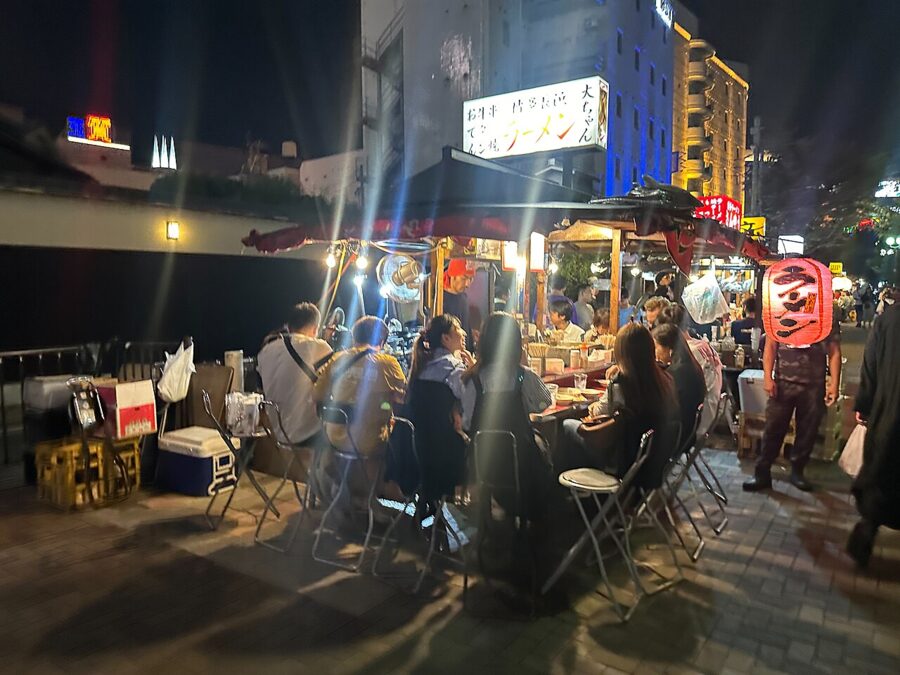

Fukuoka City’s yatai rules allow a stall on its pitch from 17:00 to 04:00, set-up and pack-down included. A typical night, as the city describes it, starts with the stall arriving at 17:00, opening at about 18:30 and closing at about 01:00, with the pitch cleared by 02:30. A stall may be no wider than 3 metres and no deeper than 2.5, food may not be served beyond it, and there is no takeaway.
Raw food is off the menu at a yatai, so expect ramen, grilled skewers and whatever else the cook does best. The counter is the whole restaurant, which makes for a short rule of my own: order a drink and a dish each, eat, talk to the cook, and give up the stool when people are waiting. From Fukuoka the trains run on into the rest of Kyushu, but nothing else on the island eats like this.

Karaoke boxes
Japanese karaoke happens in a box: a private room for your own group, hired by time, with a screen, microphones and a way to order drinks to the room. Big Echo, Karaoke Kan and Joysound run whole buildings of them, and the big station districts usually have one open late. Nobody you do not know will hear you sing.
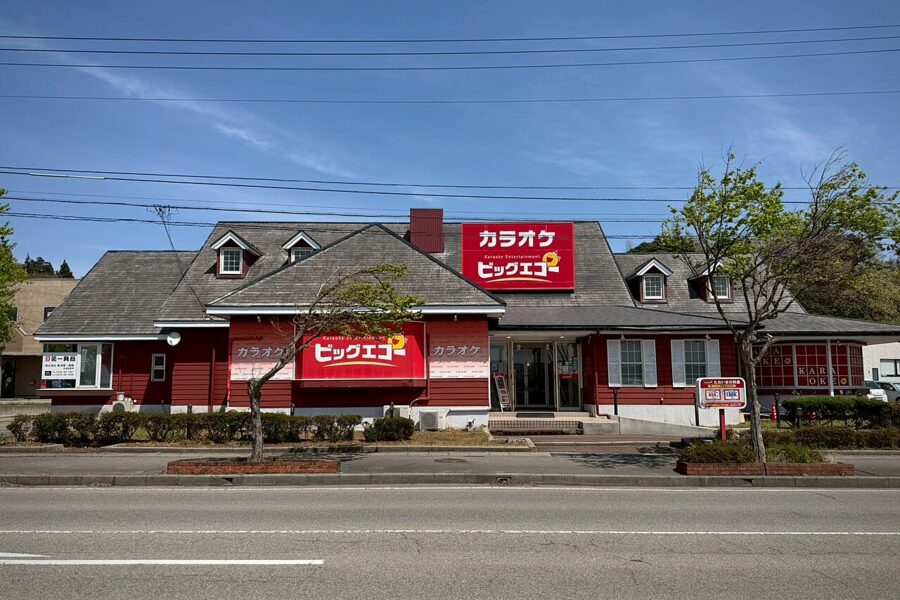

The price board confuses people, so here is how it reads, using Karaoke Kan’s own explanation. The room charge is per person per 30 minutes, not per room. During one-drink hours each person orders at least one drink, once per visit rather than every half hour. Many branches sell a “free time” flat rate for a long block, but the days, hours and whether drinks are included vary by branch.
Rates change with the time of day, and every branch sets its own, so read the board at the counter rather than trusting a figure from elsewhere. Under-18s may stay until 22:00 under the prefectures’ youth rules. Big Echo has rooms for heated tobacco only at some branches; ask for a non-smoking room if you care.
Live houses, clubs and jazz kissa
A live house is Japan’s small music venue: a basement room for a few hundred people standing, several acts a night and a bar at the back. The ticket has two prices, ADV in advance and DOOR on the night, and on top of either you pay a drink charge at the door, which covers one drink. Bands go on early, so an evening show ends well before the last train.
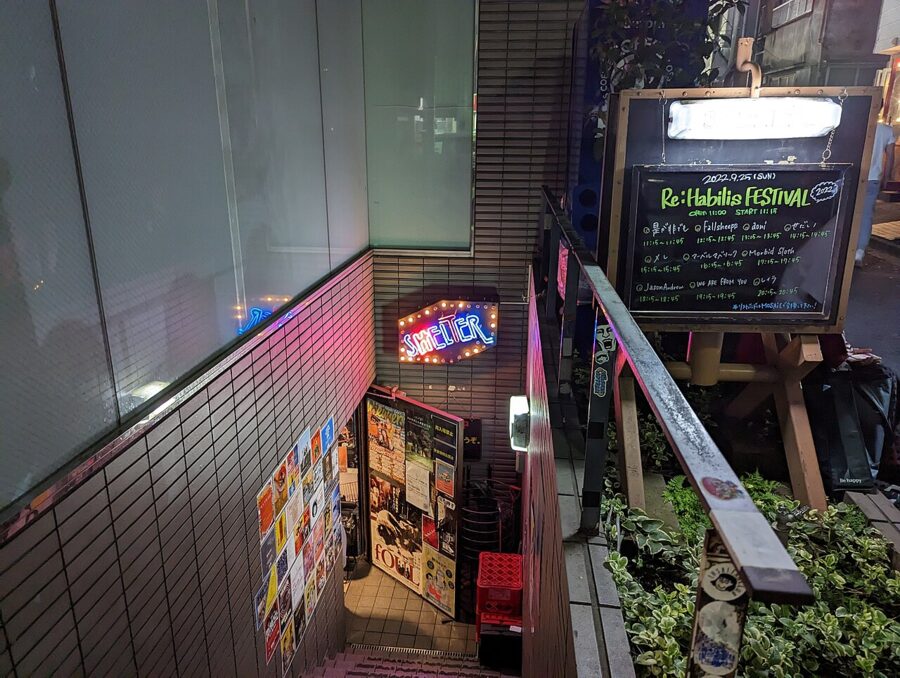
Shinjuku Loft, in a Kabukicho basement that holds 500 to 550, is a fair sample. Its November 2026 listings run from ¥2,500 (about £12 / $16) in advance to ¥4,500 (about £21 / $28) on the door, plus a ¥600 (about £3 / $4) drink charge, with doors at 18:00 or 18:30 for a 19:00 start. The same group runs Shelter in Shimokitazawa, another basement room.
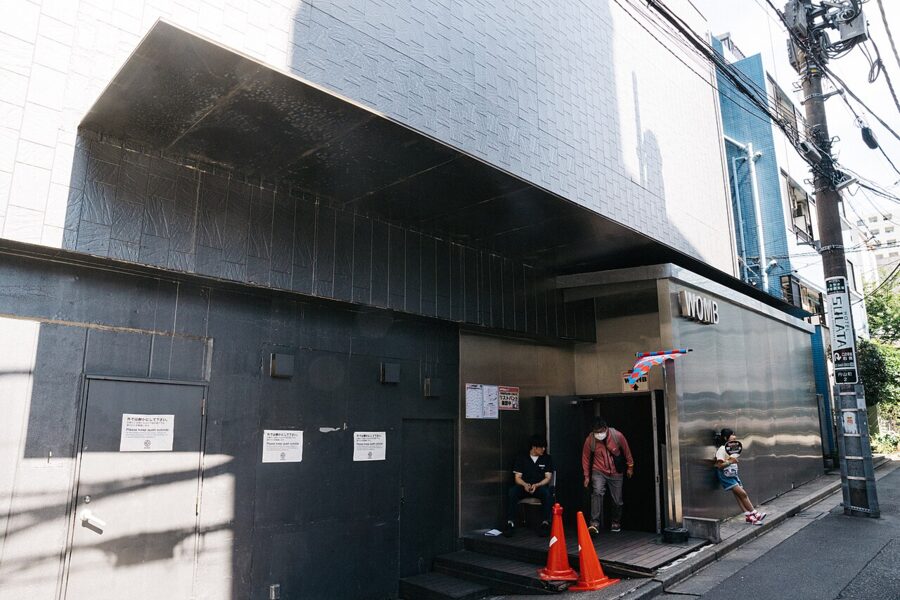
Clubs keep later hours and stricter doors. At WOMB in Shibuya, no one under 20 gets into the late-night events, a passport or driving licence is checked at the door, re-entry is not allowed, and there is no dress code beyond the right to refuse flip-flops in summer. Its late-November 2026 techno night cost ¥3,500 (about £17 / $22) on the door and ¥3,000 (about £14 / $19) in advance.

The jazz kissa is the quiet end of the night: a coffee house built around a record collection and a large pair of speakers, where the customers listen rather than talk. Many serve beer and whisky after dark. Keep your voice down and let the record play out.
Theatre after dark
Kabuki is the obvious evening out, and the Kabukiza in Ginza makes it easy. The December 2026 programme runs from 2 to 25 December in three parts a day, the last starting at 18:00 and ending at 20:30. Seats cost ¥4,500 to ¥17,000 (about £21 to £81 / $28 to $108), and a ticket with a captioning device adds ¥1,500 (about £7 / $9.50).
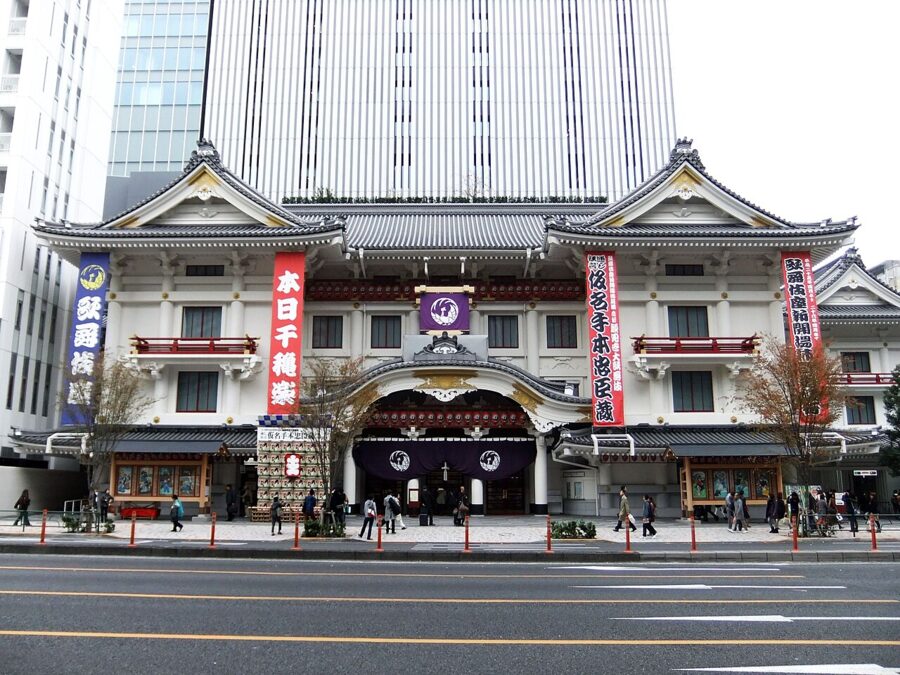
The cheaper way in is a single-act seat. A kabuki programme is several separate plays and dances, and at the Kabukiza you can buy one act alone: reserved online in advance, or unreserved on the top level from the single-act box office on the day. For a first visit one act is plenty, and it leaves the rest of the evening for Ginza’s bars.
Yose, the variety theatres of comic storytelling, are where Tokyo laughs. Shinjuku Suehirotei runs an evening show from 16:45 to 20:30 for ¥3,500 (about £17 / $22), dropping to ¥3,000 from about 18:00 and to ¥2,000 (about £10 / $13) from the interval, special shows excepted. About two thirds of the acts are rakugo, a single storyteller kneeling on a cushion; the rest are manzai double acts, magic and acrobatics.
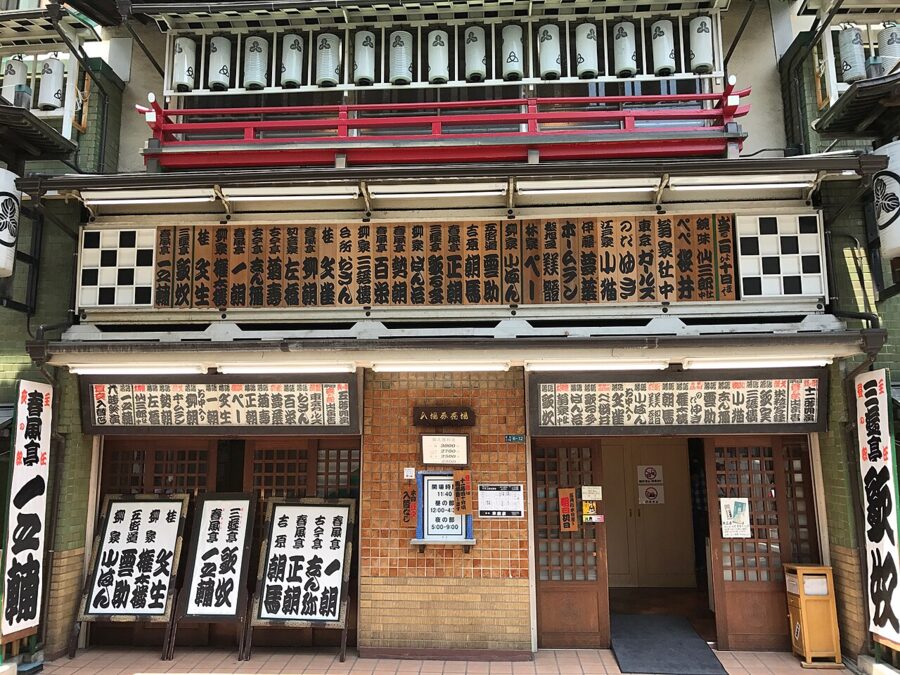

The stories are all in Japanese. I would still go: the room and the timing are worth an hour without a word understood, and the jugglers need no translation.
Summer nights: festivals and fireworks
From July into August the night moves outdoors, and a cotton yukata, a can from a street stall and a crowded riverbank make the whole programme. Several of the big festivals keep fixed dates, so they can be planned a year ahead.
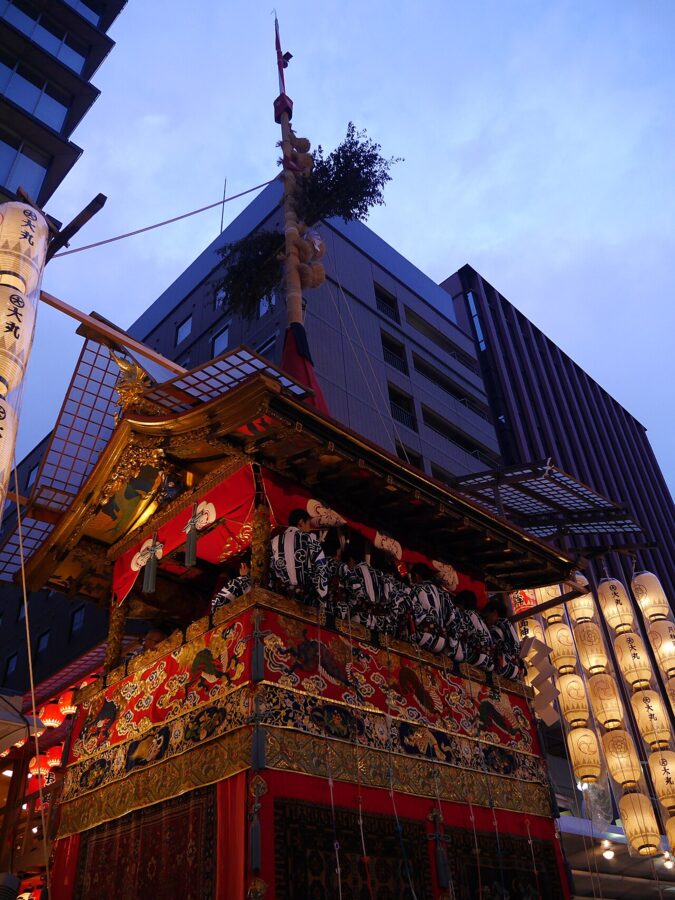
Kyoto’s Gion Matsuri fills all of July. On the yoiyama evenings, 14 to 16 July for the first procession and 21 to 23 July for the second, the floats stand in the streets with their lanterns lit and the festival music playing, and old merchant houses open their front rooms to show folding screens. The city’s festival calendar puts the processions themselves on 17 and 24 July. I would choose the evenings over the processions.
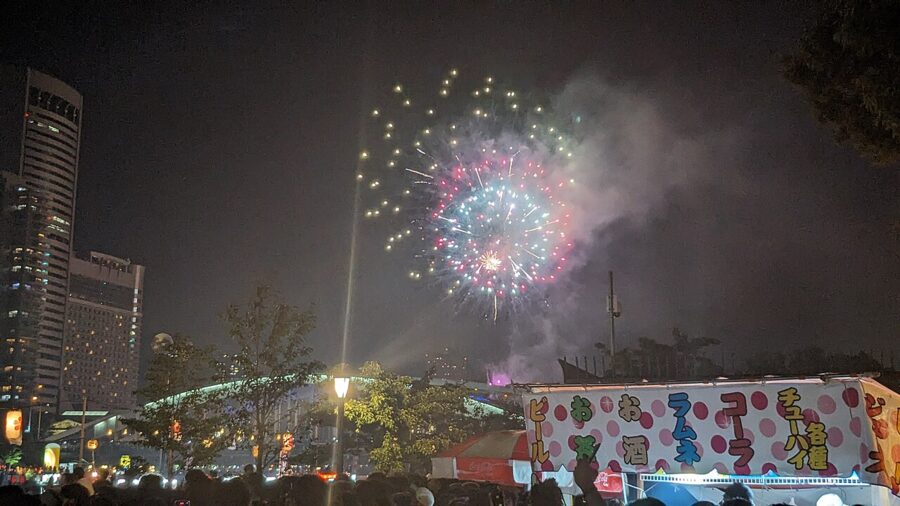
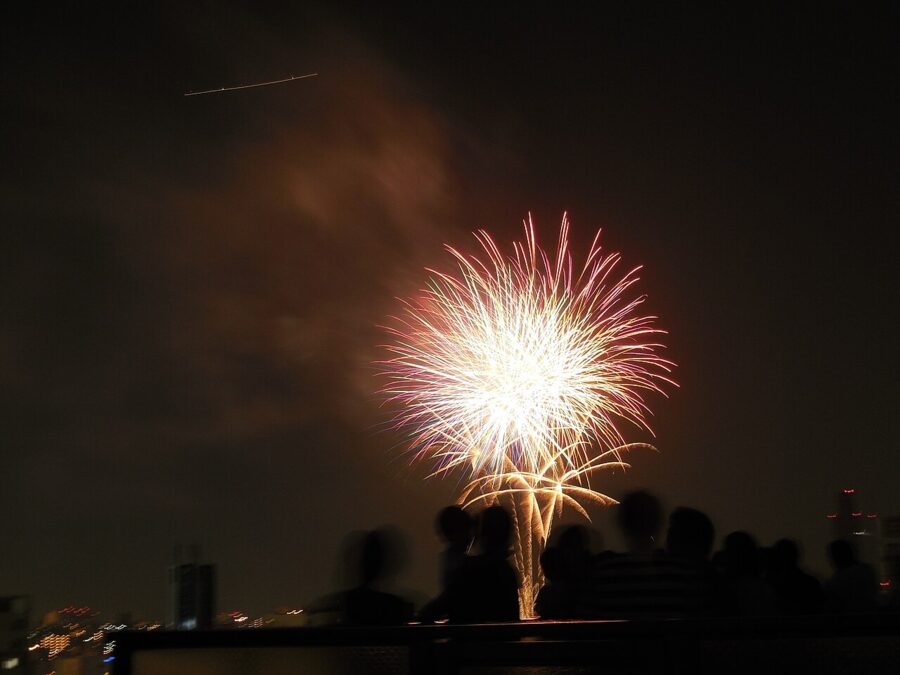
Osaka answers with the Tenjin Matsuri, a boat procession on the Okawa River and fireworks over the city. In Tokyo the Sumidagawa Fireworks Festival is held in late July; the 49th took place on 25 July 2026. There is no seating except paid sponsors’ seats, and the organisers ask people heading home to avoid Asakusa Station, which is badly crowded after the show.

Further north, the Aomori Nebuta Matsuri runs from 2 to 7 August every year. The giant lit floats parade on the nights of the 2nd to the 6th, then by day on the 7th, and that last evening ends with fireworks and the floats out on the bay. It is the best reason I know to go to Tohoku in high summer.

The rules of the night
Last trains and taxis
The last train decides the shape of the evening. In Tokyo most lines run their last services around midnight, and the first trains start again in the early morning, with very little between. Check the last departure from your station before the second round, not after the third, and know which of Japan’s trains gets you home.
Miss it and the choice is a taxi, an all-night karaoke box or a bar that stays open until the first train. Taxis are metered, and in Tokyo a late-night surcharge applies from 22:00 to 05:00, which adds up fast across a city that size. A cheap business hotel near your bar district is sometimes the better sum.
Smoking since 2020
The revised Health Promotion Act came fully into force on 1 April 2020 and made restaurants and bars non-smoking indoors in principle, with exceptions the Health Ministry sets out. A sealed smoking room (no food or drink inside), a room for heated tobacco only (where you may eat), and bars whose main business is smoking are all allowed.
The exception that matters for a night out is the small old bar. A bar already open on 1 April 2020, with capital of ¥50 million (about £240,000 / $316,000) or less and no more than 100 square metres of customer space, may declare itself smoking-permitted, and must say so on a sign at the door. Under-20s may not enter any smoking area, even as staff. Smoking where it is banned can bring a fine of up to ¥300,000 (about £1,430 / $1,900).
Tokyo goes further. Its own ordinance does not allow a smoking-permitted bar that employs staff, so in the capital the smoke-filled counter is mostly a one-person business. Golden Gai and Omoide Yokocho also ban smoking in the lanes themselves. Look for the sign at the door, and ask before you light up.
Touts, cover charges and the door
Kabukicho is where Tokyo’s touts work. Shinjuku City has banned touting for izakaya, karaoke boxes and hostess clubs on public streets since September 2013, and its ordinance on touting was tightened with fines in 2016. A shout of “irasshai” from a doorway is allowed. A man who walks alongside you quoting a price is breaking the rules, and his bar is the one to avoid.
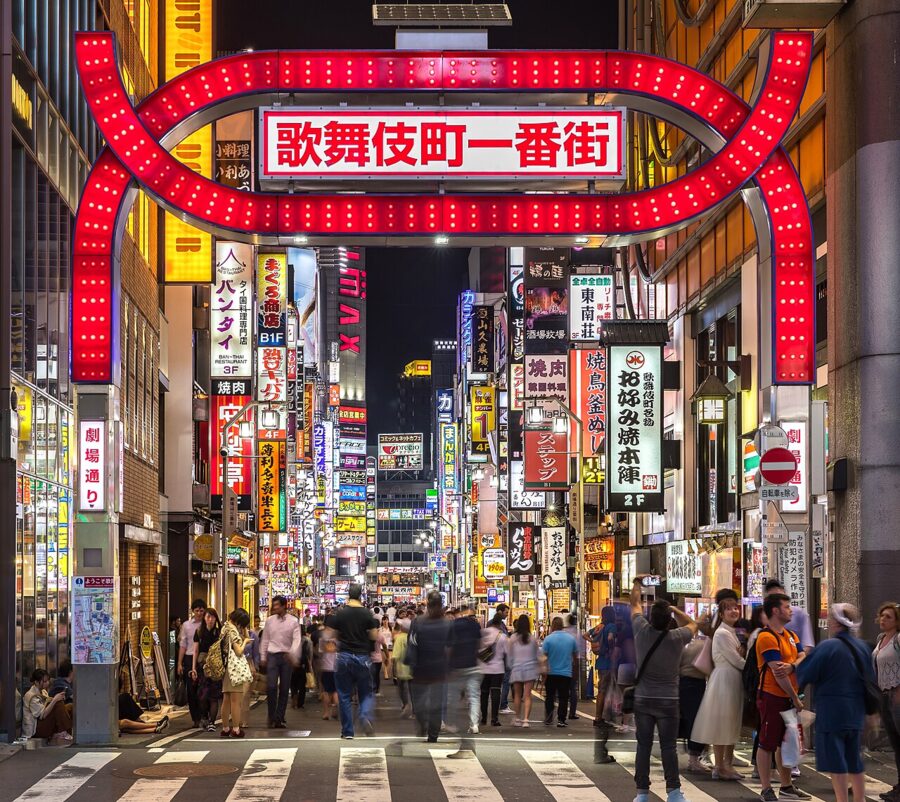

Cover charges are normal: an izakaya has its otoshidai and some yokocho bars charge a seat fee. Ask on the way in, and the bill will hold no surprises.
The drinking age is 20, and the clubs check it. Carry your passport at night, because a club will ask for it.
Tattoos come up at baths, pools and gyms more often than in bars. Some clubs and hotel pools set their own rules on visible ink, and the venue’s own page is the only reliable answer. Asking costs nothing, and a tourist information office can help you check.
By eleven the grills in Omoide Yokocho are banking down and the counters are emptying toward the West Exit. Follow them. The night in Japan is generous with almost everything except the last train.