
The 10 per cent you used to leave behind at a Japanese till now travels with you to the airport. For anything bought from 1 November 2026, a tax-free shop charges the full price, tax included, and gives the tax back only after a customs terminal at your departure airport has read your passport and agreed that the goods are leaving Japan with you. The shopping itself has not changed. The paperwork has moved from the shop counter to the last hour of your trip.
Keep each shop’s receipt and its goods together, pack the knives and pottery where you can reach them before you check in, and leave the airport an hour earlier than you think you need. Get those three things right and the system costs you nothing. Get one wrong and a whole receipt’s worth of refund is gone.
The rest of Japanese shopping is as good as its reputation, from department-store food halls to a Tokyo street that sells nothing but kitchen equipment. What follows is where to go, what to buy and roughly what it costs as of November 2026, with the tax rules first because they now shape the end of every trip.
Contents
Tax-free shopping after November 2026
Japan’s consumption tax is 10 per cent on most goods and 8 per cent on food and non-alcoholic drink. A visitor who qualifies can have it refunded on purchases of ¥5,000 (about £24 / $32) or more, before tax, at one shop on one day. The refund method works in four steps: the shop sells at the tax-inclusive price, you show your passport at customs on departure, customs confirms the goods are leaving, and the shop refunds you.
Who qualifies has not changed much. Foreign visitors on short-stay status are eligible, as are cruise passengers and crew on landing permits. Japanese nationals who have lived abroad for two years or more can also use it, with a certificate showing when they moved abroad.
What changed, and what got simpler
Several old rules went with the switch, and few will miss them. The split between general goods and consumables has gone, so a jacket, a bottle of sake and a jar of face cream all count towards the same ¥5,000 threshold. The ¥500,000 (about £2,400 / $3,150) daily cap on consumables has gone too. So have the sealed plastic bags that used to make you promise not to open your snacks until you had left the country.
| Until 31 October 2026 | From 1 November 2026 | |
|---|---|---|
| Price at the till | Tax taken off on the spot | Full price, tax included |
| Minimum spend | ¥5,000 per category, per shop, per day | ¥5,000 before tax, per shop, per day, all goods together |
| Consumables cap | ¥500,000 per shop, per day | None |
| Sealed bags for food and cosmetics | Required | Abolished |
| Departure check | Passport record only | Customs confirmation within 90 days of purchase |
| Refund | Not needed | Paid by the shop after confirmation |
The new freedom has a catch. Food, drink and cosmetics can now be opened and used in Japan, but anything you eat, drink or use up loses its refund. Customs asks you to tell an officer at the counter about it rather than putting that receipt through the machine. Gold and platinum bullion and coins are excluded altogether, and the quantity you buy is limited to what you can carry out yourself.
At the till
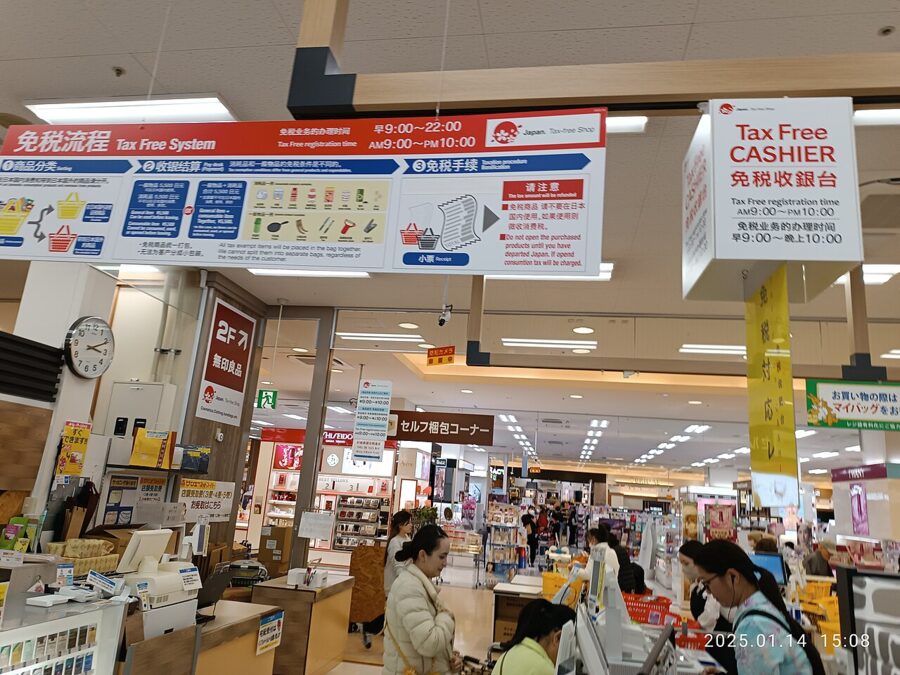
Take your physical passport shopping. The shop records it, charges the full price and explains how its refund will reach you, which is the part that varies: the tourism agency says only that refund methods differ by shop. Many shops hand the job to a refund operator and ask you to register a payment method at the counter.
Fees vary too. Don Quijote’s parent company, PPIH, covers the refund fee at its stores, except when you choose to collect cash at the airport, where the operator’s own fee applies; its Shibuya flagship put in 42 tax-free tills for the switch. Ask about the fee before you pay at any other chain.
At the airport
The customs terminals stand in the international departure lobby, before bag drop. You scan your passport, and the screen shows green, which finishes the process, or red, which sends you to a customs officer to show the goods. The tourism agency’s departure questions are blunt about the rest: every item must be with you, a suitcase already checked cannot be reopened for the procedure, and an inspection abandoned to catch a flight counts as never done.
Confirmation works per receipt. If one item from a receipt is missing, nothing on that receipt is refunded, though your other receipts are unaffected. For anything priced at ¥1 million (about £4,800 / $6,300) or more before tax, customs may ask for the certificate of authenticity or warranty, so keep it with the item. Transit passengers do all this at their final Japanese airport.
Holders of short-stay status can skip the kiosk at seven airports (Narita, Haneda, Kansai, Chubu, Fukuoka, New Chitose and Naha) by completing the procedure on Visit Japan Web before security. Japanese nationals cannot use that route. The deadline is 90 days, counted from the day after purchase, so something bought on 1 November must be confirmed by 30 January, as the National Tax Agency’s overview spells out.
One practical problem follows from all this. Kitchen knives cannot go in cabin baggage, yet tax-free knives must be in your hands at the kiosk. The answer is to put the knife in your hold suitcase, carry that suitcase to the terminal, get your green screen, and only then check it in. The same goes for sake, soy sauce and anything else in liquid form.
Department stores and the depachika
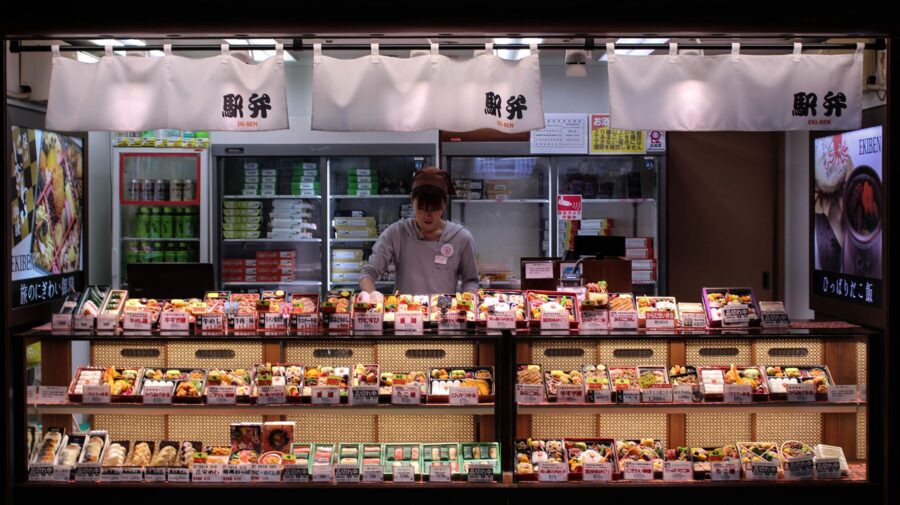
The Japanese department store is still the safest single place to shop: every floor is staffed, wrapping is free and careful, and there is usually one tax-free counter for the whole building. The basement is the reason to come. The depachika (デパ地下, literally “department-store underground”) is a food hall where confectioners, pickle makers, tea merchants and bento kitchens each run their own counter.
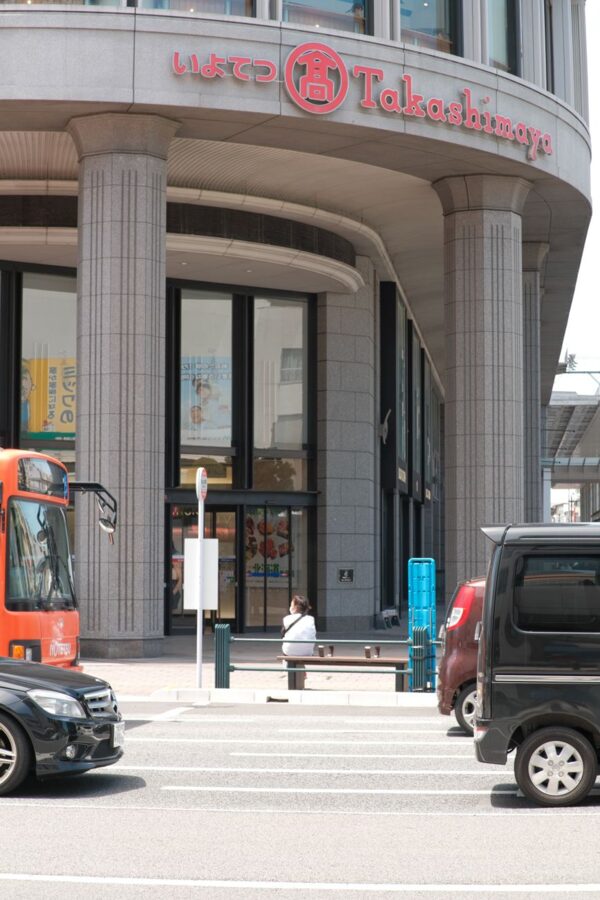
Hours are long and predictable. Daimaru Tokyo, built into the Yaesu side of Tokyo Station, opens its basement and first-floor food halls from 10:00 to 20:00 every day except 1 and 2 January, and its tax-free counter on the 12th floor keeps the same hours (as of November 2026). Most of the big names in Tokyo and Osaka work to a similar day, but check the store’s own page before planning an evening around one.
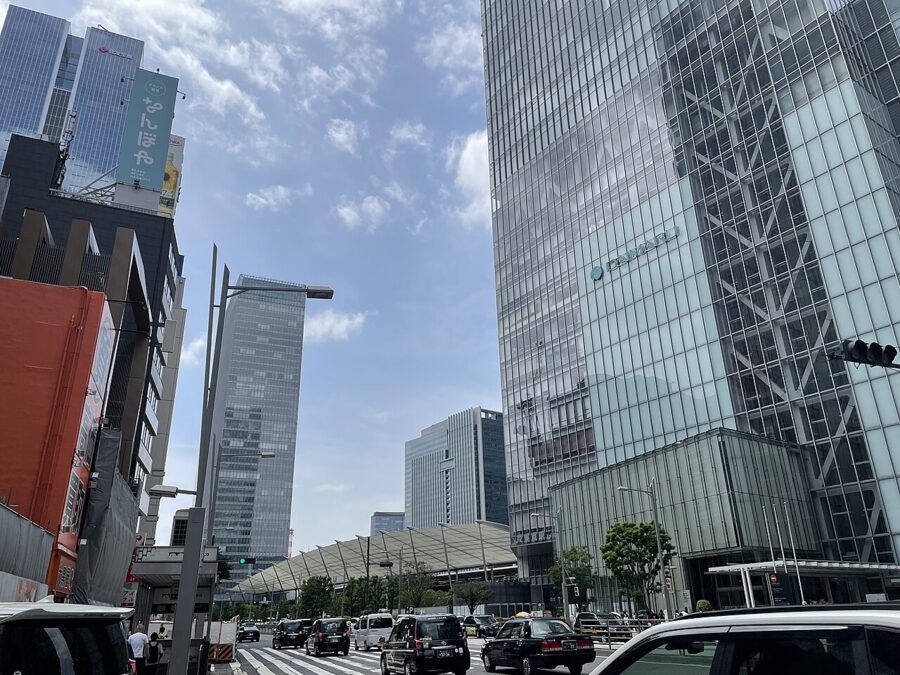

I would shop a depachika the way locals do: walk the whole floor once, buy on the second lap. The boxed sweets with printed paper wrapping are made to be given, and staff will ask whether a purchase is a gift and wrap it with a noshi paper band if so. Prepared food is for eating that day, which makes it a better picnic than a souvenir.
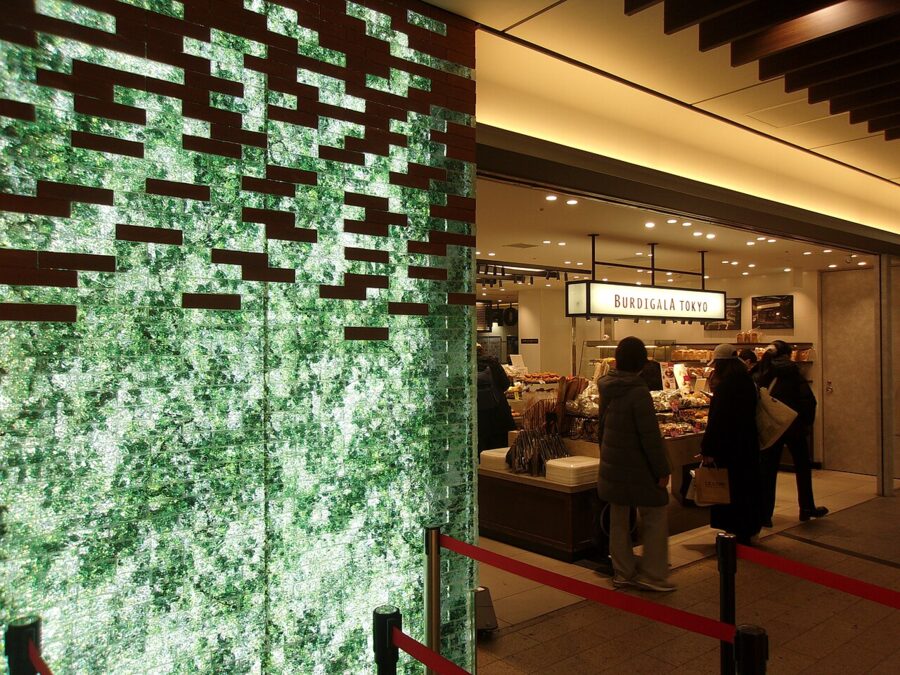
The big stations have become depachika in their own right. Tokyo Station’s Gransta, inside the ticket gates on the basement level, has a sweets zone that was rebuilt in September 2024 and is the most efficient last stop for gifts if you are leaving by Shinkansen or the Narita Express.
Don Quijote, drugstores and the 100-yen shops
Don Quijote, known to everyone as Donki, is the opposite of a department store: narrow aisles, handwritten price cards, a theme song on a loop and a stock list that runs from instant ramen to massage chairs. The MEGA Don Quijote in Shibuya runs from basement one to the seventh floor, with an annex across the road for souvenirs and suitcases, and it is generally open 24 hours.
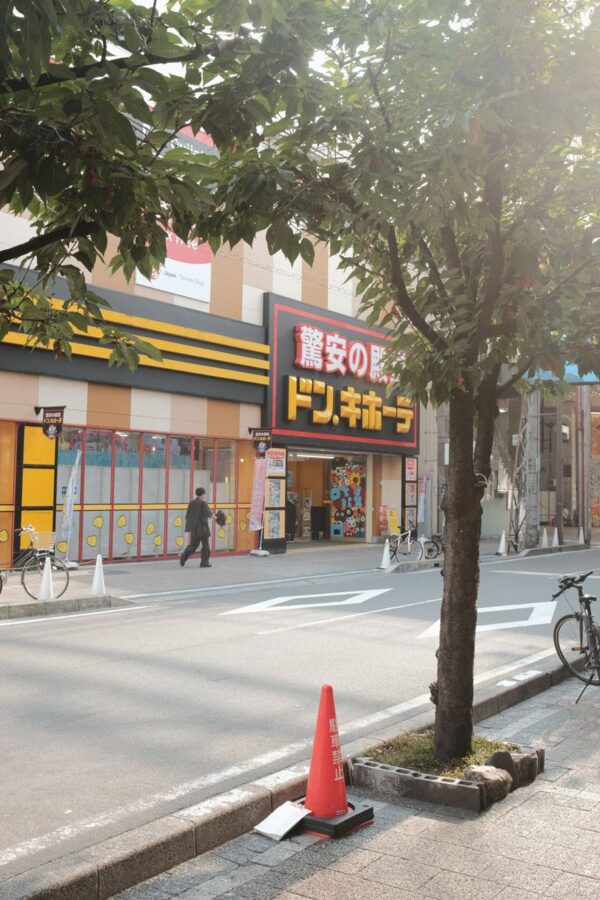
Go late at night if you can. The aisles are calmer once the evening crowds have gone, and nobody minds if you take 40 minutes over the cosmetics floor. Skip it if you dislike noise: the ambient volume is part of the concept and it does not stop.
Drugstores
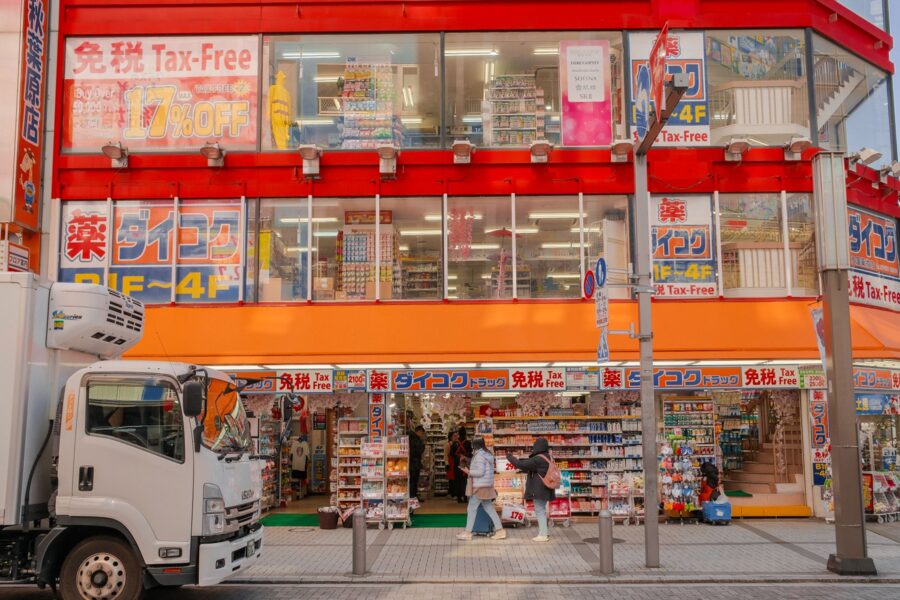
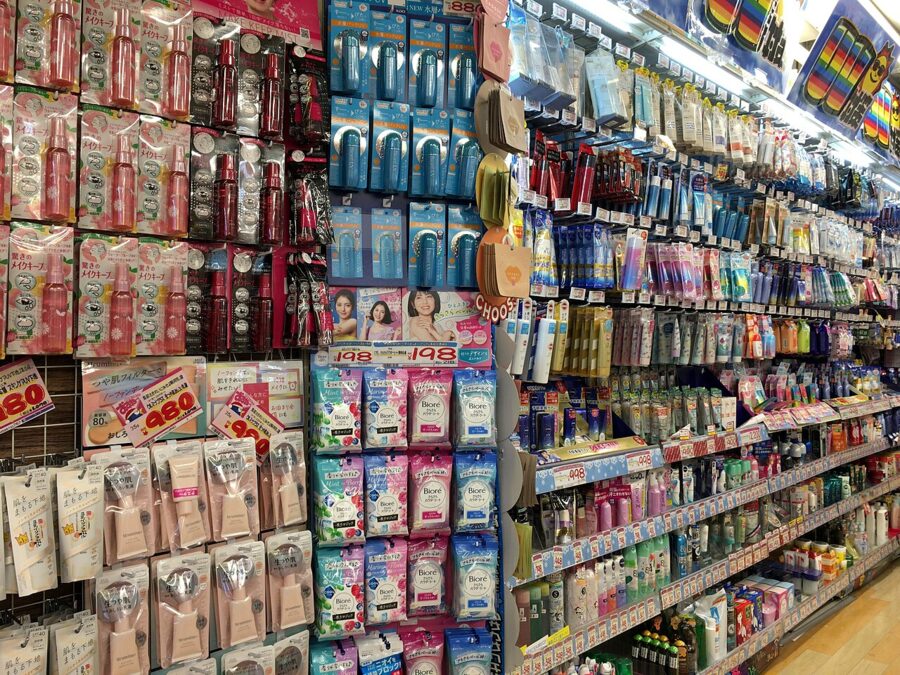
Matsumoto Kiyoshi, Daikoku Drug, Sundrug, Welcia and Kokumin cover every shopping street, and the stock is the same mix of skincare, sunscreen, cold remedies, snacks and household goods. Sunscreen is what people come back for: a 70 g bottle of Biore UV Aqua Rich Watery Essence was ¥968 (about £5 / $6) on Matsumoto Kiyoshi’s online store in November 2026.
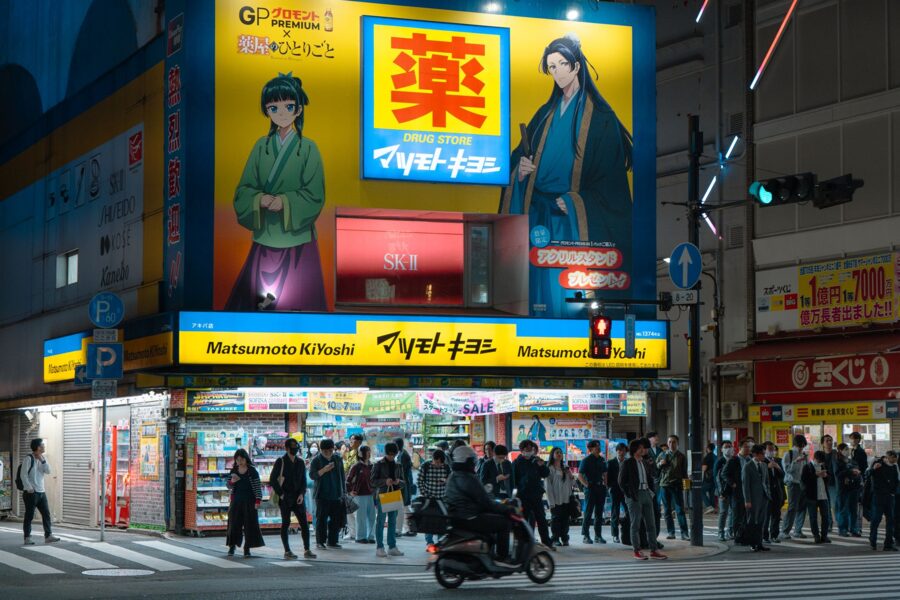
Ask the pharmacist before buying cold or pain remedies, which are formulated differently from those at home, and check your own country’s rules before taking a stock of any medicine back.
100-yen shops
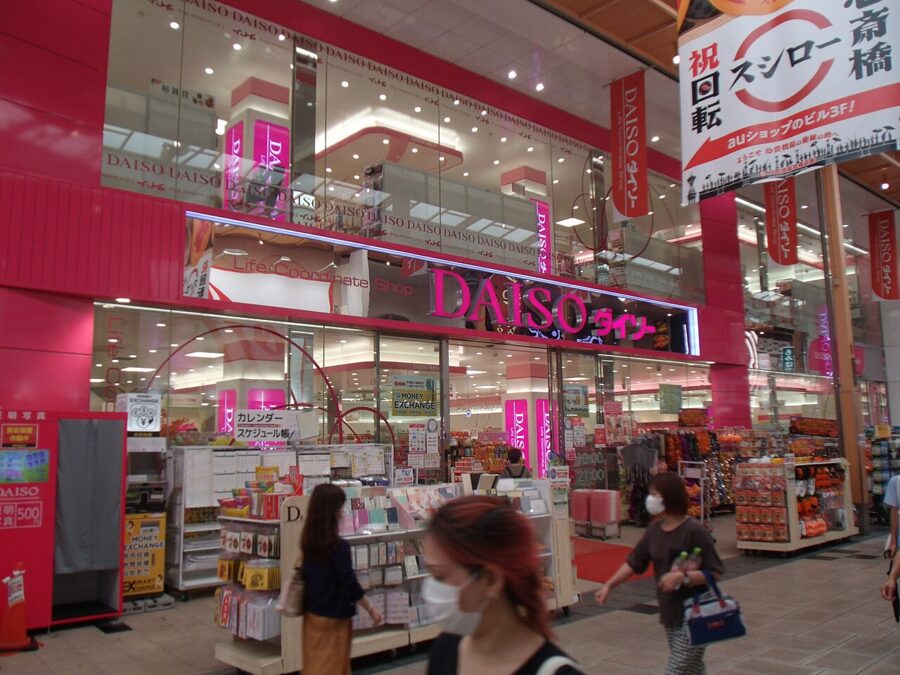
Daiso, Seria and Can Do sell most of their range at ¥100 before tax, which is ¥110 at the till (about 50p / 70 cents). Daiso now carries some higher-priced lines too, with the price printed on the tag. The useful buys are practical: folding bags, kitchen gadgets, bento boxes, chopsticks, furoshiki cloths and the little ceramic dishes that cost several times as much in a gift shop.

Electronics and outlets
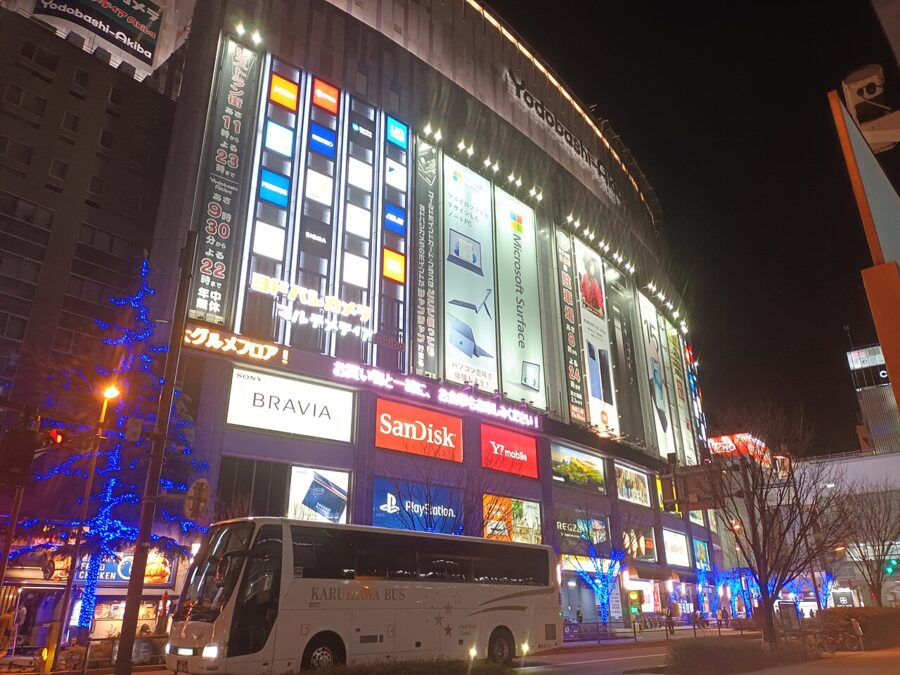
Yodobashi Camera and Bic Camera are the big electronics chains, and their flagships at Akihabara, Shinjuku and Umeda each fill a building. Japan runs on 100 volts with two-pin plugs, at 50 Hz in the east and 60 Hz in the west, so check the label before buying anything that plugs in.
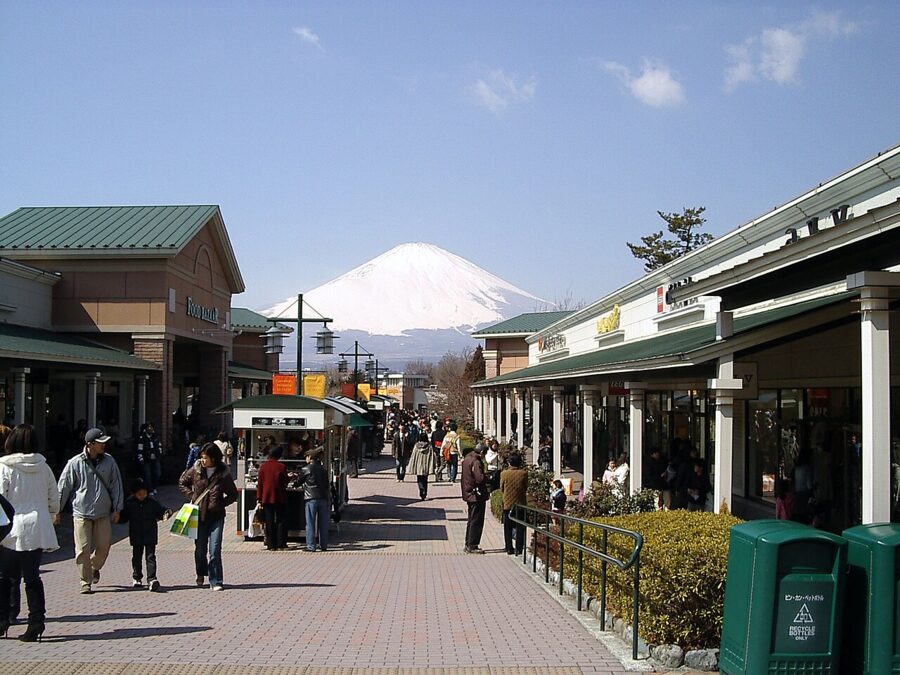
Outlet malls are the other end of the scale. Gotemba Premium Outlets, at the foot of Mount Fuji in Shizuoka Prefecture, has 290 shops and opens 10:00 to 20:00 from March to November and 10:00 to 19:00 from December to February, closing one day a year (next on 25 February 2027). My guide to getting around Chubu covers the routes from Tokyo.

What to buy, and what it costs now
Kitchen knives
A Japanese kitchen knife is the souvenir most likely to still be in use in 20 years. Prices are less frightening than people expect. The Aritsugu knife shop in Tsukiji lists blades from ¥8,500 to ¥25,000 before tax (about £40 to £120 / $55 to $160), with an all-purpose santoku at ¥16,000. Hand-forged work from named smiths climbs well beyond that.
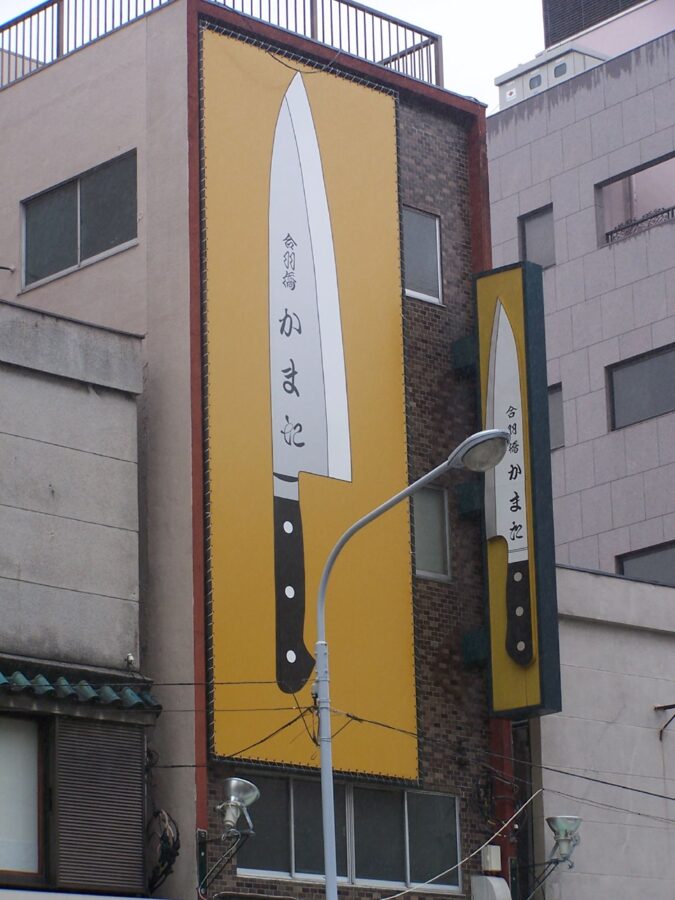

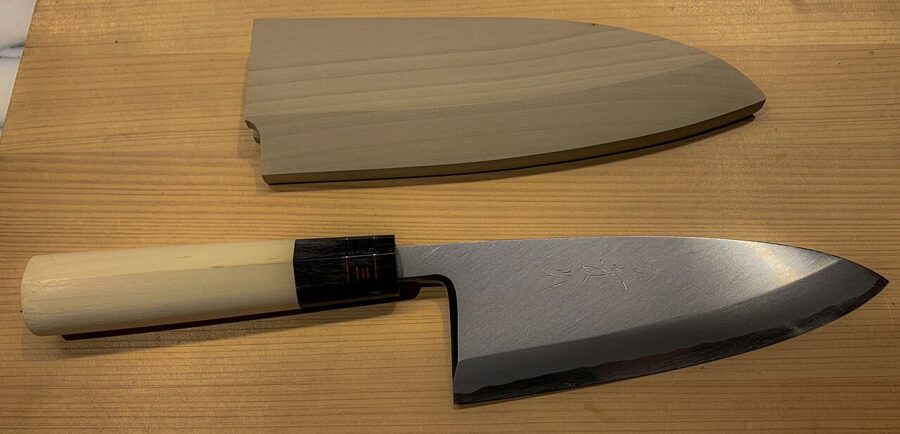
Choose carbon steel only if you will dry and oil it after every use, because it rusts; stainless or stainless-clad blades forgive neglect. Single-bevel knives such as the deba and yanagiba are specialist tools for fish. For a first knife I would buy a double-bevel santoku or gyuto, and let the shop engrave your name on the blade, which most knife shops offer.
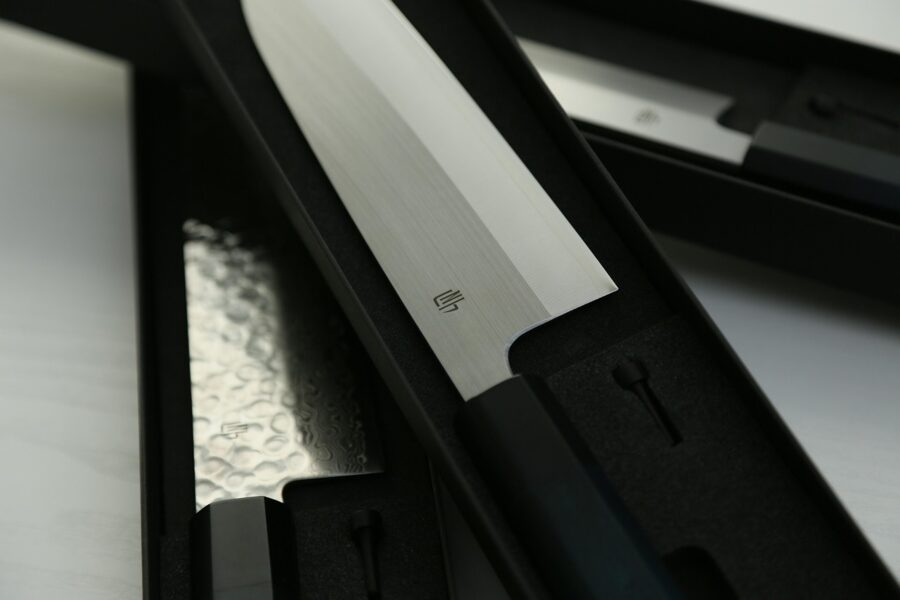
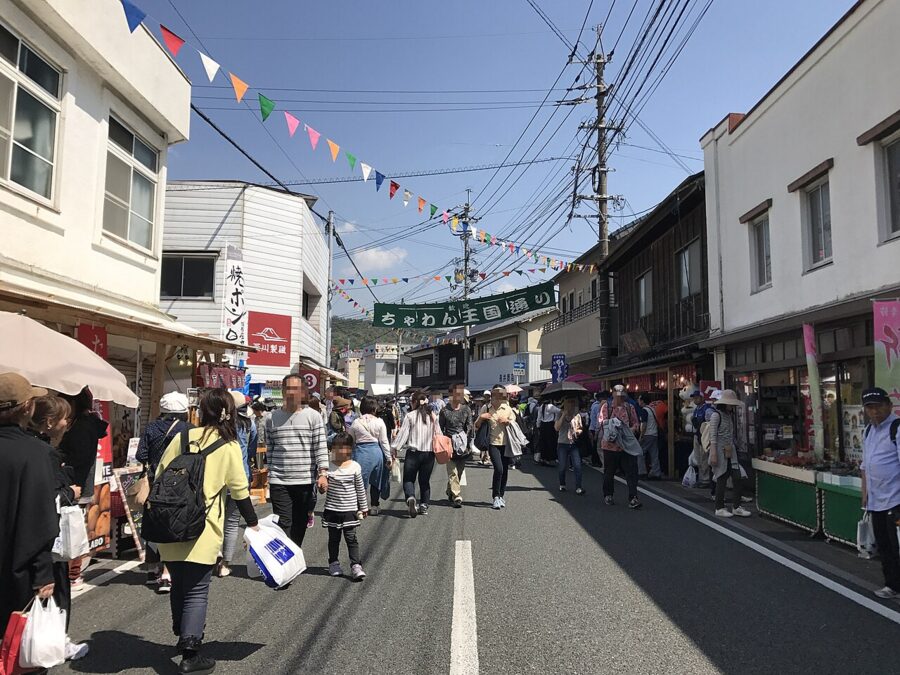
Sakai, in Osaka Prefecture, has made blades since the 16th century and supplies a large share of the knives professional Japanese chefs use. Seki in Gifu Prefecture is the other great knife town. Kappabashi in Tokyo and Nishiki in Kyoto put many makers’ work on one counter.

Ceramics
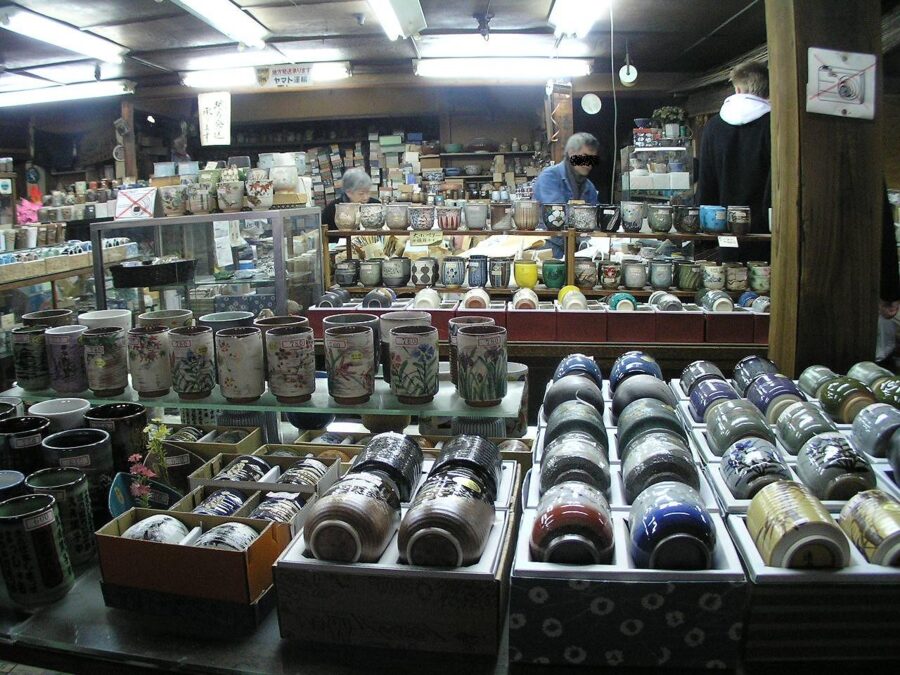
Japanese pottery is regional, and the best buying is done where it is made. Arita in Saga Prefecture has made porcelain since the early 17th century, and its Golden Week ceramic fair turns the whole town into a market; the 122nd fair ran from 29 April to 5 May 2026. Neighbouring Hasami, over the border in Nagasaki Prefecture, makes the everyday blue-and-white tableware found in kitchens across Japan. My guide to getting around Kyushu covers the trains out to both towns.

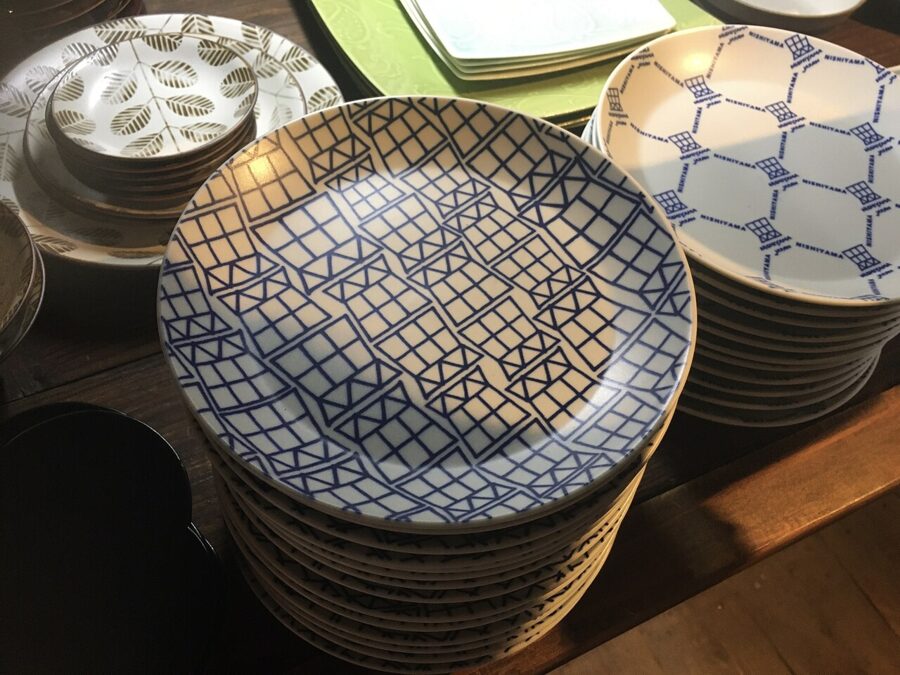

In Kyoto, the slopes up to Kiyomizu-dera are lined with shops selling Kiyomizu ware, the city’s own painted pottery. The quality ranges from careful to careless on the same street, so turn pieces over and look at the foot. Wrap anything breakable in clothes in your hold suitcase, after the customs kiosk. Tea wares carry the most meaning: Yasunari Kawabata built Thousand Cranes around a Shino water jar and a handful of tea bowls passed from one family to another.

Stationery
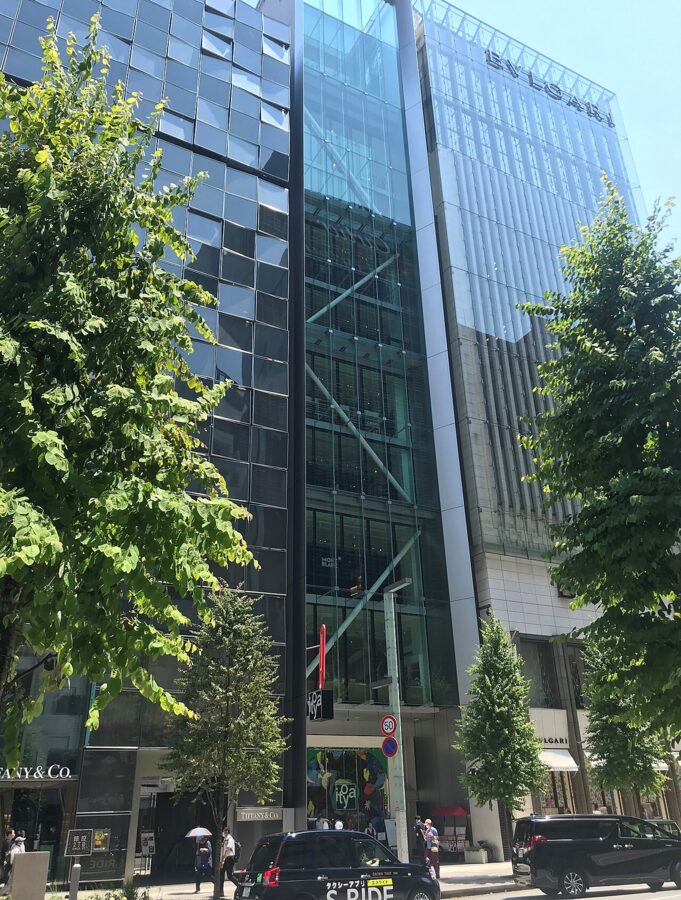
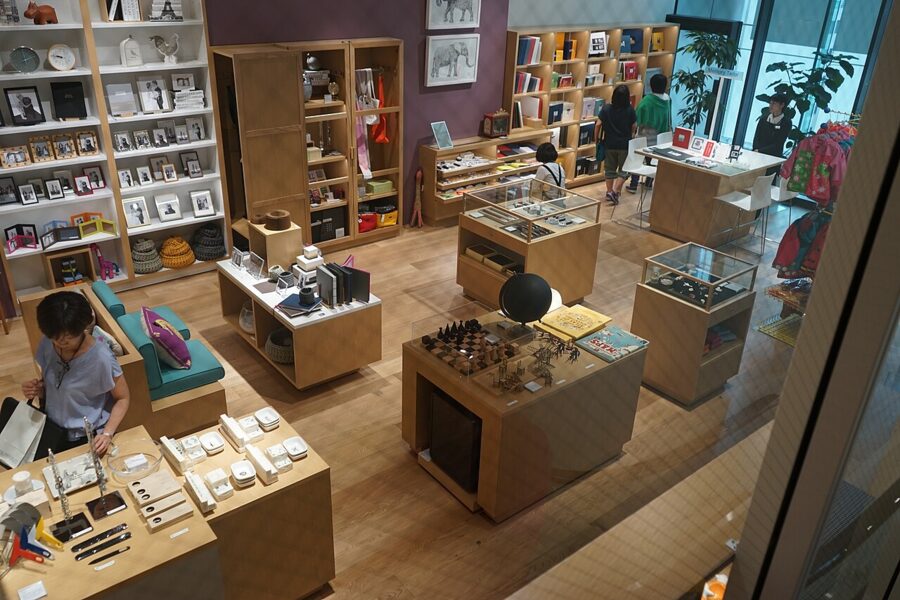
Japanese pens, notebooks and paper are cheap for their quality and light to carry home. Loft and Hands have stationery floors in most cities. The destination store is G.Itoya on Chuo-dori in Ginza, a stationer founded in 1904 that now fills a narrow tower floor by floor, open 10:00 to 20:00 on weekdays and 10:00 to 19:00 on Sundays and holidays (as of November 2026).


Omiyage, the gifts you owe
Omiyage are the food gifts Japanese travellers bring back to colleagues and family, and they explain the shape of the souvenir trade: individually wrapped pieces, in boxes of eight or twelve, tied to one place. Every prefecture has its own, sold in its stations and airports. Tokyo’s best known is Tokyo Banana, a banana-cream sponge, and its current honey-banana version costs ¥1,404 (about £7 / $9) for a box of eight under the maker’s July 2026 price list.
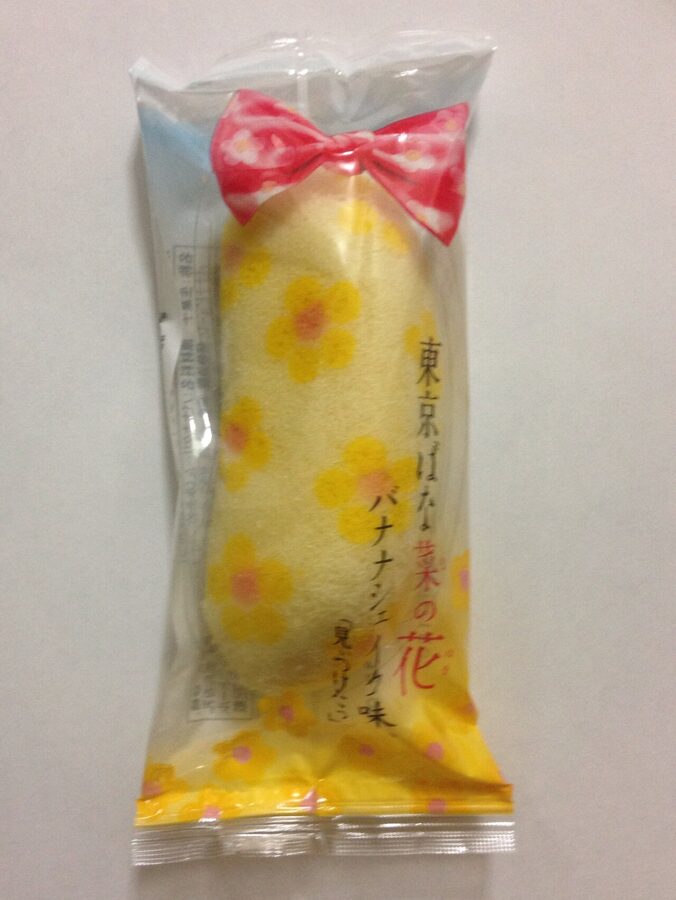

Food is taxed at 8 per cent, not 10, so the refund on a box of sweets is smaller than on a scarf. Anything you open and eat before departure is no longer refundable. If you want to snack on the train, buy that box separately from the ones you are taking home.
The shopping districts
Ginza
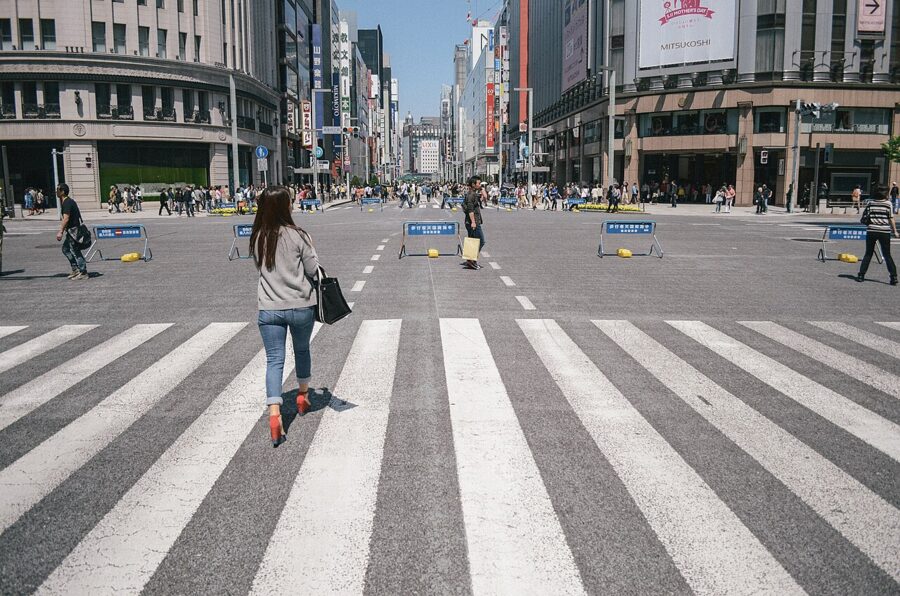
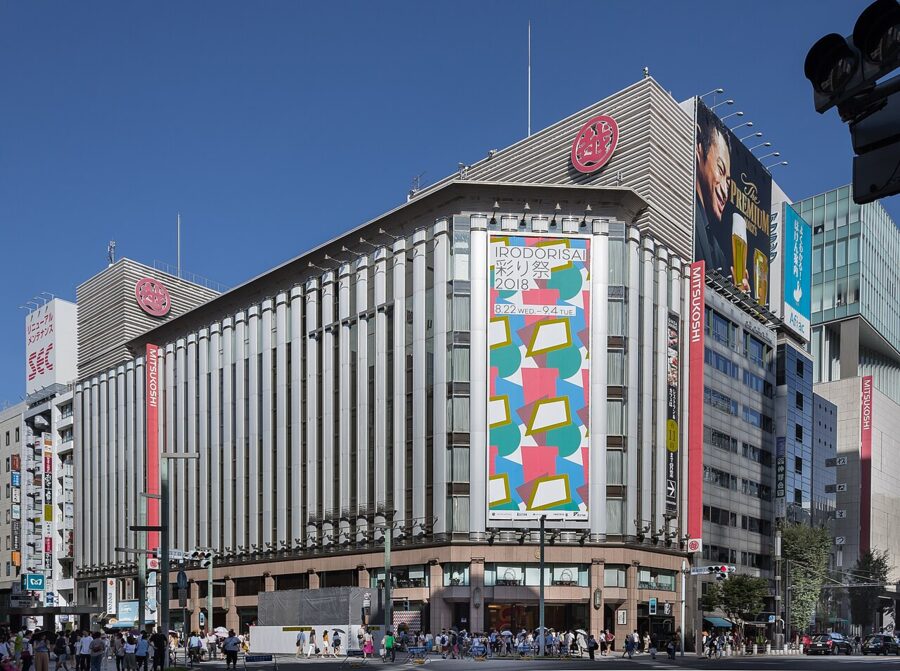
Ginza has been Tokyo’s smartest shopping street since its brick rebuilding in the 1870s: department stores at the 4-chome crossing, flagship boutiques along Chuo-dori, stationers and kimono shops on the side streets. At weekends Chuo-dori closes to cars, and the pedestrian hours are 12:00 to 17:00 from October to March and 12:00 to 18:00 from April to September on Saturdays, Sundays and holidays.
I would come on a weekday morning to shop and on a Saturday afternoon to walk. Mitsukoshi’s basement at the crossing is the classic depachika.

Shibuya
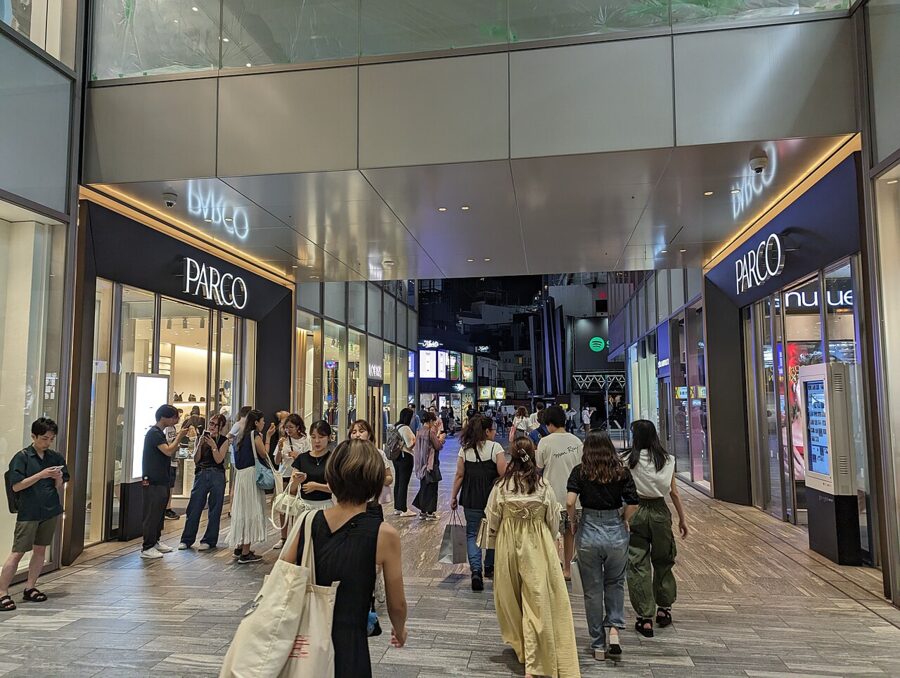
Shibuya is younger and louder. Parco reopened in 2019 with floors of Japanese designers, game and anime shops, and a basement of small restaurants; Shibuya 109 still sells fashion to teenagers; and the MEGA Don Quijote is a few minutes’ walk away.
Akihabara
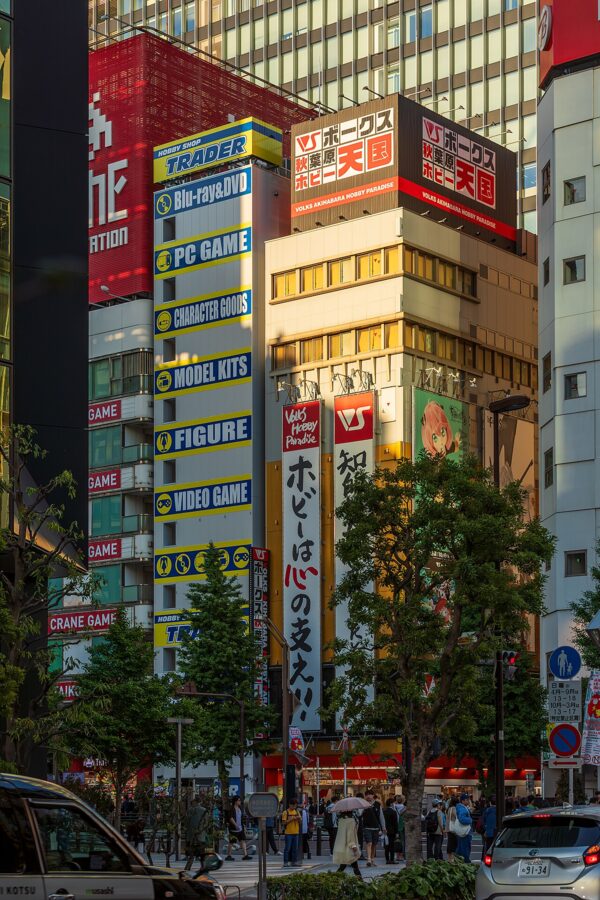
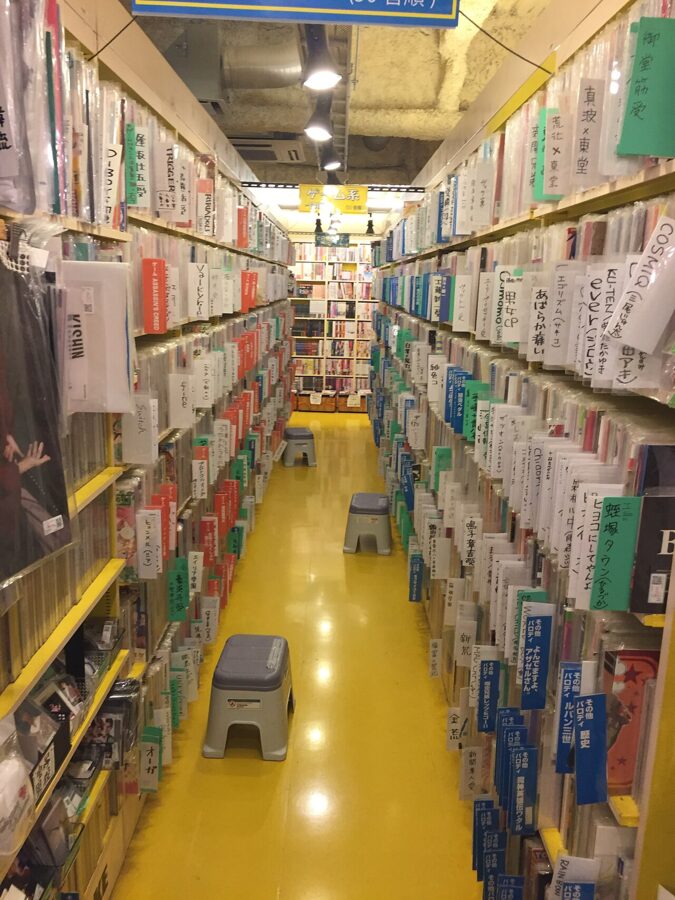
Akihabara grew out of a post-war market for radio parts and now sells electronics, games, anime and collectibles in roughly equal measure. For second-hand and vintage, Mandarake and the shops along Chuo-dori are the draw, and prices on rare figures can run into six figures in yen.


Kappabashi
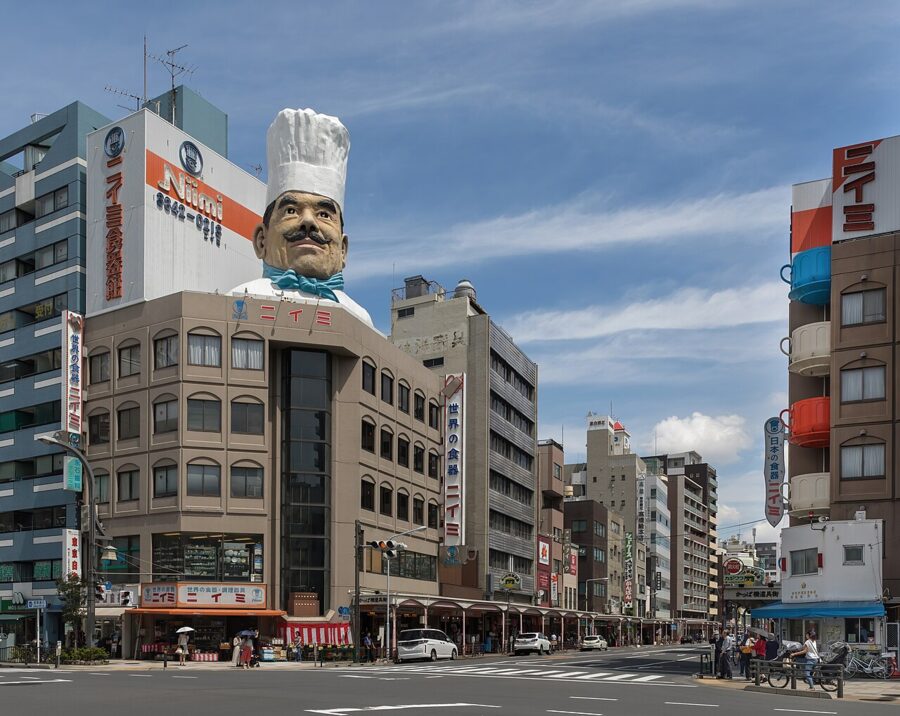
Kappabashi Dougu Street, between Ueno and Asakusa, is where Tokyo’s restaurants buy their equipment: knives, lacquer bowls, noren curtains, paper lanterns and the plastic food models that sit in restaurant windows. Walk from Tawaramachi Station on the Ginza Line. Some shops close on Sundays, and the street association posts each month’s opening information.

Shinsaibashi-suji, Osaka
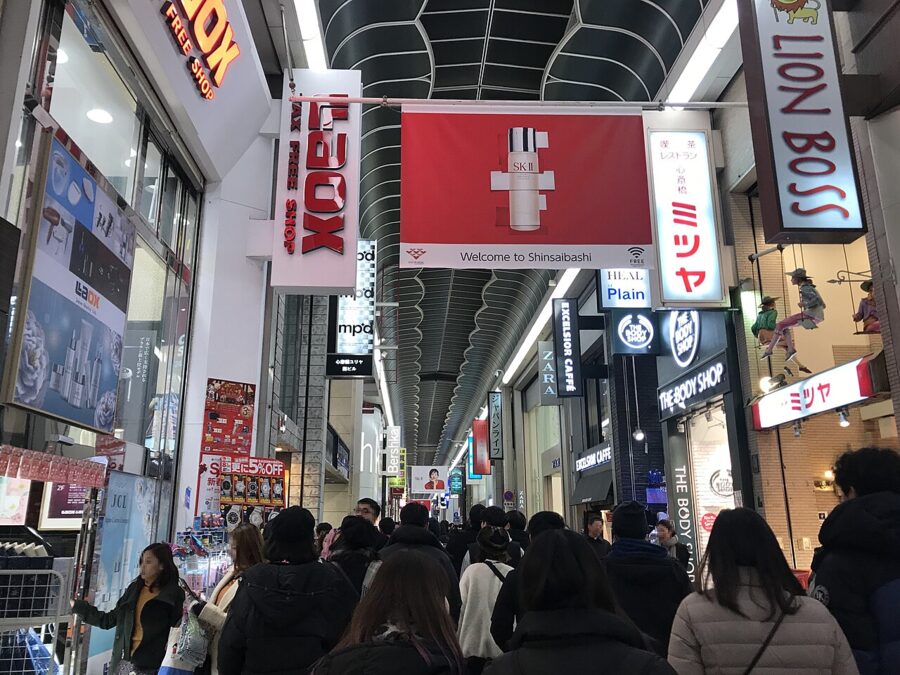
Osaka’s main shopping street is a covered arcade running south from Nagahori-dori to the Dotonbori canal, with Daimaru’s Shinsaibashi store halfway along. The arcade is mostly chains, drugstores and fashion, and the more interesting independent shops are in Amerikamura to the west and Minami-Senba to the north. The Kansai transport guide covers the subway lines that meet here.

Nishiki Market and Teramachi, Kyoto
Kyoto‘s Nishiki Market (錦市場) is a single covered lane about 390 metres long, one block north of Shijo-dori, with roughly 400 years of trading behind it. The market association asks visitors not to eat while walking; buy a skewer or a cup of soy milk and eat it in front of the shop that sold it. Come before 11:00, when the lane is still mostly Kyoto cooks.
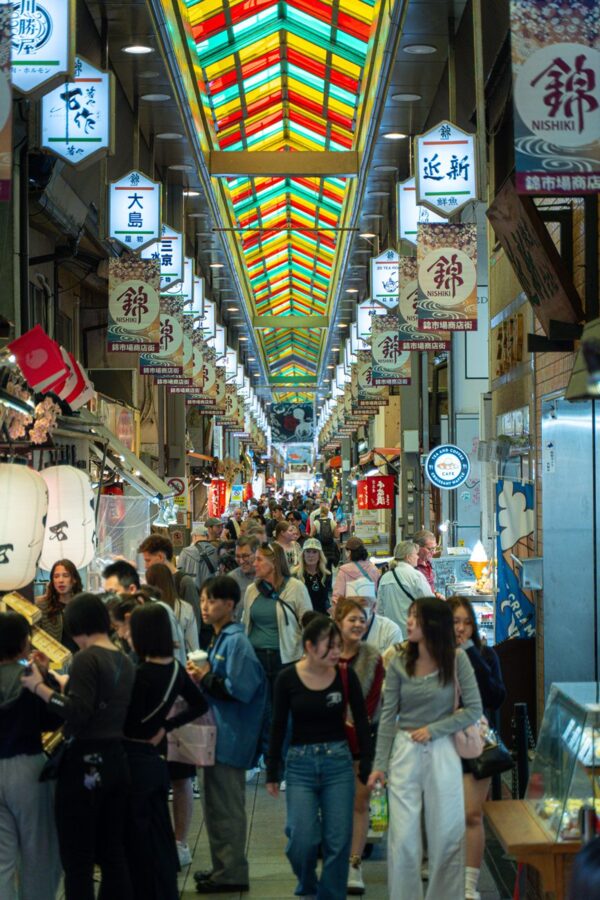
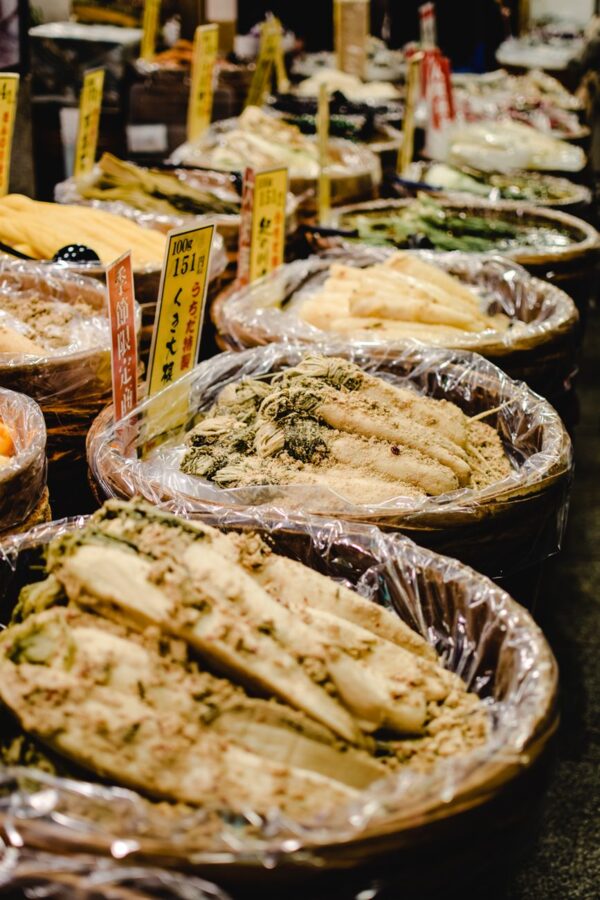
What to buy here is what Kyoto cooks buy. Tsukemono pickles are vacuum-packed for travel, and dried yuba, sansho pepper and dashi packs are light and keep for months. The kitchen shops in the market sell knives, graters and copper pans alongside them.
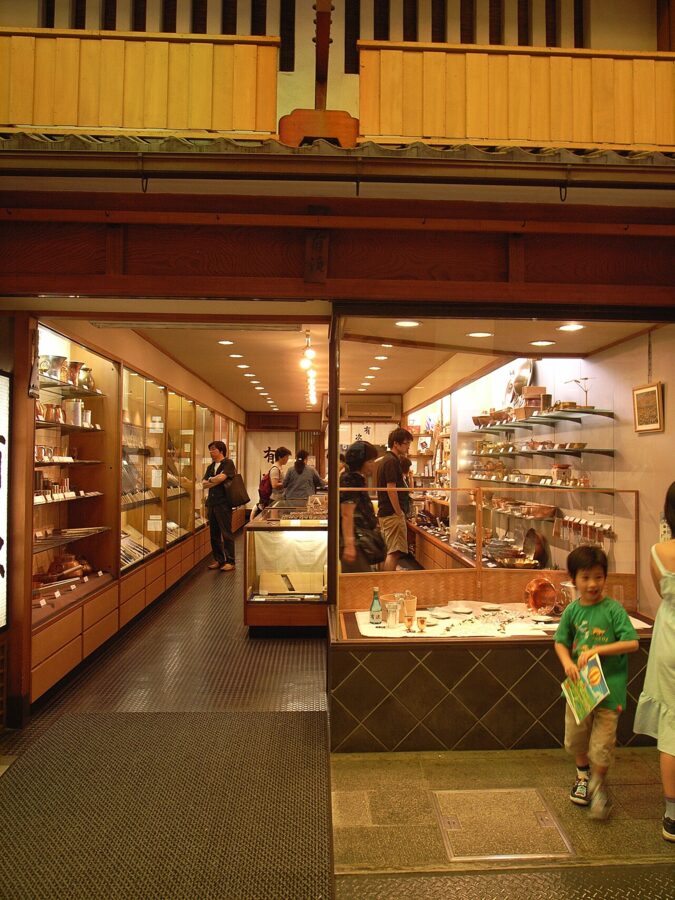

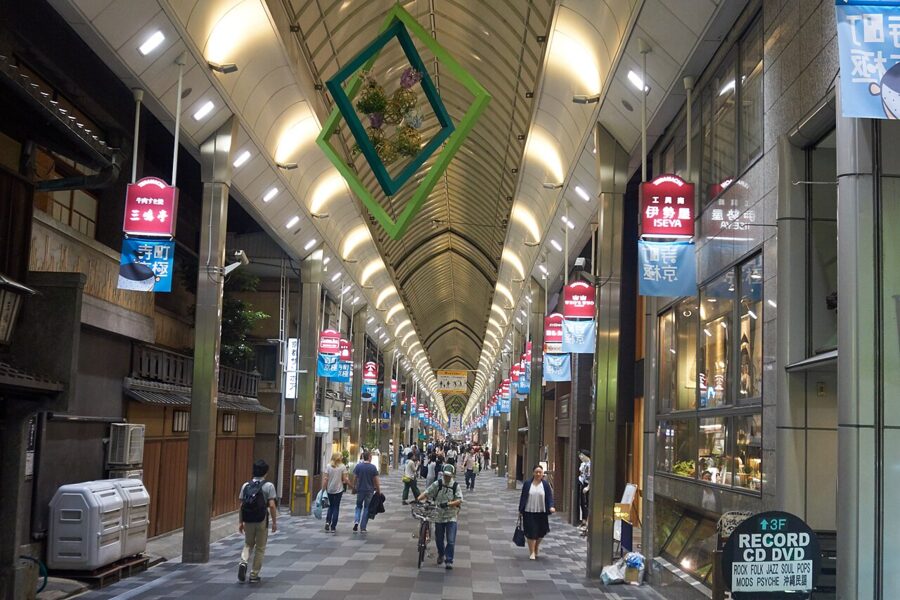
Nishiki’s east end meets the Teramachi and Shin-Kyogoku arcades, two parallel covered streets running north to Sanjo. Teramachi means “temple town”, and Toyotomi Hideyoshi gathered the city’s temples along this line in the late 16th century; several still open their gates between the shops. Teramachi is the better of the two for tea, incense, washi paper and second-hand books, and Shin-Kyogoku for school-trip souvenirs.

Paying, receipts and customs at home
Cards and contactless payment are taken in department stores, chains and most city shops. Cash still matters at market and temple stalls, so keep ¥10,000 (about £48 / $63) or so in notes, and a Suica or ICOCA transport card pays at convenience stores and station kiosks. My practical information guide covers cash machines and cards in more detail.
Prices on shelves must by law show the tax-inclusive total, so the price you see is the price you pay. Place cash on the small tray by the till rather than handing it over, and expect change to come back the same way. There is no tipping and no haggling in shops. The guide to Japanese manners covers the rest.
Receipts matter more than they used to. Customs checks each receipt as a unit, so keep every receipt with the goods it lists. If two people are shopping together, pay separately for the things each will carry.
Then there is the other customs, at home. Arriving in Great Britain, the personal allowance is £390 of goods plus 4 litres of spirits, 18 litres of wine and 200 cigarettes; anything over the allowance is taxed in full, not just the excess. Returning US residents have a duty-free exemption of $800 each, with alcohol and tobacco counted within it. Australia, Canada, New Zealand and the EU set their own figures, and Australia and New Zealand want all food declared, which matters if your bag is full of pickles and dashi.
That leaves the last hour in Japan. Carry the shopping bags to the departure lobby, find the customs terminal before bag drop, scan your passport and wait for the colour. A green screen means the 10 per cent is on its way back; check in your knives and pottery after that, and the trip home is the easy part.