
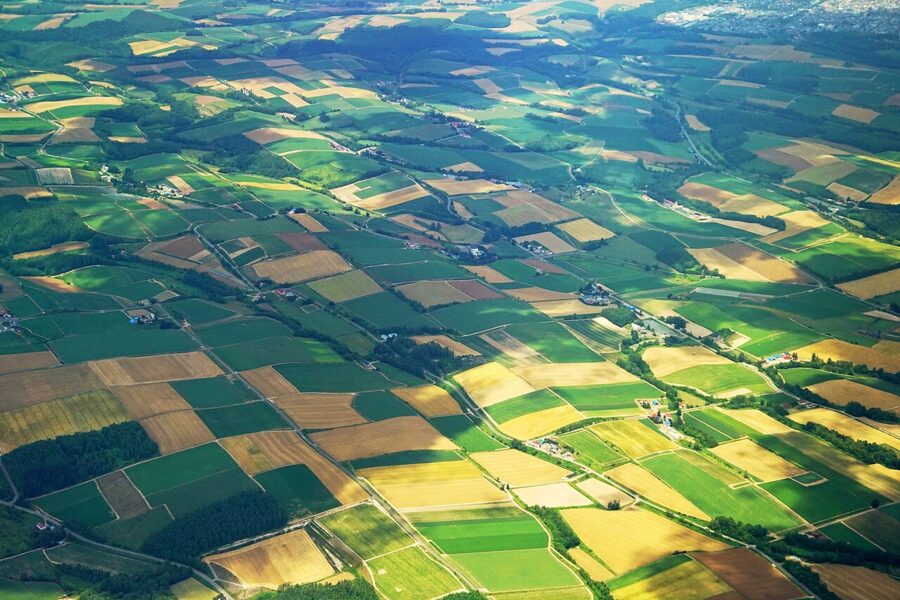
A car in Japan is either the best decision of the trip or an expensive way to sit in traffic, and the line between the two runs roughly along the edge of the big cities. Inside Tokyo, Osaka and Kyoto the trains beat any road and parking costs more than fuel. Out in Hokkaido, on Okinawa, across Shikoku and in the mountain valleys of Honshu and Kyushu, the trains thin to a few a day and the road becomes the only sensible way to see the country between the stations.
Driving here is calm. Roads are well kept, signs on main routes carry English, other drivers are patient, and the expressways are superb, with tolls to match. What catches visitors out is the paperwork: Japan accepts only one kind of International Driving Permit, a handful of countries need a translation instead, and a licence that works across Europe will not get you the keys at a counter in Sapporo.
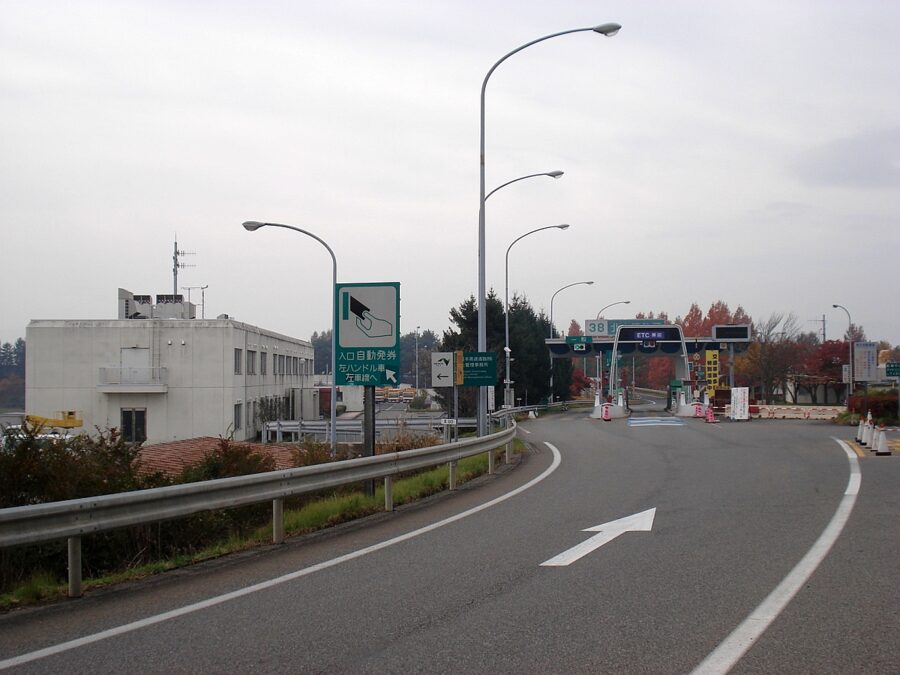
Most of the trouble comes from three places: the wrong permit, a toll gate with no cash lane, and the cities. Get those right and the rest is a full tank, a phone mount and an early start. Money, phones and emergency numbers in general are on the practical information page.

Contents
Where a car makes sense, and where it does not
The test is how often the trains run where you are going, because most of Japan’s sightseeing outside the big cities lies a bus ride or more from the nearest station. On the map of Japan the split is fairly clean: the corridor from Tokyo through Nagoya to Osaka belongs to the train, and most of the rest rewards a car for part of the trip. The pattern that works best is mixed: Shinkansen for the long legs, a car from a regional station or airport for two to five days, then the train again.
Hokkaido
Hokkaido is the clearest case for a car anywhere in Japan. The island is about a fifth of the country’s land, its lines run between a few cities, and the places most people come for (the fields of Biei and Furano, the lakes of Akan and Mashu, the capes of Shiretoko, the Kushiro marshes) sit between those lines. Roads are wide and quiet once you leave Sapporo, and the expressways have their own visitor pass.
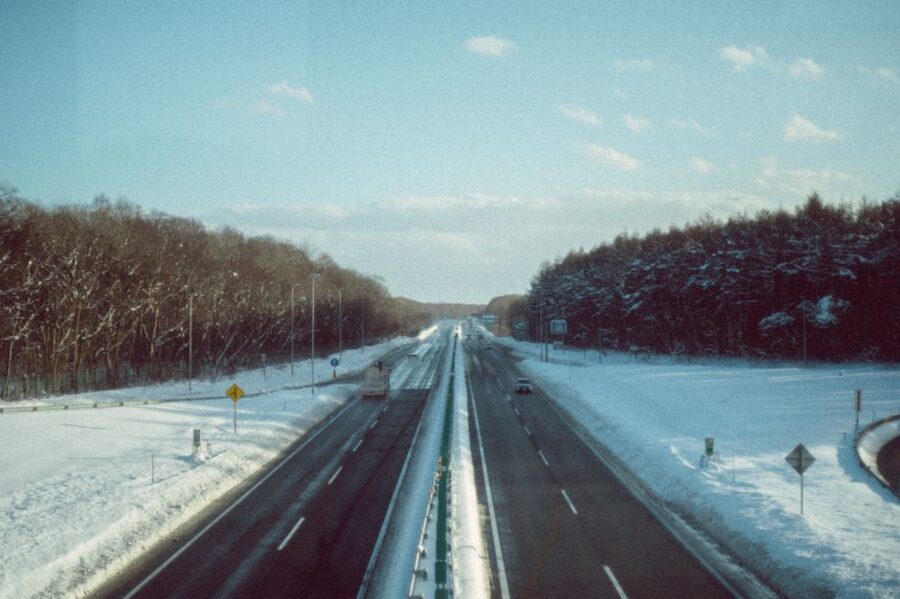
Respect the distances. A loop of the eastern lakes and Shiretoko from the airports at Memanbetsu or Kushiro takes three or four days without rushing, and Hakodate to Wakkanai is more than a day’s drive on its own. Deer on the road at dusk are common in the east.
Okinawa
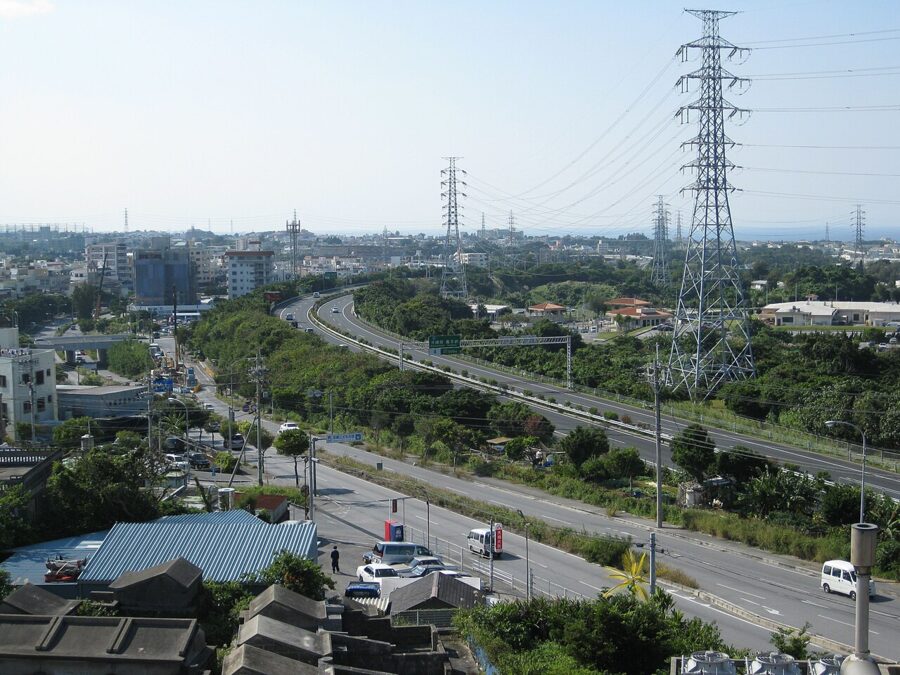
On the main island of Okinawa there is no railway beyond the monorail in Naha, and the buses north are slow. A car from the airport opens up the beaches, the Motobu Peninsula, the castle ruins and the far north in a few days. The Okinawa Expressway runs from Naha to the edge of Nago; beyond it Route 58 and the coast roads take over.
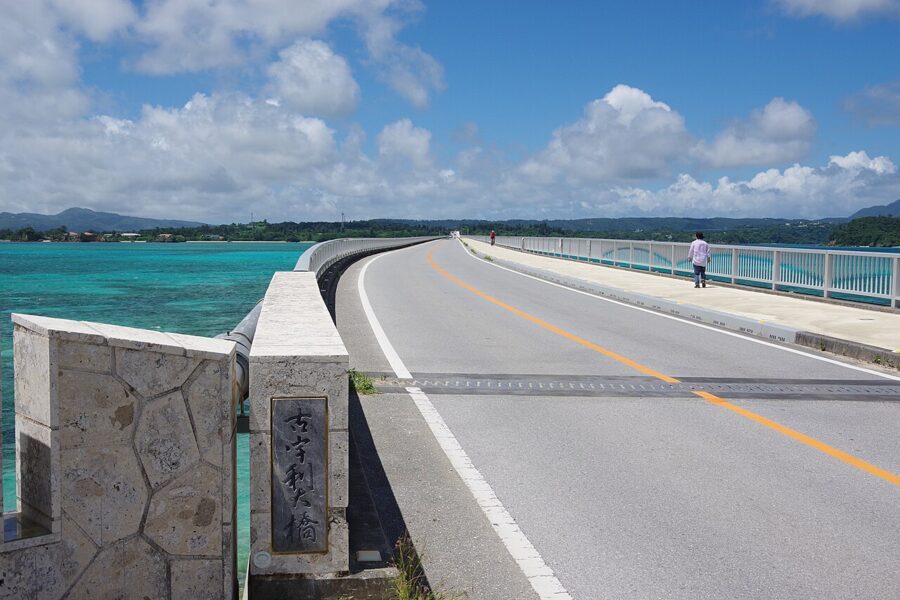

The catch on Okinawa is the traffic around Naha, where Route 58 crawls on weekday mornings and evenings. Collect the car early, head north first, and leave the city for the last day.

Shikoku
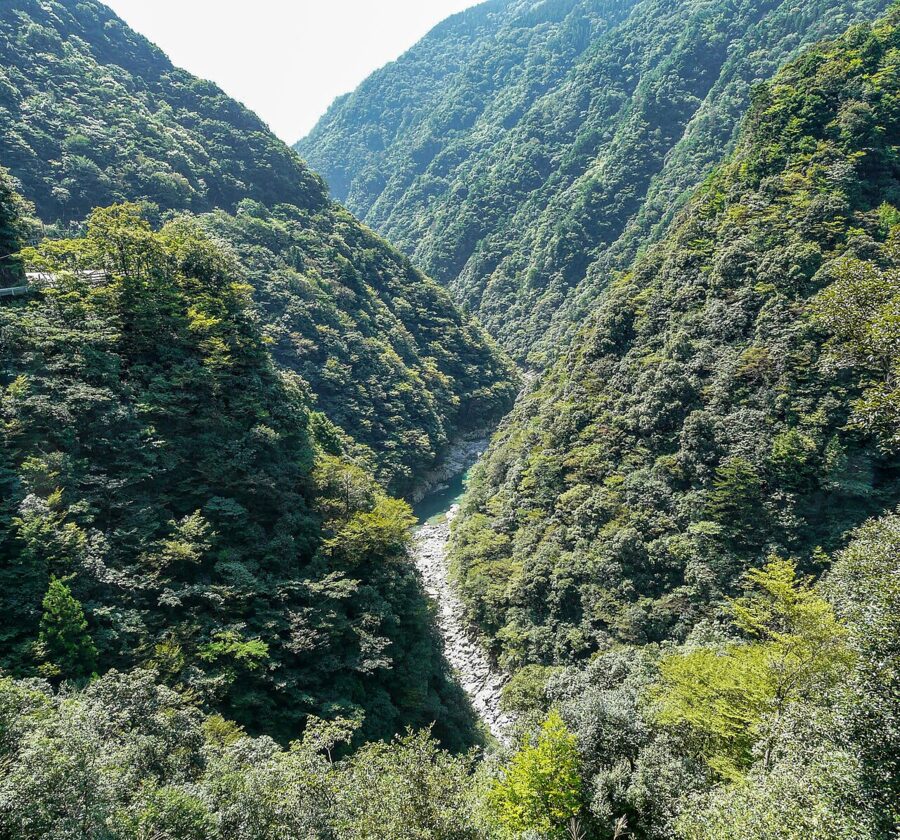
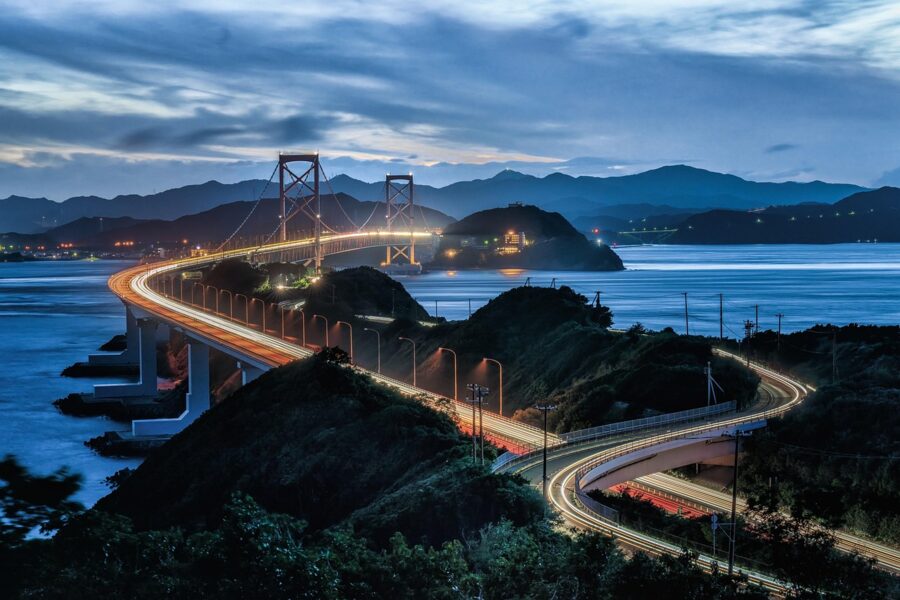
Shikoku has trains, but its interior is mountain, and the lines follow a few river valleys. The Iya Valley and its vine bridges, the cape roads of Kochi and the southern Ehime coast are far easier by car. From the mainland you can drive in over the Seto Ohashi bridges into Kagawa, across the Shimanami Kaido from Onomichi, or over Awaji Island from Kobe.

Awaji belongs to Hyogo Prefecture and has no railway at all, so it is worth a day of farm stands and coast roads on the way. Elsewhere in Kansai, the shore roads around Lake Biwa in Shiga, the Kii Peninsula in Wakayama and the Ise-Shima coast in Mie all reach harbours and shrines the lines pass by.
The Japanese Alps
Nagano, Gifu and the mountains behind the Sea of Japan coast are good driving country in the warm months. The Venus Line over the Kirigamine plateau, the valleys of Hakuba and Azumino, and the post towns of the Kiso Valley sit off or between the rail lines. Several high roads close for winter, so check before planning a crossing between November and April.
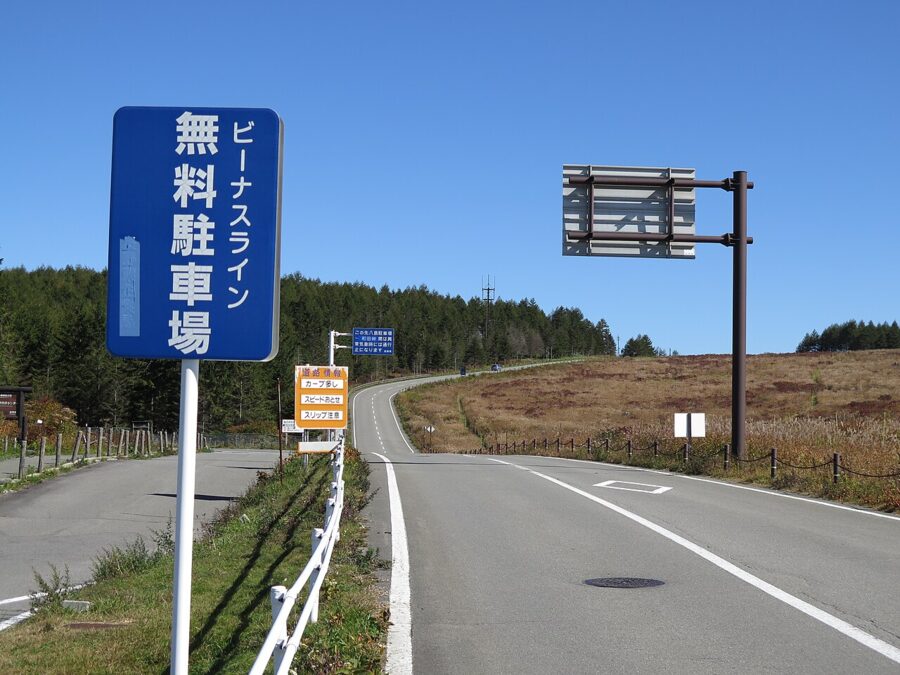

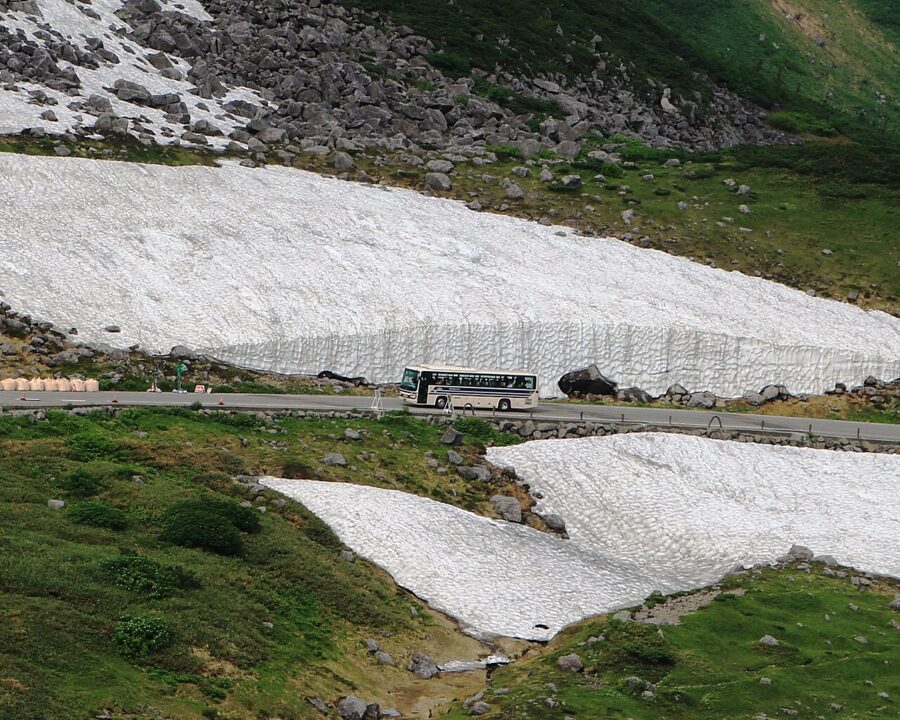
The exception is the Tateyama Kurobe Alpine Route, which private cars cannot drive. It runs by bus, cable car and ropeway, and you leave the car at one end.

Rural Kyushu and northern Honshu
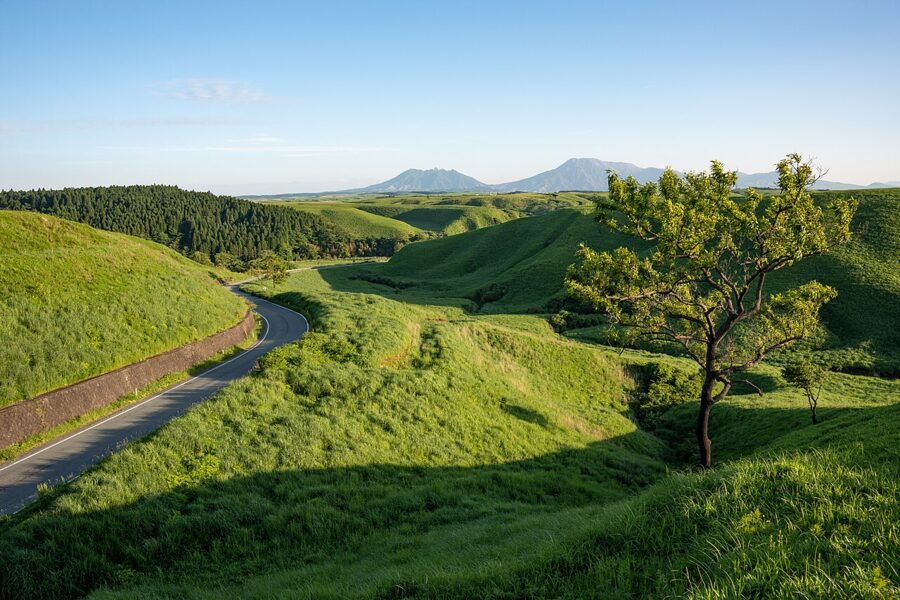
Kyushu’s cities are joined by the Shinkansen, but its best country lies inland: the caldera of Aso, the Kuju highlands, the onsen towns of Oita and the gorges of Miyazaki. The Yamanami Highway across the Kuju plateau toward Aso is the drive people remember, and the coast around Sasebo north of Nagasaki suits a car for a day or two.

The same holds in the north. Akita, Yamagata, the coast of Iwate and the San’in coast of Chugoku all have long stretches where only a car links the places worth seeing. The map of Tohoku shows why: the Shinkansen and the Tohoku Expressway run up the middle, and the coasts hang off them on slow branch lines. In Miyagi, the largely toll-free Sanriku Expressway makes the coast north of Sendai an easy drive.
Tokyo, Kyoto and the big cities
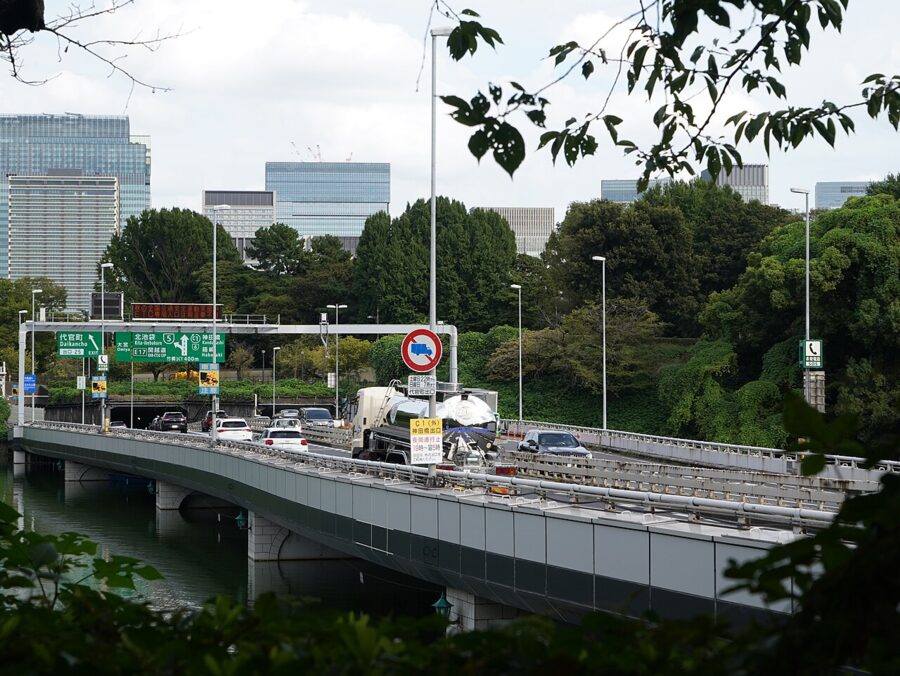
I would not hire a car for Tokyo, Osaka or Kyoto. The rail networks are dense and frequent, the urban expressways are a tangle of raised junctions, and parking is scarce and charged by the half hour. If a road trip starts from a city, take the train to a branch on its edge: Kawaguchiko for the Fuji lakes, Odawara for Hakone, a station south of Osaka for the Kii Peninsula.

The paperwork: permit or translation
Visitors cannot drive in Japan on a foreign licence alone. You need your home licence plus one of two supporting documents, depending on the country that issued it. Get this wrong and the rental company will refuse the car, whatever you paid in advance.
The 1949 Geneva permit
For most visitors the answer is an International Driving Permit issued under the 1949 Geneva Convention on Road Traffic. The Tokyo Metropolitan Police state that a permit under any other treaty, including the Vienna Convention, is not valid in Japan, even when the issuing country also signed the Geneva one. Countries that issue more than one kind (the UK is one) will sell you the 1949 version if you ask.
The permit is a paper booklet with a photo and stamped vehicle categories, and it only works alongside your home licence, so carry both. It must be issued in your own country before you travel; no office in Japan can issue one to a visitor.
The countries that need a translation instead
A few countries and regions have a separate agreement with Japan. The Metropolitan Police list licences from Belgium, Estonia, France, Germany, Monaco, Slovenia, Switzerland and Taiwan as valid when carried with an official Japanese translation, and that translation, not a home IDP, is what the rental desk expects to see.
The translation comes from the issuing country’s embassy, from the Taiwan-Japan Relations Association for Taiwanese licences, or from the Japan Automobile Federation. JAF’s translation service covers Switzerland, Germany, France, Belgium, Monaco and Taiwan, takes applications online only and quotes two to three business days on average, so apply well ahead. Estonian and Slovenian drivers should ask their embassy.
The one-year limit
A permit or translation lets you drive for up to one year from the date you enter Japan, even if the document runs longer. The police notice on valid permits adds that a registered resident must spend more than three consecutive months abroad before the clock restarts, so a short trip home for a new permit does not reset it.
Converting to a Japanese licence is no longer open to tourists. Since 1 October 2025 a licence conversion needs a residence record or equivalent proof of address, which short-stay visitors cannot provide, and the written test has grown from 10 questions to 50.
Age and experience
You must be 18 to drive a car in Japan; the police confirm that a 17-year-old with a valid permit still cannot drive here. Some rental companies also ask for a year or more of driving experience or charge young drivers extra. Every driver must show their own documents at the counter and be named on the contract.

Driving without the right documents counts as unlicensed driving, with up to three years in prison or a fine of up to ¥500,000 (about £2,400 / $3,160), and it voids the rental insurance.
Renting the car
The companies
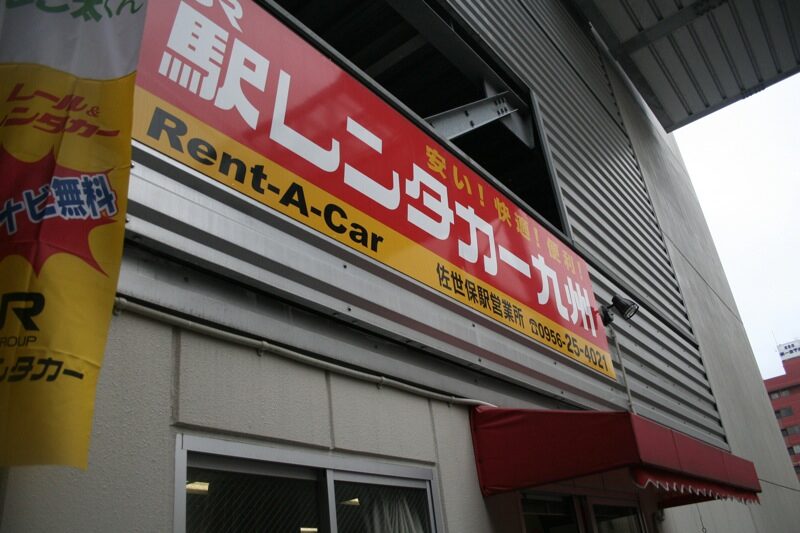
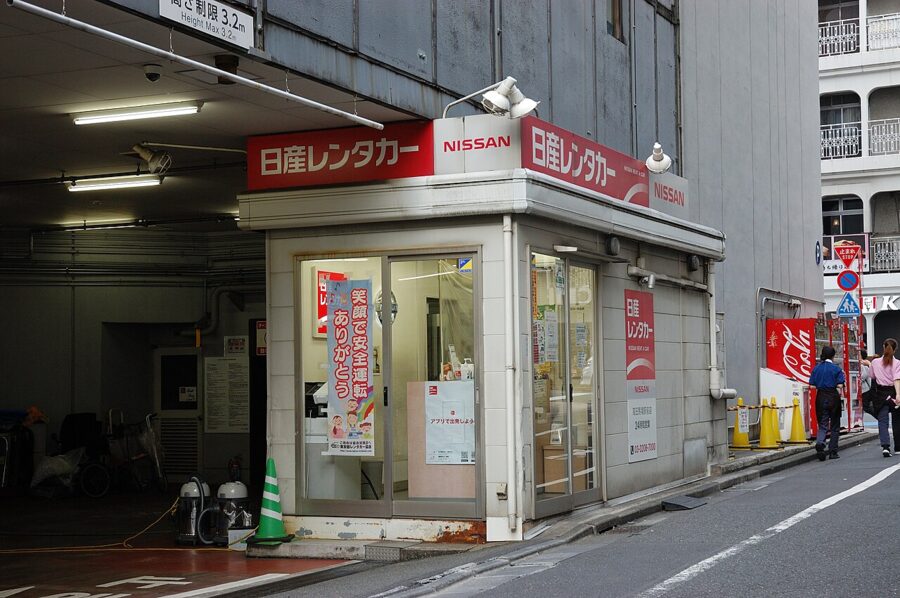
The large nationwide firms are Toyota Rent a Car, Nippon Rent-A-Car, Times Car Rental, Orix Rent-A-Car and Nissan Rent-A-Car, with JR’s Eki Rent-A-Car at stations and regional firms strong on Okinawa and in Hokkaido. The big names have English booking sites and desks at almost every airport, and Toyota’s English pages are among the clearest on documents, insurance and extras. Comparison sites list the same cars, sometimes cheaper; check who actually holds the contract.
Booking and collecting
Book ahead for Golden Week (late April to early May), the Obon week in mid-August, New Year and Okinawa’s summer, when cars run out. Automatics are the norm, most cars are hybrids, and nearly all have built-in navigation. Bring your passport, home licence, permit or translation, and a credit card in the driver’s name; Toyota, for one, takes no QR-code payments.
The international airports all have rental desks, but a domestic flight on to Sapporo, Naha or a regional airport and a car from there is often the better plan. Airport counters usually send you by shuttle to a depot nearby, so allow an hour from landing to driving away. The car goes back with a full tank at the time you booked; late returns are charged by the hour.
What it costs, as of November 2026
As a fixed reference, these are Toyota Rent a Car’s published rates, tax included, before insurance and extras. Toyota charges a higher Tokyo rate in the 23 wards and at Narita Airport, so collecting at Narita costs the same as central Tokyo. High-season prices are higher, and discount sites often undercut these figures outside the holidays.
| Class (example cars) | 24 hours | Each extra day | 24 hours, Tokyo rate |
|---|---|---|---|
| C1 (Yaris, Corolla Fielder) | ¥8,580 (£41 / $54) | ¥7,260 (£35 / $46) | ¥10,010 (£48 / $63) |
| C2 (Aqua, Yaris hybrid) | ¥10,120 (£49 / $64) | ¥8,250 (£40 / $52) | ¥12,430 (£60 / $79) |
| C3 (Prius, Corolla hybrid) | ¥12,100 (£58 / $77) | ¥9,900 (£48 / $63) | ¥15,400 (£74 / $97) |
Insurance, the waiver and the NOC
Basic insurance is included, with excesses: at Toyota you pay the first ¥50,000 (about £240 / $316) of damage to the car or to other property. The collision damage waiver, ¥1,100 (about £5 / $7) per 24 hours for an ordinary car, removes those excesses, and nearly everyone takes it.
The waiver does not cover the non-operation charge, or NOC, a flat fee for the time the car is off the road being repaired or cleaned. At Toyota it is ¥20,000 (about £96 / $127) if the car can be driven back to the branch and ¥50,000 if it cannot. Toyota’s extra package, ¥1,650 (about £8 / $10) a day including the waiver, covers the NOC too, and other firms sell their own versions. On narrow mountain roads or a first winter drive, I would take it.
Child seats, extras and one-way hire
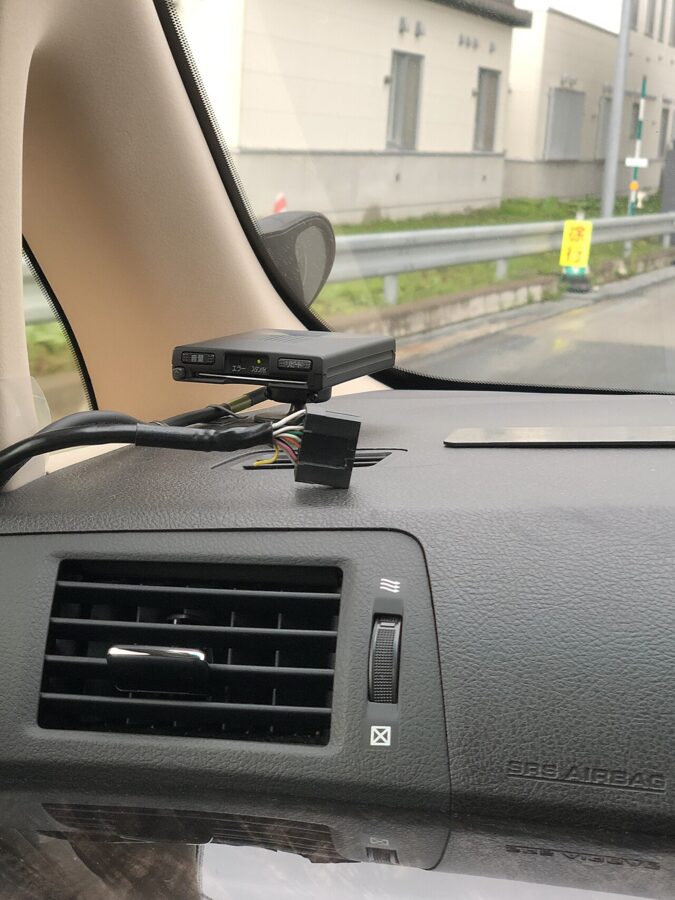
Children under six must ride in a child seat by law, and seats are limited, so reserve them with the car. Add the ETC card at the same time; Toyota charges ¥550 (about £3 / $3.50) per rental. One-way hire works between many branches of the same company for a drop-off fee that depends on the return branch, but not every pair allows it, and you should ask before taking a rental car on a ferry.

Expressways, tolls and the ETC card
Japan’s expressways are tolled by distance, and on a long day the tolls can rival the rental itself. They are also fast, signed in English, and lined with service areas with good food, clean toilets and fuel. Use them for the long transfers and the ordinary roads for the country you came to see.
The ETC card
ETC is the electronic toll system: a reader in the car talks to the gate as you pass at walking pace and charges the card in the slot. With a rental card the tolls are totalled when you return the car. Without one you use the general lanes, take a ticket on entry and pay cash or card on exit, where those lanes still exist.
ETC-only toll gates
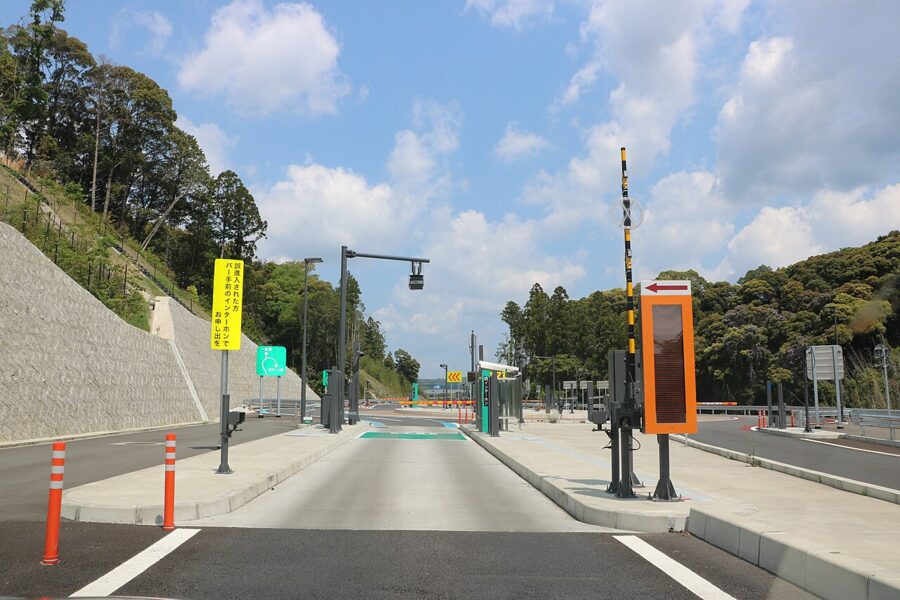
More and more gates have no cash lane at all. NEXCO Central Japan lists 87 ETC-only gates across 12 prefectures, with five more on the Hokuriku Expressway in Ishikawa and Toyama switching between 30 November and 17 December 2026, and NEXCO West converted another 30 in spring 2026. If you enter one without a card, do not reverse: stop in the lane marked “ETC/サポート” or “サポート” and follow the staff. A rented ETC card avoids the problem entirely.

Expressway passes for visitors
The expressway companies sell flat-rate passes to drivers with a non-Japanese passport, used through a rental ETC card and booked with the car. The two that cover the best driving country are the Hokkaido and Tohoku passes; these are ordinary-car prices from Nippon Rent-A-Car and, for Hokkaido, the NEXCO East pass page, as of November 2026:
| Pass | Up to 4 days | 7 days | 14 days |
|---|---|---|---|
| Hokkaido Expressway Pass | ¥7,700 (£37 / $49) | ¥13,500 (£65 / $85) | ¥27,000 (£130 / $171) |
| Tohoku Expressway Pass | ¥8,500 (£41 / $54) | ¥14,900 (£72 / $94) | ¥29,700 (£143 / $188) |
Kei cars pay less. The pass must match the rental period exactly, cannot be extended and is not refunded for an early return; NEXCO East sells the Hokkaido pass in blocks of up to eight days, so a longer trip takes two. Passes also exist for Kyushu, for San’in, Setouchi and Shikoku, and for central Japan; ask your rental company which its branch sells and the price for your dates. Before buying, compare the pass with the tolls for your two or three longest runs.
Rules of the road and the signs
Japan drives on the left, which suits drivers from the UK, Ireland, Australia and New Zealand and takes an hour of quiet roads for everyone else. The indicator stalk is usually on the right, so expect to wipe the windscreen at your first junction.
Stop signs and lights
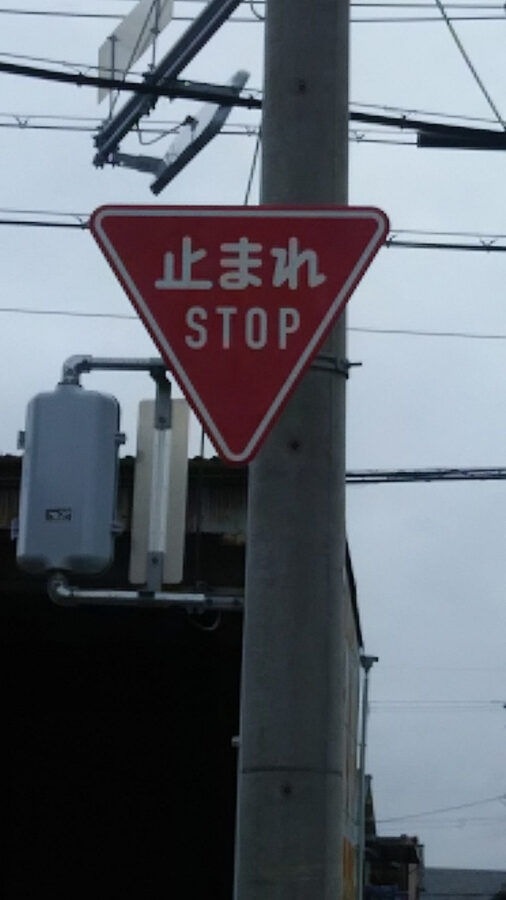
The stop sign is an inverted red triangle reading 止まれ (tomare), and newer ones add STOP in English. Stop completely at the line; the police do enforce it at small residential junctions. You may not turn left on a red light, and green arrows under a red light allow only the direction shown.

Railway crossings
Every car must stop before a level crossing, look and listen, then cross, unless a traffic signal at the crossing shows green. The rule applies on the busiest commuter line and the quietest rural branch, and a car that sails over a crossing marks its driver as foreign.
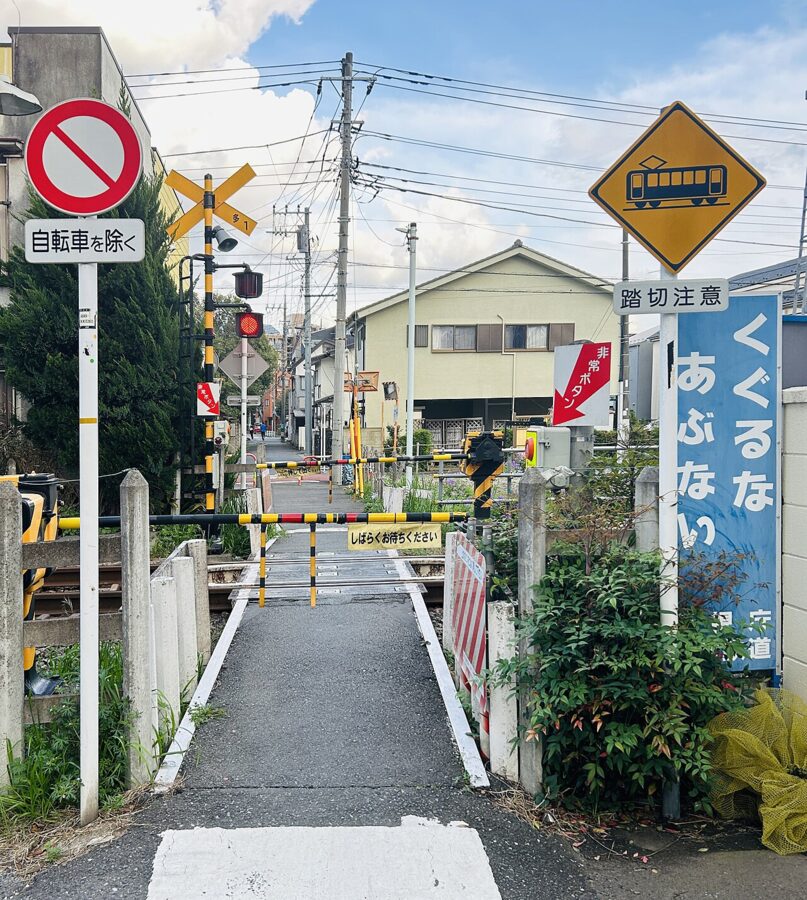

Speed limits
Limits are posted in km/h on round red-ringed signs. On an ordinary road with no sign the limit is 60 km/h, but since 1 September 2026 it is 30 km/h on residential roads without a centre line or marked lanes, which covers most village lanes and side streets. Expressways usually run at 80 to 100 km/h, with a few newer sections posted higher, and cameras are common.
Alcohol: none at all
Treat the rule as zero. The legal threshold is 0.15 milligrams per litre of breath, but a driver judged impaired is charged at any reading. Under the National Police Agency’s penalties, a drunk driver faces up to five years in prison or a fine of up to ¥1,000,000 (about £4,800 / $6,330), as does whoever lent the car.
Passengers who rode along and whoever served the drink face up to three years, and rental insurance is void in any accident involving alcohol. If there is sake with dinner at a ryokan, park for the night first.
Phones and seatbelts
Holding a phone while the car is moving is illegal, so mount it and set the route before you leave. Seatbelts are compulsory in every seat. A quick flash of the hazard lights is how drivers say thank you when someone lets them in.
Winter tyres and snow
From November to April snow covers Hokkaido, most of Tohoku, the Sea of Japan coast and the central mountains. Hokkaido rental cars carry studless winter tyres through the snow season as a rule; elsewhere ask when booking, because some branches charge for them. Four-wheel drive is worth the extra for mountain onsen and ski areas.
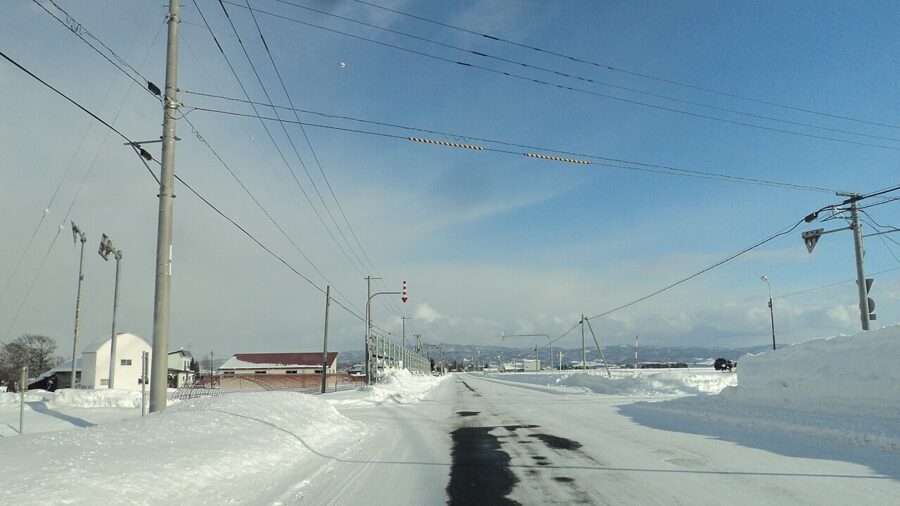

Black ice on bridges and at tunnel mouths is the real danger. Brake early and leave three or four times the usual gap. In heavy snow the authorities can close passes, require chains even on winter tyres, or shut expressways, so check the road operator’s traffic information each morning.
If something goes wrong
Call 110 for the police and 119 for an ambulance or fire. Every accident, however small, must be reported to the police before you leave the scene, and the insurance depends on that report. Then call the rental company’s emergency line, printed on the contract.
Parking
Parking is the cost that surprises visitors in the cities and vanishes in the country. Street parking is rare and usually banned, and illegal parking brings a police fine plus the rental company’s own charge. Hotels outside the big cities usually have parking, often free, while city hotels charge by the night, which is worth checking when you choose where to stay.
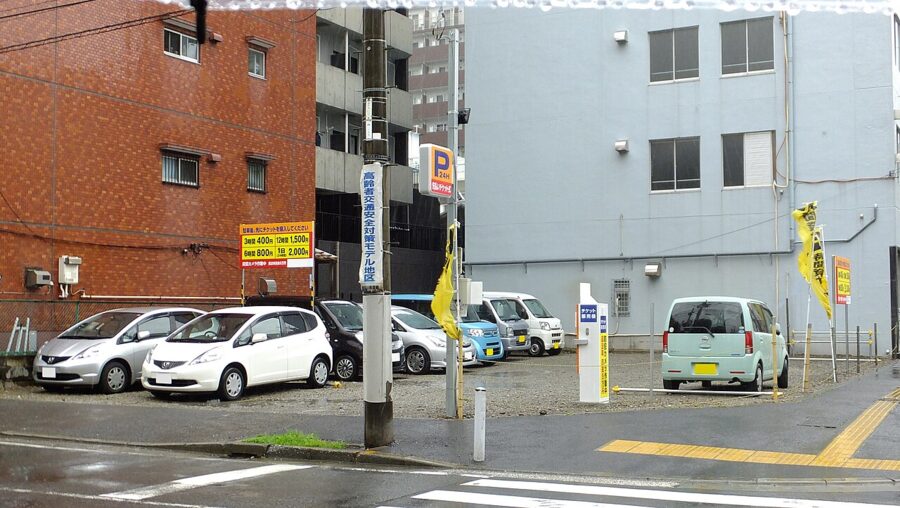

In towns the standard is coin parking, small unattended lots charged per 15, 20 or 30 minutes, often with a daily or overnight cap. Read the cap carefully: some apply once and others reset every 24 hours. Sights in the country usually have large car parks, and roadside stations and expressway service areas offer free parking around the clock.
Fuel and charging
Most petrol stations are now self-service, marked セルフ (serufu), with full service still common in the country. Nozzles are colour-coded: red for regular (レギュラー), yellow for high-octane (ハイオク), green for diesel (軽油, keiyu). The classic mistake is filling a small kei car with keiyu; kei cars run on regular petrol.
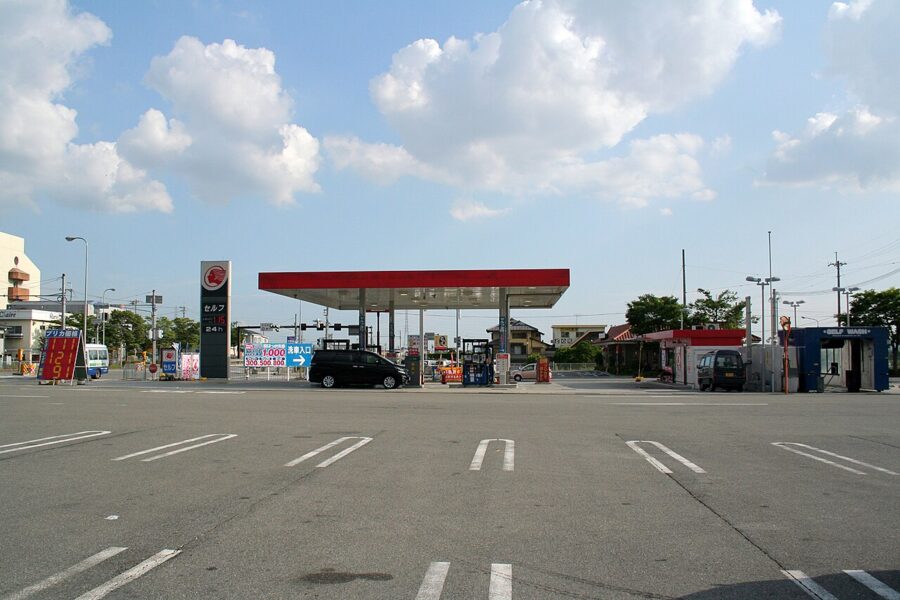

At a full-service station say “regyura, mantan” and the attendant does the rest. As of October 2026, regular petrol ran from about ¥163 a litre (about 78p / $1.03) in Miyagi to about ¥179 (about 86p / $1.13) in Okinawa in the government’s weekly survey. A hybrid uses little, so fuel is rarely the large cost; return the car full and keep the receipt, or the company charges by distance at its own rate.
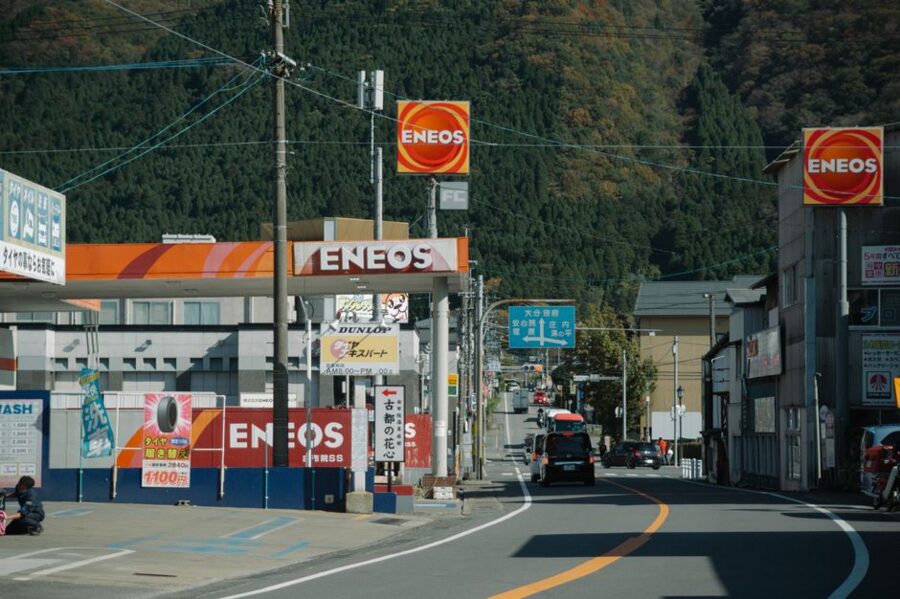
Electric rental cars exist, mostly in cities and on Okinawa, but chargers outside the cities are sparse and slow. For a country road trip a hybrid is the easier choice.
Finding your way
The built-in navigation can usually switch to English, and its real strength is searching by telephone number or Mapcode rather than address. Japanese addresses run by district and block, not street, so a hotel or museum is easiest found by its phone number. A Mapcode is a numeric code for any spot, printed in Okinawa and Hokkaido guides, and it finds a beach or viewpoint that has no number at all.
Google Maps works well for driving, with live traffic; download offline maps for Hokkaido and the mountains, where the signal fails in the valleys. Main roads and expressways sign place names in English as well as kanji, and expressways carry E-numbers (E1 for the Tomei, E4 for the Tohoku), which helps when the navigation and the signs use different names.
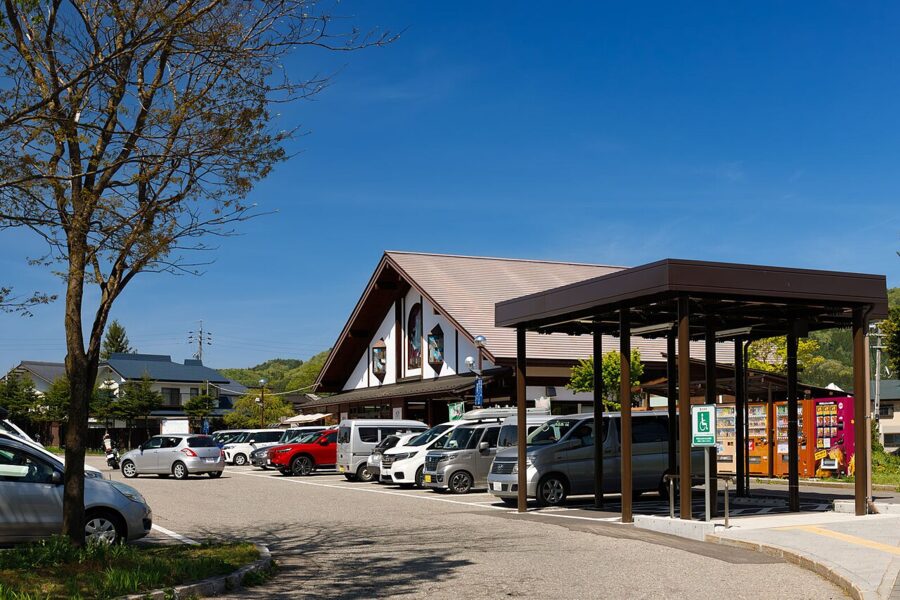
On a long day, plan the stops around the michi-no-eki. There are more than 1,200 of these roadside stations across Japan, each with parking, toilets, local produce and usually a small restaurant serving what the district grows or catches. They make a better lunch than any service area.

So the line from the opening holds. Leave the car out of the cities, where the trains outrun it, and pick it up where the timetable gives out: an airport in Hokkaido or Okinawa, a station on the edge of the Alps, a port on Shikoku. From there the road runs on to the places between the lines.